MS in Supply Chain Management
Power the backbone of global commerce
Dive into one of the most critical, fast-growing fields with Wisconsin’s Master of Science–Business: Supply Chain Management. Build job-ready skills to optimize operations, strengthen supply chains, and navigate industry disruptions.
Format
In-person
Duration
1 year
Start
September
Location
Madison, Wisconsin
A supply chain education you can count on

Ready for the real world
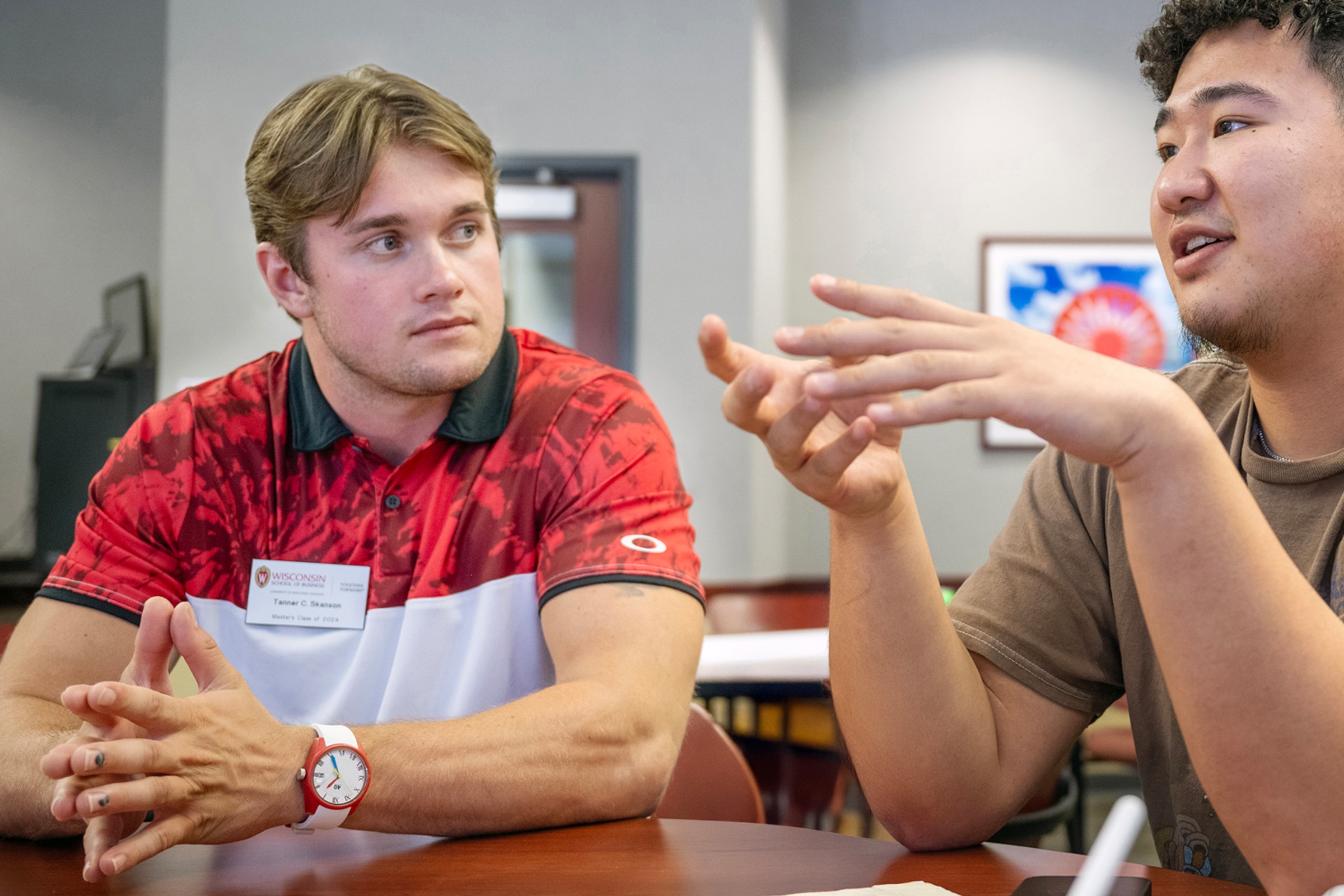
“The program’s unique structure immersed us in a diverse range of challenges and perspectives, thoroughly preparing us to make a meaningful impact as emerging supply chain professionals.”
Consultant, Deloitte Consulting
Innovative, big-picture curriculum
- Build a strong supply chain foundation
Learn planning, network design, global sourcing, logistics, and analytics. - Dive into the disruptors affecting supply chains today
Understand the risks and impacts of global trade uncertainty, climate change/sustainability, and AI. - Get hands-on with applied learning
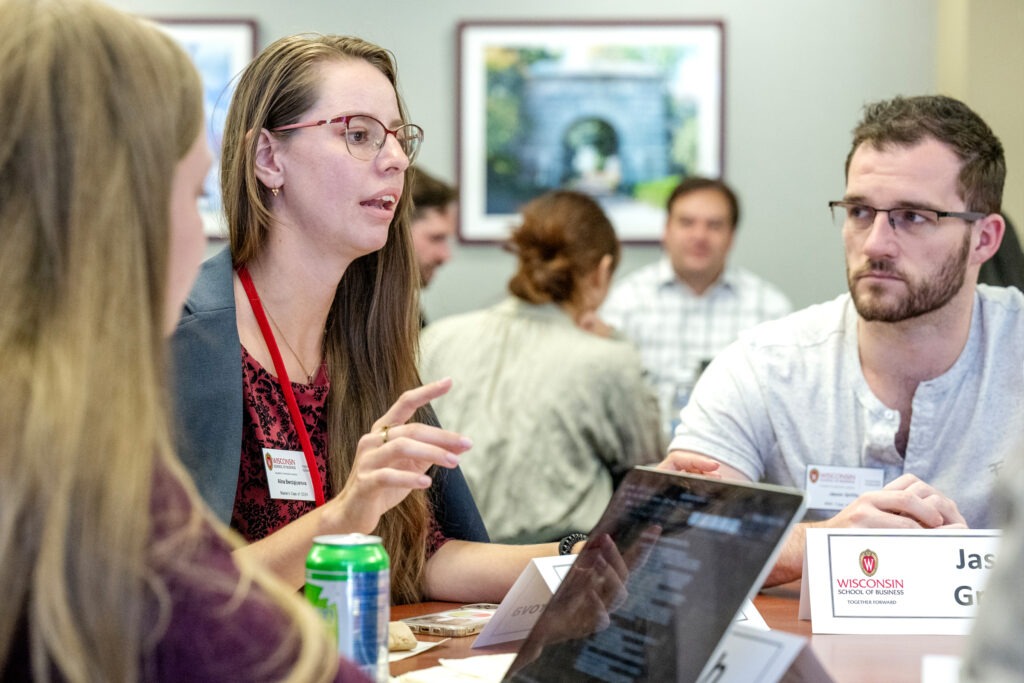
Opportunities include global trips, consulting projects, site visits, and guest speakers.
This is a STEM-designated program.
Start a career that delivers
Supply chain careers: At the center of everything
Secure a high-impact role in almost any industry—from manufacturing to technology to consulting.
Personalized career support
- Get career advice from industry experts and the Grainger Center advisory board.
- Work one-on-one with a career coach.
- Get help with your résumé and job interview preparation.
- Get connected to companies and industries where you want to work.
Common roles
- Logistics analyst
- Sourcing analyst
- Planning analyst
- Supply chain analyst
- Commodity manager
- Consultant
A complement to many backgrounds
Adding a supply chain master’s to your undergraduate degree proves you understand how systems, resources, and markets interact—the exact end-to-end perspective employers look for.

Tech, data, and engineering
Undergraduate majors: Computer science, information systems, industrial engineering
You know how to build systems, manage data flows, and write code.
Your impact in supply chain: Use those skills—plus new knowledge in sourcing logistics and customer impact—to predict demand and optimize logistics networks. Take on a tech-focused operations leadership role.

Finance, economics, and analytics
Undergraduate majors: Accounting, banking, economics, operations management
When you look at numbers, you see a story about risk and value.
Your impact in supply chain: Use your risk assessment skills to prepare for and respond to supplier bankruptcies, natural disasters, or surges in demand. Open doors to roles in supply chain network design, trade finance, and risk analytics.

Strategy, marketing, and consumer insights
Undergraduate majors: Business administration/management, marketing, consumer behavior/retail
You understand how to build a brand, craft a corporate strategy, and anticipate consumer needs.
Your impact in supply chain: Bridge the gap between customer expectations and operational reality. Position yourself to build profitable, customer-focused networks.

Global systems, policy, and communications
Undergraduate majors: International business, political science, communications
Turn your global fluency and communication strengths into a practical corporate skillset.
Your impact in supply chain: Model geopolitical risk, manage cross-border networks, and translate messy operational data into clear strategic narratives for CEOs and boards.
The Business Badger network advantage
Your cohort is where you start; our global network is where you grow.
- Get paired with a personal mentor, an experienced supply chain professional. Meet with them to discuss the industry and your goals.
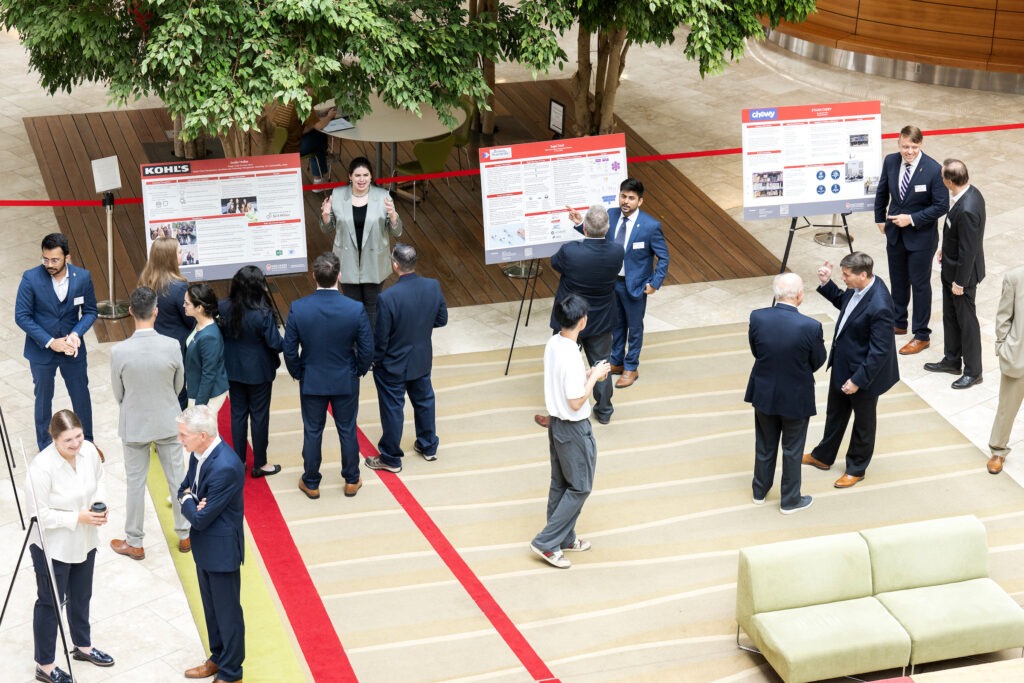
- Build connections with industry leaders through speaker series, Grainger Center alumni board discussions, seminars, and consulting projects.
- Learn from world-renowned faculty.

“The Grainger Center is a real community, not just an academic community. I interacted with people from India, China, and Germany. I now have a network of supply chain professionals in these really amazing positions. I think that’s really going to help me later in my career. I can tap into that.”
Senior Consultant of Global Operations, Deloitte

“From the second I had my initial interaction with the Center, I knew this was where I wanted to continue my studies. I have had the opportunity to dive deeper into important supply chain topics like logistics, supply chain analytics, and information systems.”
Service Specialist, Saunders & Company

“The curriculum is robust and offers a diverse range of course options. The alumni network is valuable for employment opportunities and can assist with referrals to suitable positions after graduation.”
Meet your cross-industry experts
Learn from experts at WSB’s supply chain knowledge center—the Grainger Center for Supply Chain Management—as well as across UW–Madison through dedicated cross-campus partnerships.

Jake Dean
Jake Dean (MBA ’09) has more than a decade of supply chain management experience at Cisco and Canadian Tire.

Matt Seitz
Matt Seitz brings more than 30 years of experience helping organizations use technology to solve challenges, including in leadership roles at Google, McDonald’s, and Abbott Laboratories.

Justin Sydnor
Justin Sydnor is an applied microeconomist specializing in behavioral economics. His research includes the study of insurance markets and decision-making under risk and uncertainty.

Andrea Hicks
Dr. Andrea Hicks is an associate professor in the Department of Civil and Environmental Engineering. She studies the environmental impacts and sustainability implications of emerging technologies.
Admissions & tuition
Deadlines
Applications to begin your degree in September 2027 open in September 2026. Application deadlines:
- November 4, 2026
- January 13, 2027
- March 3, 2027
- April 29, 2027*
- June 3, 2027**
*Final deadline for international applicants
**Final deadline for domestic applicants
Tuition
The tuition rate is $27,764.80 for the one-year program for Wisconsin residents and $51,413.28 for nonresidents.
Scholarships available
Up to $7,000 in scholarships are available to graduates of any Wisconsin college.
Meet with us
This is a big decision, and our admissions team is here to help!
Connect with us to ask questions, explore fit, and get application advice.
Apply
The admissions team considers each application holistically. There is no “perfect candidate.”
We want to get to know you. Tell us your story and your goals.
FAQs
No. Students of various backgrounds can be successful in supply chain management, including science, engineering, math, law, humanities, and social science. View the Class Profile to learn about our current students’ backgrounds, and visit the Admissions page to learn about prerequisites.
The Wisconsin specialized master’s programs require the GMAT or GRE to assess academic readiness. However, applicants who can demonstrate strong quantitative and analytical preparation through prior academic achievement and professional experience may request a test waiver. Visit the Admissions page to learn more.
Apply when you feel you have the most competitive application and are ready to begin the master’s program. Review the application deadlines on the Admissions page. If you have questions, contact the admissions team.
A campus visit is one of the best ways to gather information about the Wisconsin Master’s in Supply Chain Management. We suggest you plan a campus visit during the school year when classes are in session, although modified campus visits are available during the summer.
For detailed information on information sessions and tour registration, head to our Admissions Events page.
Yes, this program is STEM-designated. You’ll get a cross-functional perspective on business and technology.
Connect with us.
Get the latest infoGet the latest program info