
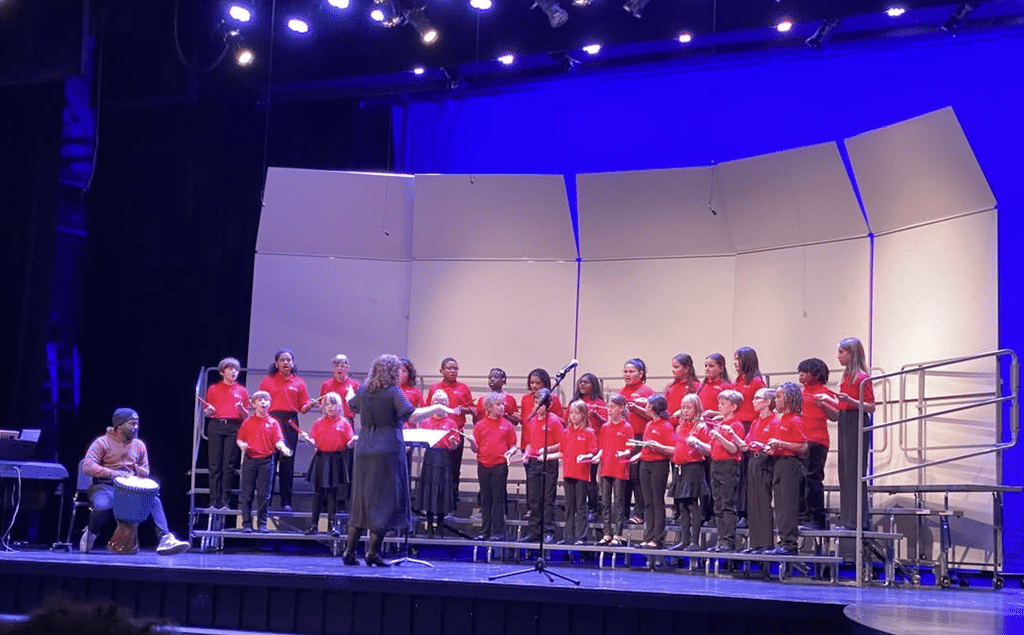
Six months ago, I was standing in front of a group of two-hundred students, ages three to thirteen, conducting them in the final song of their Spring Music Concert. As the last notes of One Love faded, I felt a deep surge of gratitude, pride and a small bit of sadness. This bittersweet moment marked the end of my career as a teacher and the beginning of my journey as an MBA student. Approximately seven weeks ago, I became a student again, starting a set of core business classes and few classes for my specialty in human resources. A class I was especially excited for was Leading and Working in Teams with former executive, lawyer, business founder, executive coach, and our adjunct instructor, Nancy Geenen. I wanted to dive into something familiar, working in a team, and expand my knowledge base in a practical way. Working my way through the course, I realized that there are several similarities between leading a musical ensemble and working with a diverse team. Whether directing a fifty-person choir or collaborating with a multi-disciplinary MBA team, the core principles of effective team performance remain the same: establishing psychological safety, orchestrating diverse strengths, and leading through service and trust.
Through teaching, I learned how to create a space where students felt safe learning. For instance, on the first day of school, it is easy to undervalue this rehearsal because we haven’t gotten to the “content” of the class. However, this first class was one of the most important days in terms of forming the foundation of trust that the year’s learning would be based on. I would always model the risky behavior first. Introducing ourselves? I go first. Playing a singing and rapping get-to-know-you song? I would be the loudest, silliest person in the room. My goal was to show my students from day one that risk-taking is a part of music-making and I was on their side whether they succeeded or failed. This commitment to being vulnerable first is a core principle we learned about in Leading and Working in Teams. Psychological safety is created when everyone in the group shares the belief that their environment is safe for risk-taking. When creating our team charter for Team Dynamo, made up of Carlos, Sophia, Eddie and me, it was important to be direct about what each team member should contribute and what they needed from the team in return. Especially coming from such a diverse background of experiences – with team members in the Marketing, Corporate Finance and Risk Specialties and having two international students on the team – it was incredibly important that the team felt safe sharing their needs with me so that we could work effectively. I modeled the same honesty I would in the classroom. I went first and risked being blatantly honest about the kinds of expectations we needed to have for the group and ways we should support one another. I think that this vulnerability helped me to bond deeply with my team and create a clear set of goals up front. In these deeply varying situations, my instinct to be vulnerable first helped my team grow.
One of my absolute favorite parts of this class was the opportunity to read and analyze Simon Sinek’s Leaders Eat Last, a book I had wanted to dive deeply into for quite some time. The book discusses themes of psychological safety, or the “Circle of Safety”, team vulnerability, and the biological chemicals that drive our choices: dopamine, endorphins, serotonin, oxytocin and cortisol. As I read, I could draw direct parallels to my lived experience. In a musical ensemble, my role as the conductor was not to make any sound myself, but to be there entirely in service of my team of musicians, enabling them to shine. Simon Sinek consistently talks about leadership in the lens of it being a service to others, focusing on potential, and stepping out of the way so team members can shine. This philosophy has been incredibly useful in the projects I have done with my team thus far.
Orchestrating strengths under pressure is something I have identified as an aptitude of mine throughout our team’s projects. In both a concert setting and a business competition, success under pressure relies on how smoothly diverse talents work together. This was put to the test for our team during the IGNITE case competition, where Team Dynamo developed a five- year growth plan for Wenzel’s Farm. Delivering a complete strategy on a tight timeline (just two days), required blending our skills and perspectives from different areas quickly. Especially true because of the curve ball thrown at us: we would be adding a new teammate the week of the competition. By relying on our previously established team charter and set of norms, Joi was integrated into our team seamlessly and her marketing skills supported our final solution. Much like cueing specific instruments, I focused on leveraging each members strengths to manage our rigorous timeline, making sure we divided tasks according to our known strengths (financials, design, presenting etc.). Having experience working under strict deadlines with my musical ensembles helped me to remain calm under pressure and focus directly on the most prominent areas of need. By leading with empathy and clear communication, we kept morale high and worked as a team to create a final performance that made us proud.
Ultimately, teams thrive when leadership is practiced as service rather than a title. Trust, psychological safety and explicit norms transform individual experts into cohesive, high- performing teams. My experience at the Wisconsin School of Business is shaping my view of what it means to be a future strategic human resources leader, proving that unconventional backgrounds bring valuable depth to business leadership. Whether on a concert stage or in a corporate boardroom, embracing diverse perspectives is the true conductor of organizational harmony.