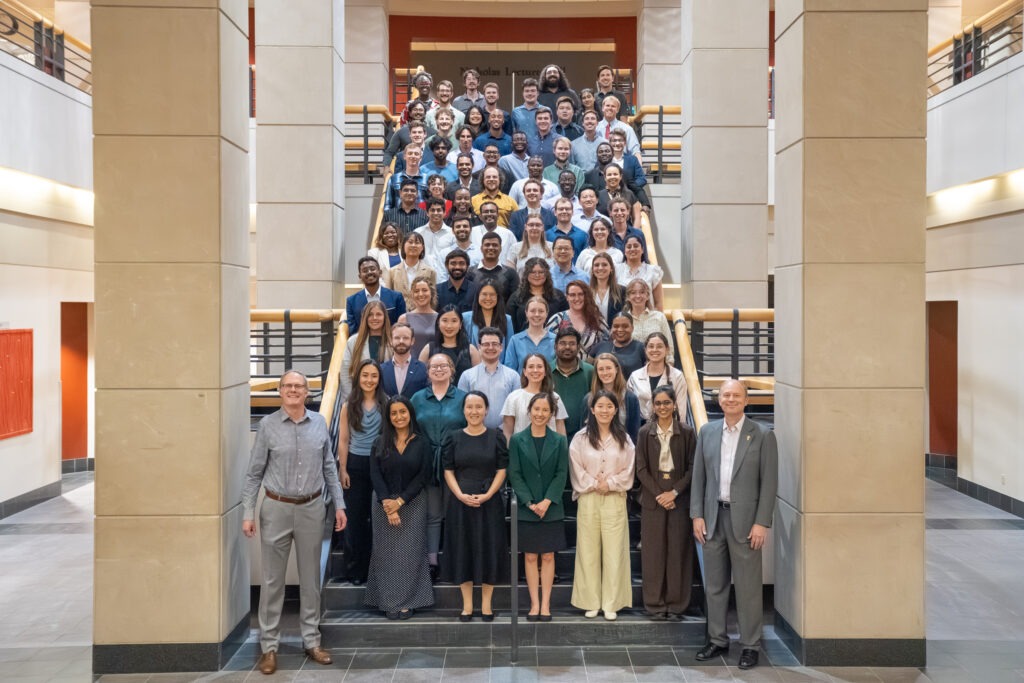
Since its launch in 2007, the Morgridge Entrepreneurial Bootcamp (MEB) has introduced UW-Madison students to the world of entrepreneurship through a week-long immersive experience led by accomplished entrepreneurs, business leaders, alumni, and Wisconsin School of Business faculty. Each summer, the program brings together students from a wide range of disciplines, particularly STEM fields, to explore innovation, venture creation, and entrepreneurial thinking.
Throughout the week, participants engaged in interactive workshops, case discussions, alumni panels, and hands-on exercises designed to help them better understand the entrepreneurial process. Students explored topics including entrepreneurial careers, business model canvas, customer discovery, funding sources, intellectual property, negotiation, go-to-market strategy, and the growing role of artificial intelligence in entrepreneurship.
Returning faculty favorites included Professor Emeritus Anne Miner, who challenged students to think creatively and identify opportunities to solve real-world problems through innovation. Professor Charlie Trevor also led his highly regarded negotiation workshop, where students strengthened their communication and persuasive skills through experiential exercises and salary negotiation simulations.
This year’s program featured several new additions. Among them was Lewis Sheats, Associate Vice Chancellor and Executive Director of the Wisconsin Entrepreneurship Hub, who guided students through an Airbnb case study focused on innovation, growth, and strategic decision-making. Another addition was students participating in discussions that examined entrepreneurship as a career path, highlighting how entrepreneurial experiences can create valuable professional opportunities and cultivate skills that transfer across industries.
One of the program’s defining features is its emphasis on learning through real-world business cases. For many participants, studying and discussing entrepreneurship cases alongside faculty, entrepreneurs, and alumni provided a new perspective on how organizations navigate challenges, pursue growth opportunities, and make critical strategic decisions.
Midweek, some students developed and presented their own venture concepts, applying the frameworks and lessons they had learned. Presenting to a panel of experienced entrepreneurs and investors, participants received constructive feedback that helped refine both their business ideas and their pitching abilities.
MEB 2026 would not have been possible without the generous support of alumni, guest speakers, panelists, faculty, and community members who dedicated their time and expertise to the program. Special thanks go to John and Tashia Morgridge for their continued generosity and steadfast commitment to fostering entrepreneurship at UW-Madison and supporting the next generation of innovators.
Categories: