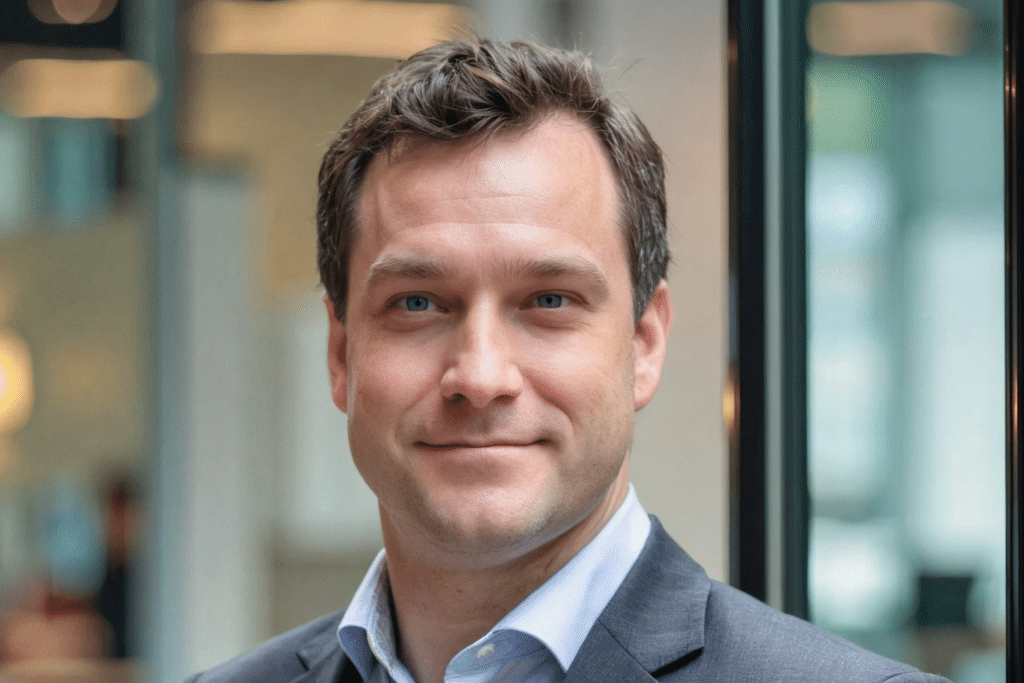
When you talk to Miles Gerson (JD/MBA ‘09), Partner at SV Health Investors, one theme quickly stands out: his career has never followed a linear path. Instead, it has been driven by a willingness to step into challenging, unfamiliar territory, requiring him to learn how to navigate in real-time. From managing emergent technology and early-stage startups to helping to take a biotech public to leading a corporate venture capital fund, Miles has built an impactful career at the intersection of healthcare, business strategy, and venture investment.
Miles’ journey after graduating from the University of Wisconsin–Madison began during a difficult economic downturn. Facing a historically weak job market where he found himself “overqualified and under-experienced” for most roles, Miles moved back home to Colorado and started consulting and volunteering for local life science incubators, investors, and startups. He focused on adding value wherever he could, running investment diligences, writing business plans, generating asset valuations, competitive analyses and market landscapes, evaluating intellectual property, and building project finance models, often for free.
His engagements with the local ecosystem led to an analyst role at a venture fund focused on life sciences and tech, which served as an economic development fund for the State of Colorado. Miles credits the generosity and thoughtfulness of many mentors who all advocated for him and helped him to land the job. When the fund’s remit had run its course, he was asked to join as management of one of the fund’s portfolio companies, an early-stage medical device startup, to manage day-to-day operations alongside a first-time CEO. Miles took on many responsibilities, managing everything from finance and accounting to IT and HR to commercial licensing and vendor management.
“It was intense – we went from company inception to 510(k) FDA clearance, treating patients and generating revenue in just two and a half years,” Miles recalls.
Looking back, he sees that willingness to dive into uncharted territory as the defining thread of his career: “A lot of what I chose to do was say yes to things that were stretches for me, to learn on the job, and to work as hard as I possibly could to deliver.”
Miles’ interdisciplinary background at UW–Madison was instrumental in preparing him for these multifaceted roles. On the law side, he points to UW’s philosophy of “Law in Action” and the influence of world-renowned professors such as R. Alta Charo (former FDA policy advisor and bioethics expert), who illuminated the real-world administrative and regulatory realities of bringing new therapies safely to market.
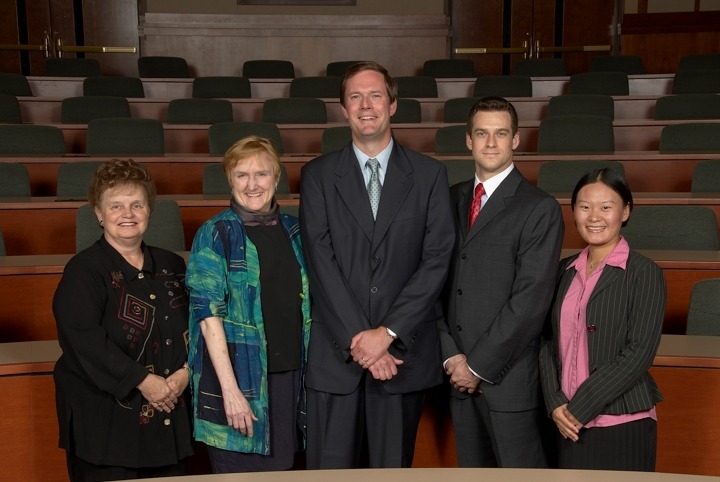
At the Wisconsin School of Business, Miles was in the Strategic Management in Life and Engineering Sciences (SMILES) program, a specialty pathway bridging technical science with business execution. He credits Professor Kenneth Kavajecz’s rigorous finance course with expanding his capital markets toolkit and recalls marketing coursework with Professor Jan Heide as transformative for understanding strategic messaging.
However, the Wisconsin Applied Ventures in Entrepreneurship (WAVE) core classes were particularly influential. Led by Dan Olszewski, Goldberg Family Director of the Weinert Center for Entrepreneurship, WAVE broke down the components of launching a business—evaluating target markets, testing competitive commercial paths, analyzing financing strategies and valuations, and navigating real-world case studies. “The WAVE curriculum is the blueprint for how I evaluate opportunities today,” Miles notes.
Following the successful launch of the medical device company, Miles’ career continued to span diverse sectors: leading business development at UCLA’s technology transfer office, serving as head of legal and business development for a public biotech (including negotiating agreements to open 60 clinical trial sites globally during the launch of GDPR), and eventually heading Takeda Ventures, the corporate venture arm of Takeda Pharmaceutical Company.
Today, as co-lead of SV Health Investors’ Dementia Discovery Fund, Miles focuses on funding companies developing therapeutics for neurodegenerative diseases associated with dementia, including Alzheimer’s, Parkinson’s, ALS, Huntington’s, Lewy body dementia, frontotemporal dementia (FTD), and other rare neurodegenerative diseases.
Evaluating these investment opportunities requires balancing rigorous scientific assessment with business realities. Beyond reviewing scientific data and development plans, investments in biotech require full-scope consideration of financing conditions, market sentiment, competitive landscapes and regulatory hurdles. Venture capital requires comfort with risk and knowing that failure is often a major part of the business. So, importantly, Miles assesses management team’s history to understand the depth of their ability to manage the inevitable twist and turns of drug development.
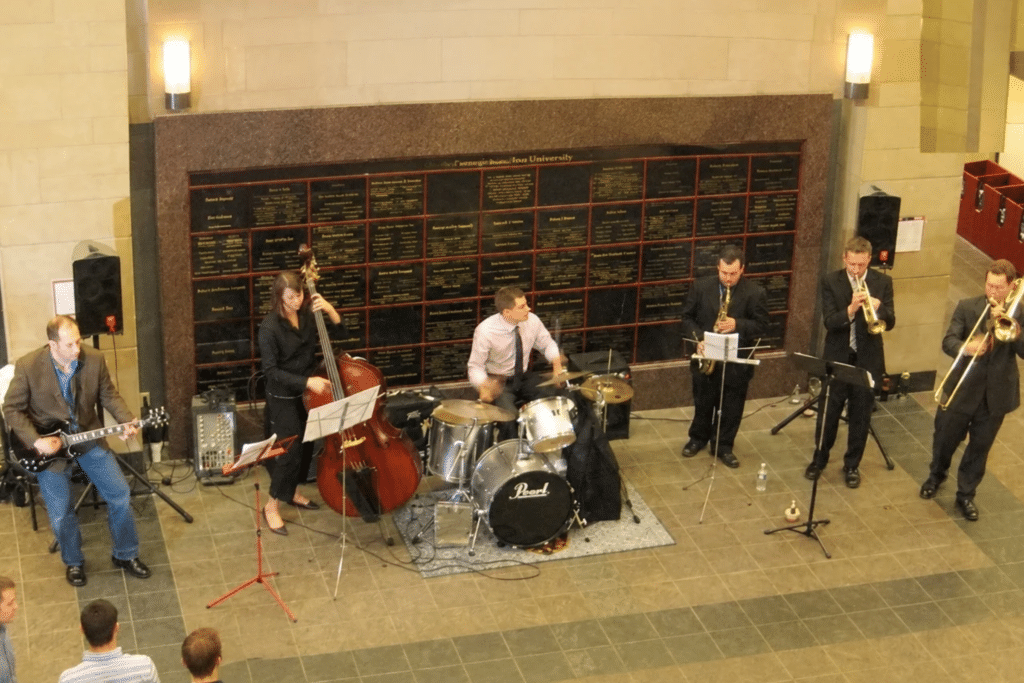
“Every entrepreneur will or has already faced serious struggles, which is something that I both deeply respect and value in a management team,” says Miles. “It’s important to know whether someone has encountered potential or actual failure – when choppy waters inevitably hit, they will have the composure to navigate without losing vision and focus.”
For UW–Madison students interested in entrepreneurship, finance, or venture capital, Miles offers grounded advice: Look beyond startup hype. While founding a company carries notoriety or gravitas, the day-to-day reality requires immense dedication, potentially at the cost of growth that will make you a better founder in the future. Don’t overlook the value of gaining experience at established organizations where you can learn from seasoned operators or structured systems and better identify industry-specific pain points where entrepreneurship can solve problems and create value. Focus on continuous growth rather than fixating on job titles or notoriety. Prioritize roles that force you to expand your capabilities.
“Always look for ways to add skills beyond your job description so that you can bring that to your next role,” Miles advises. “The next person who hires you will see more than just your current capabilities. They will see someone who has the ability to rise to the occasion or make the next step into a bigger role.”
Miles’ trajectory demonstrates that entrepreneurship isn’t just about launching a company from day one, it’s about embracing uncertainty, learning on your feet, absorbing everything you can from different opportunities, and building the skills to translate innovative science into real-world impact.