
For Sean Ebert, entrepreneurship has been a career-long journey shaped by experience, experimentation, and plenty of lessons along the way. After earning a master’s degree in industrial engineering in 1999, Sean entered the workforce during the dot-com boom and co-founded an online banking company. After several years in banking and some time at Epic, he returned to the Wisconsin School of Business to pursue an MBA in entrepreneurship from 2006 to 2008. Looking back on his time at UW, Sean said, “I learned a ton in the MBA program, wouldn’t trade it for anything. It gave me the foundation that I needed.”
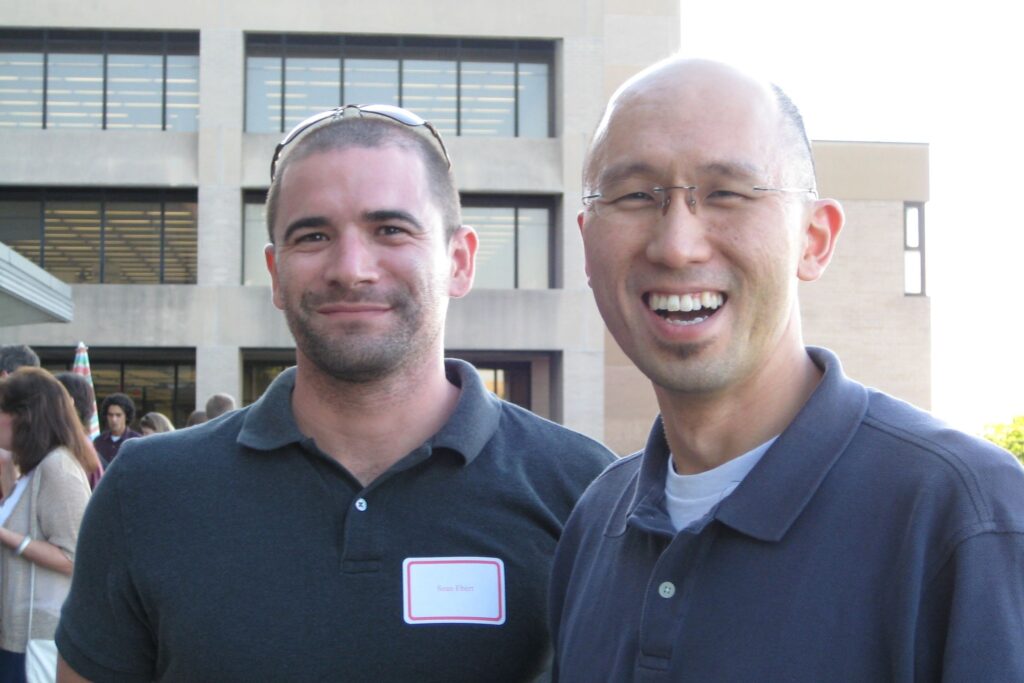
After graduating from the MBA program, Sean joined a small local company where he was given the opportunity to build and grow brands with significant autonomy. He helped grow a flood restoration brand from roughly $10 million to $80 million in revenue and launched another brand in the janitorial space that eventually surpassed $100 million in annual revenue. These experiences also changed how Sean viewed innovation. Rather than focusing only on flashy or traditionally innovative industries, he learned to find opportunities in overlooked markets, noting that he had once held “too literal or too narrow of a view on what innovation meant or what entrepreneurship looked like.”
Over time, Sean shifted from a traditional approach centered on extensive planning and market research to one focused on customer discovery and feedback. He found that understanding customers’ problems and needs was far more valuable than keeping ideas protected behind closed doors. “Being better informed of the customer’s problems, being more knowledgeable about their pains or needs, and then delivering on those with a higher batting average,” Sean explained, was “infinitely more useful” than trying to keep ideas secret.
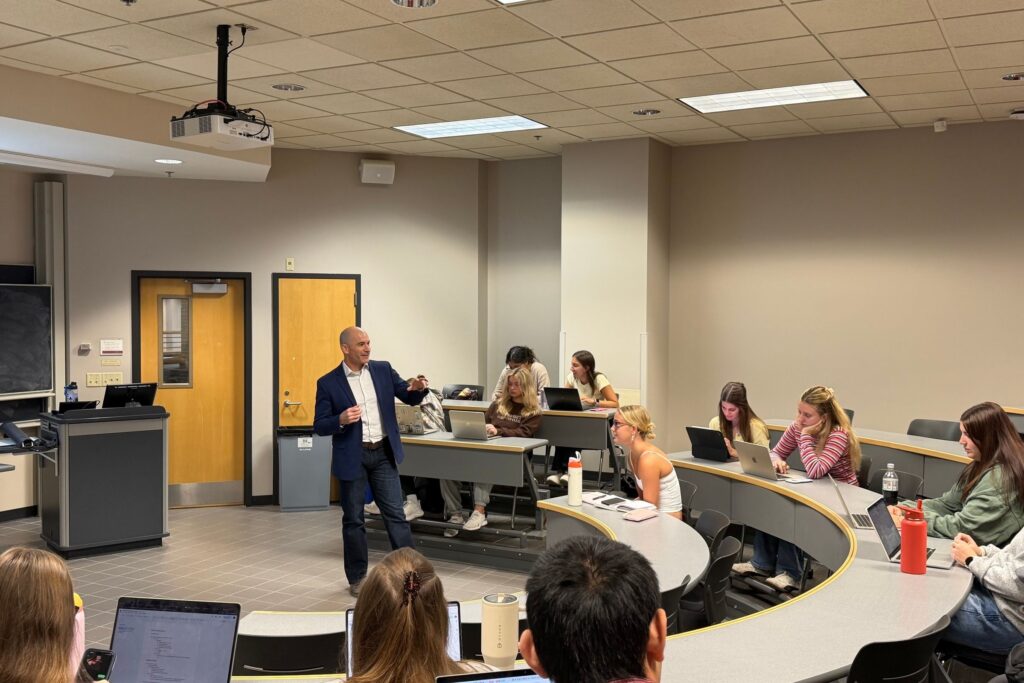
Today, Sean brings those experiences back to the Wisconsin School of Business as an instructor. His return to UW came after discovering how much he enjoyed training and developing leaders within his previous organization. When Dan Olszewski, Goldberg Family Director of the Weinert Center, reached out about a teaching opportunity, Sean decided to give it a try, responding simply, “Sure, I will try it. What is the worst that can happen?”
Since returning to campus, Sean has been particularly impressed by his students and the conversations they bring to the classroom. He expected the transition from teaching experienced professionals to undergraduate students might be challenging but instead found himself impressed by “the quality of the students” and “the quality of the discussions.” That, he said, has been “my favorite part of all of this.”
Sean also uses his entrepreneurial experiences, including the mistakes he has made along the way, to connect academic concepts to the real world. When reaching for real-world examples, Sean focuses on “what has worked for me, what I have seen work for others, what worked across our organization” and, perhaps most importantly, what did not work. He hopes to combine those experiences with academic concepts so students can see how ideas translate beyond the classroom.
Ultimately, Sean hopes students leave his courses with a practical toolkit they can carry into their careers. “I hope that what people can take away from my class is a framework to approach challenges,” he said, one that students may not remember word for word but can draw on “when a situation arises” in the working world.
For Sean, entrepreneurship and teaching have become interconnected. His experiences building businesses, leading teams and learning from failure now shape the way he prepares the next generation of business leaders to navigate their own careers. As he reflects on his own journey, his approach continues to center on learning, adapting, and finding practical ways to create value.
Categories: