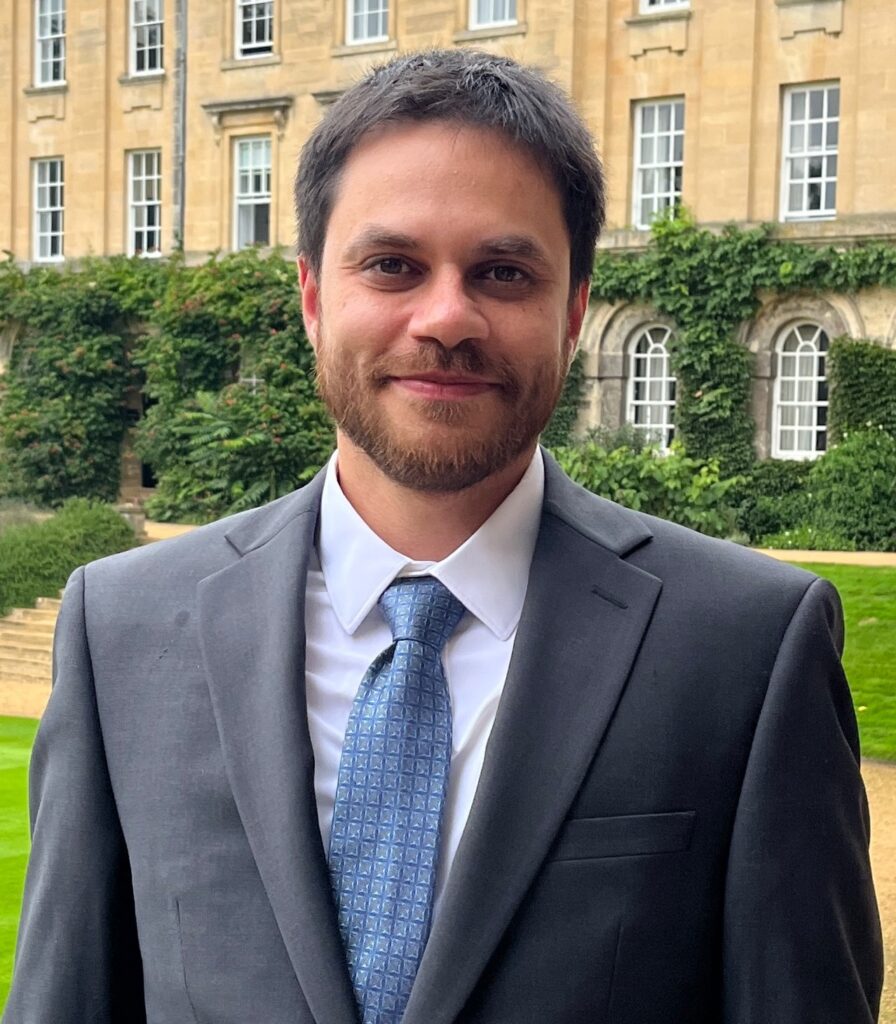
The Wisconsin Real Estate Program is delighted to welcome Abdollah Farhoodi as an Assistant Professor in the Department of Real Estate and Urban Land Economics at the Wisconsin School of Business. Farhoodi joins UW–Madison through the university’s RISE-AI initiative, bringing expertise at the intersection of real estate and urban economics, artificial intelligence and data science.
Farhoodi is an applied economist whose research focuses on housing markets, household mobility, digital platforms, and the spatial distribution of economic activity. A central focus of his work is bringing together economic theory and structural models with the predictive capabilities of AI and machine learning. This emerging approach can help researchers understand not only what is happening in real estate markets, but why it is happening and how different policies could affect market outcomes.
He applies these tools to some of the most important questions facing housing and urban markets today: What influences whether and where households move? How do moving costs and housing supply constraints affect affordability? How do digital platforms such as Airbnb alter local housing markets? And how can AI and machine learning provide new ways to understand these increasingly complex markets?
“We are excited to welcome Abdollah to our faculty at a time when artificial intelligence is creating new possibilities for real estate research, education, and practice,” said Chris Timmins, Chair of the Department of Real Estate and Urban Land Economics. “His ability to combine rigorous economic analysis with AI and machine learning will strengthen our research and help us explore how these rapidly evolving tools can be applied to some of the most important questions facing housing and real estate markets.”
Farhoodi also brings broad teaching experience to Wisconsin, having taught urban economics, microeconomics, big data methods and applied machine learning. Before joining UW–Madison, Farhoodi was an Assistant Professor of Economics at the University of Toronto. He earned his PhD in Economics from the University of Illinois Urbana-Champaign, an MSc in Economics from Sharif University of Technology, and a BSc in Electrical Engineering from the University of Tehran.
We are delighted to welcome Abdollah to the Wisconsin Real Estate community and look forward to the expertise and new perspectives he will bring to our students, faculty, alumni and industry partners.
Learn More About Abdollah Farhoodi
What are you most excited about as you join the Wisconsin Real Estate Program, and what drew you to Wisconsin?
A major part of what drew me to Wisconsin is the RISE-AI initiative. The university is making a serious investment in interdisciplinary AI research and bringing together faculty and students from across campus, and I look forward to collaborating with researchers who approach AI from fields very different from my own. Within the School of Business, the AI Hub gives my work a natural home. It connects academic research with students, alumni, and industry partners, which fits the way I like to work. I want my research to be rigorous while staying close to the practical questions that businesses and policymakers face as AI changes the real estate industry.
I was also drawn to the Wisconsin Real Estate Program itself. It is one of the oldest and most respected real estate programs in the country, with a deep alumni network across the industry. Just as important for me, it is home to top scholars in real estate and urban economics, and the chance to work with and learn from them was a big part of the appeal. Joining a program with that kind of foundation, at a moment when AI is beginning to change how the industry operates, is a wonderful opportunity. I hope to help connect this long tradition with the tools that will shape the future of real estate.
Beyond the university, Madison itself contributed to my decision. It is a welcoming city built around a leading research university, and it feels like an ideal place for research, teaching and building a community.
Tell us a little about your research and professional interests. What questions or issues in real estate are you most interested in exploring right now?
My research sits at the intersection of real estate and urban economics, industrial organization, and AI. Structural economic models are powerful because they explain the mechanisms behind what we observe and allow us to evaluate how alternative policies would change outcomes. AI and machine learning offer remarkable predictive power and flexibility. The question that interests me most right now is how to bring these two approaches together. It is an innovative and still developing area of research, and I believe it will change how we study real estate markets.
I apply this approach to some of the central questions in housing and urban economics. Why do households move, and what keeps them in place? How do moving costs and housing supply constraints affect affordability? How do platforms such as Airbnb alter the housing markets around them? Answering these questions well requires understanding not just what is happening in real estate markets but why it is happening and what would change under different policies. That is exactly what the combination of economic theory and AI allows us to do.
What are you most looking forward to about working with Wisconsin Real Estate students, both in and outside the classroom?
What I enjoy most about teaching is seeing students take what they learn in the classroom and apply it to questions they genuinely care about. The tools I teach, AI and machine learning applied to real estate, are new enough that there is no established playbook for using them in the industry. I look forward to watching UW students carry these tools into the real world and seeing what they build with them. The path for AI in real estate has not been drawn yet, and this generation of students will be the ones to draw it.
When you’re not teaching or doing research, what’s something you enjoy doing that our students and alumni might be surprised to learn about you?
I enjoy almost any activity that involves movement or a little friendly competition. Rock climbing, soccer, table tennis and swimming are among my favorites, and I am always willing to try a new sport. At home, my wife, who is also an economist and I spend plenty of time with our dog, who is without question the cutest member of the household.