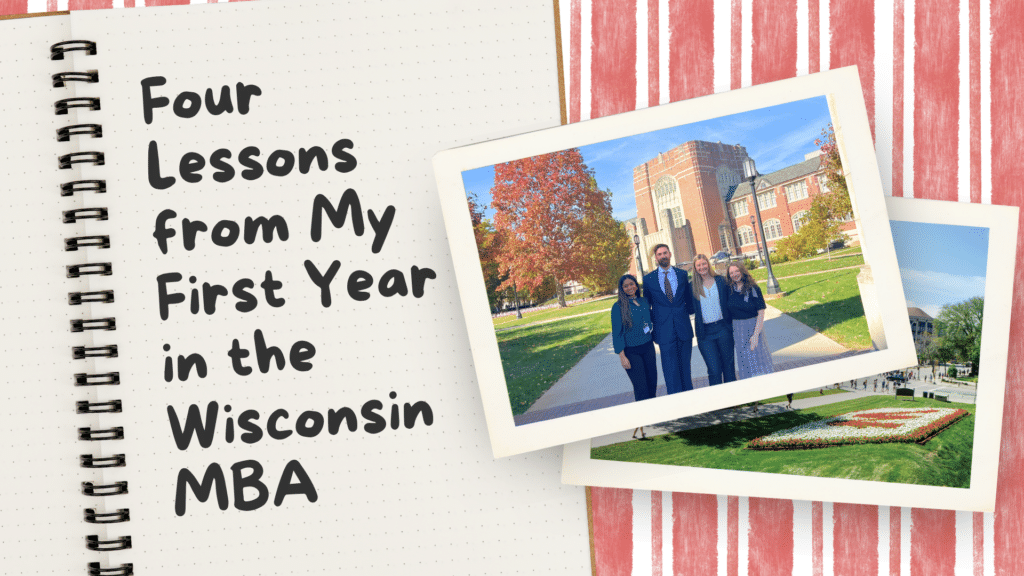

When I began the full-time MBA program at the Wisconsin School of Business, I had more than three years of experience in human resources. I had supported employees, implemented HR systems, managed compliance needs, and helped leaders solve day-to-day people challenges. I entered the program expecting to add business knowledge to that foundation. What I did not expect was how much the first year would change the way I define effective HR leadership.
The most valuable lessons did not come from one class, project, or leadership role. They came from seeing how those experiences connected. Coursework gave me new frameworks, my classmates challenged my assumptions, leadership opportunities tested my judgment, and recruiting required me to explain the value I could bring. Together, those experiences taught me four lessons that I will carry into my second year and my career.
Business fluency makes HR more effective
Before business school, I often approached a challenge by asking what HR process could address it. During my first year, courses in strategy, finance, operations, marketing, and data analysis pushed me to begin with a different question: What business problem are we trying to solve?
That shift matters because a people recommendation is only as useful as its connection to the organization’s goals. A staffing decision affects cost and capacity. A performance-management process influences accountability and execution. A development program should build capabilities the business will need in the future. HR professionals do not need to be the technical expert in every function, but we do need to understand how the organization creates value and how talent decisions support that value.
This broader perspective has made me more confident in moving between employee needs and business priorities. It has also reinforced why strategic HR cannot operate on the sidelines. When HR understands the business model, it can help leaders anticipate workforce risks instead of reacting to them after they become urgent.
Application turns knowledge into judgment
The MBA classroom introduced useful models, but applying them made the learning stick. Case discussions rarely offered one perfect answer. Team projects required us to work with incomplete information, defend our recommendations, and adjust when a classmate saw the problem differently. Those experiences strengthened a skill that is essential in HR: making a thoughtful decision even when the situation is ambiguous.
I saw the value of that practice during my summer HR internship with Amazon Web Services. My project examined how work was distributed across two engineering job families in an organization of approximately 1,100 employees. The challenge was not simply to compare job descriptions. I needed to combine workforce data, employee and leader interviews, organizational context, and business needs to determine where roles were converging and where clearer distinctions were necessary.
The work required both analytical discipline and curiosity. Data revealed patterns, but conversations explained why those patterns existed. That combination helped me translate a complex workforce question into a practical framework leaders could use. My first year prepared me not only to analyze the issue, but also to communicate a recommendation in a way that connected people decisions to organizational effectiveness.
Community is part of the curriculum
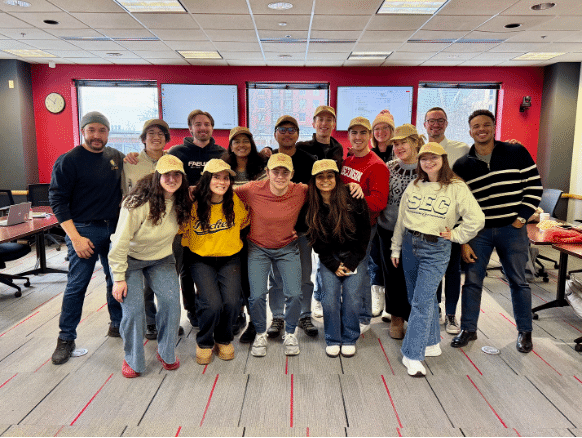
Some of my most important learning happened outside scheduled class time. Conversations with classmates exposed me to industries, functions, cultures, and ways of thinking that were different from my own. Faculty, alumni, career coaches, and peers offered feedback that helped me sharpen both my ideas and how I presented them.
My involvement in the Graduate Business Association made this lesson especially clear. I began as a first-year representative and later stepped into the president role. I learned that building community is not separate from leadership; it is one of the ways leadership creates results. People are more likely to contribute when they understand the purpose, feel that their perspective matters, and can see how their work connects to a shared goal.
That insight applies directly to human resources. Policies and programs may be designed centrally, but employees experience them locally and personally. Listening is not simply a relationship-building skill. It is a source of information that helps leaders identify barriers, test assumptions, and design solutions people can actually use.
Growth often begins before confidence
My first year included recruiting conversations, presentations, leadership decisions, and unfamiliar coursework. I did not feel fully prepared for every opportunity before I pursued it. In many cases, confidence arrived after I took the first step, asked for feedback, and tried again.
That may be my most practical advice for future MBA students: do not wait until you feel completely ready. Volunteer for the role that will stretch you. Build relationships before you need something. Ask questions in the class that feels least familiar. At the same time, be intentional. Growth does not require saying yes to everything; it requires choosing experiences that connect to the person and professional you want to become.
Looking toward year two
I entered the Wisconsin MBA program hoping to become a more strategic human resources professional. After one year, I understand that strategy is not a title or a single skill. It is the ability to connect information across functions, recognize the human implications of business decisions, and turn insight into action.
Year one gave me stronger business fluency, more comfort with ambiguity, and a deeper appreciation for the people who make growth possible. As I begin my second year, I am excited to keep building on that foundation—and to contribute to the same community that challenged, supported, and invested in me.