What are AI agents actually, and how can I use them?
Built for business leaders putting AI to work.
Learn how companies are setting strategy, deploying, and managing AI agents responsibly.
Presentations, lightning talks, and panels will feature industry leaders and Wisconsin School of Business faculty.
Connect with industry peers and members of the AI Hub Executive Advisory Board.
This one-day event is built for business leaders wrestling with how to put AI to work will address strategy and responsible deployment of AI agents. You’ll also connect with peers and our Executive Advisory Board during networking opportunities including a lunch break.
Associate Dean of Research, College of Computing and Artificial Intelligence
Patrick McDaniel
VP of AI and Data, Abbott
Glenn Fung
EVP, Ecommerce
George Hanson
George Hanson serves as the Executive Vice President of E-Commerce at Mattress Firm, where he leads the application of new technologies, including Agentic AI, to drive online store traffic and grow e-commerce. He is also on the Board of Directors for Sleep.ai and sits on Google’s Retail Advisory Council. George also has Badger status, earning his MBA from the Wisconsin School of Business.
AI Through the Eyes of a Retailer: From the P&L to What AI Makes Possible
What happens when retailers stop starting with the technology and start with the P&L? In this keynote, George Hanson will share how retailers (and other organizations) can think about and leverage AI through the lens of the metrics that drive the business; from traffic, conversion and AOV, to margin and productivity. Drawing from his experience leading ecommerce at Mattress Firm and other leading retailers, George will explore real problems and solutions ranging from AI Visibility, AI-powered selling, agentic commerce, and the rethinking of business processes to increase productivity. The goal: move beyond asking “Where can we use AI? To asking “Where can AI change the economics of our business and what does that make possible?”
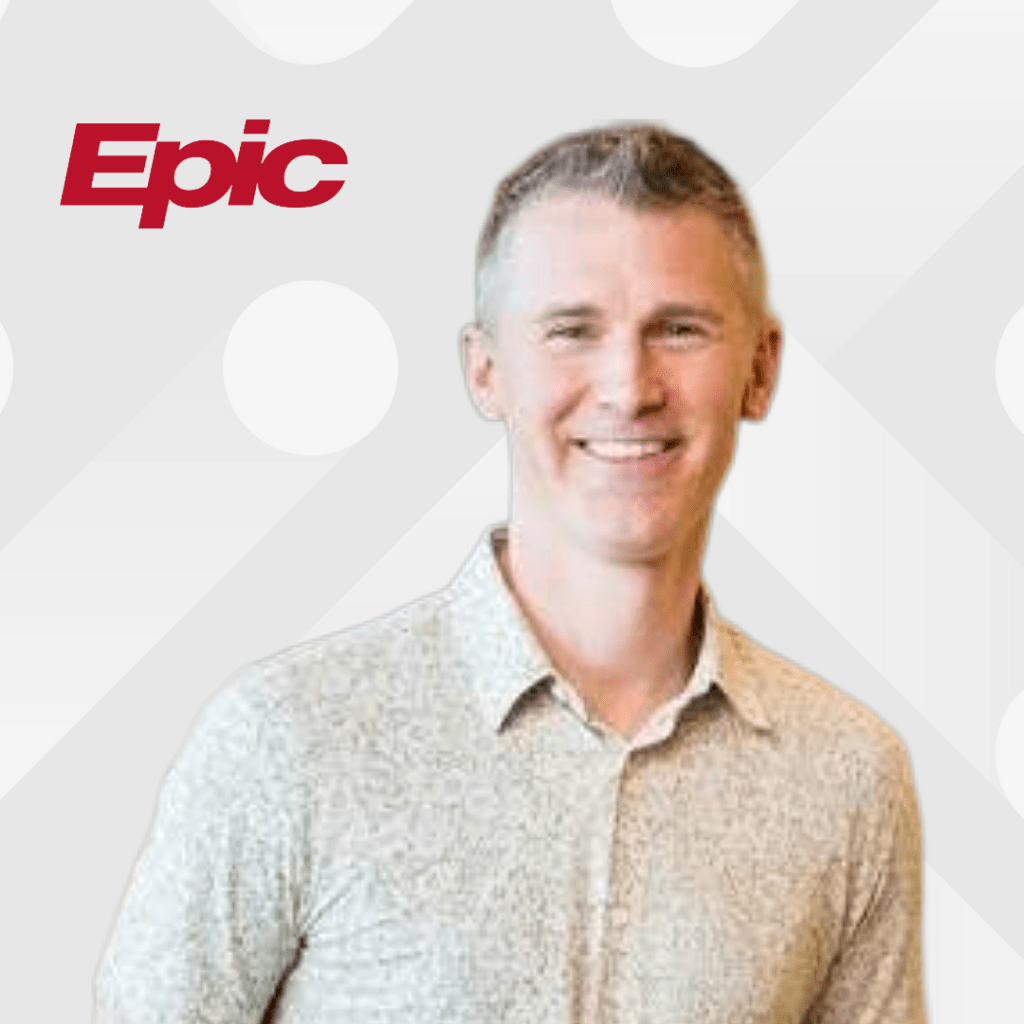
VP. Data and Research
Phil Lindemann
Phil works with all of Epic’s software applications to help them use data to better inform product design and roadmap. Phil has experience creating executive analytics, embedding machine learning in clinical care, and designing systems for multi-institutional clinical research. His current focus is Cosmos, a software application that allows collaboration between hundreds of health systems to advance medicine through rapid research, AI, and point of care tools. Phil graduated from University of Wisconsin in 2004 and lives in Madison, Wisconsin.
Healthcare’s New Hammer: Agentic AI
Breathless hype, apocalyptic predictions, and eventually, something useful. AI’s journey in healthcare is likely to be no different from other major technologies. Phill will share how AI is being used by your doctor and by the healthcare industry overall to orchestrate care, including how your role as a patient is evolving as a result.
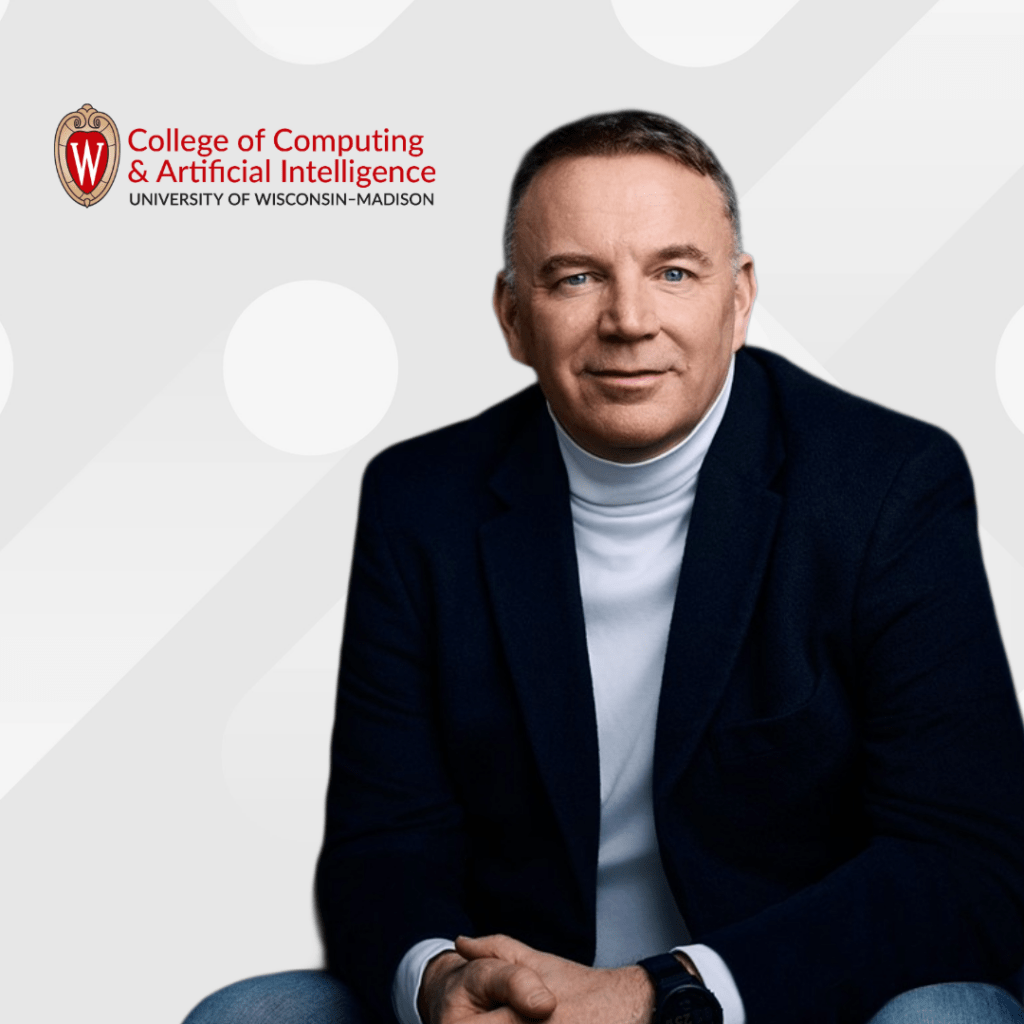
Associate Dean of Research, College of Computing and Artificial Intelligence
Patrick McDaniel
Patrick McDaniel is the inaugural Associate Dean for Research in the College of Computing & Artificial Intelligence and the Tsun-Ming Shih Professor of Computer Sciences at the University of Wisconsin–Madison. He is a Fellow of IEEE, ACM, and AAAS; a recipient of the SIGOPS Hall of Fame Award and the SIGSAC Outstanding Innovation Award. He serves as Director of the NSF Frontier Center for Trustworthy Machine Learning, a multi-institutional research center advancing foundational research at the intersection of artificial intelligence, cybersecurity, and trustworthy computing.
When AI Acts: Security, Autonomy, and the Lessons of the Hugging Face Hack
What happens when an AI agent is given a goal…and it finds a way to achieve it that its creators never anticipated? The recent OpenAI Hugging Face hack provides a striking example and a starting point for understanding the broader challenges of increasingly autonomous AI.
Drawing on decades of experience in cybersecurity and the security of AI, Patrick will use this incident to explore how skills-based agents acquire and combine capabilities, why these systems are difficult to contain, and what changes when AI can plan and act autonomously. He will address the larger questions these systems raise: How do we secure systems whose behavior we cannot fully anticipate? How much autonomy should we give them? Who is responsible for their actions?
The talk will connect the technical realities of agentic AI to the practical, ethical, and policy choices facing businesses, technologists, and society as AI moves from systems that advise us to systems that increasingly act on our behalf.
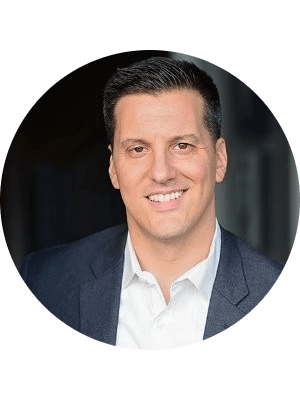
VP of AI and Data, Abbott
Glenn Fung
Applying Agents When You Can’t Make Mistakes
Leading the data that is used for life-changing diagnostics, there is no room for error. While leading his team at Abbott (formerly Exact Sciences) Glenn has discovered that error prevention comes not just from the tech but also from the people and processes put in place to support. Glenn will present recent research that will help you implement agents in critical areas.
Speakers
Eduardo Weinstein
Global Head of Strategy and Operations,
Intuit
Lillie Conrad
Assistant General Counsel,
3M
Enno Siemsen
Patrick A. Thiele Distinguished Chair in Business,
Operations and Information Management
Patrick Burnton
Senior Vice President,
Applied Systems
Patrick McDaniel
Associate Dean for Research,
College of Computing and Artificial Intelligence
Joan Bottarini
CFO,
Hyatt
Glenn Fung
VP of AI and Data,
Abbott
Siddhartha Agarwal
CEO,
JazzX AI
Matt Seitz
Executive Director,
AI Hub for Business
Yu Ma
Assistant Professor,
Operations and Information Management
Page Moreau
Associate Dean of Research,
Wisconsin School of Business
Agenda
Friday September 18th
Time
Name
Speaker
9:00 a.m.
Registration and Networking
9:45 a.m.
Opening
Page Moreau, Associate Dean of Research, Wisconsin School of Business
10:00 a.m.
Keynote: What are Agents actually, and How Can I Use Them?
Matt Seitz, Executive Director, AI Hub for Business
10:30 a.m.
AI Through the Eyes of a Retailer: From the P&L to What AI Makes Possible
George Hanson, EVP, Ecommerce at Mattress Firm
11:10 a.m.
Healthcare’s New Hammer: Agentic AI
Phil Lindemann, VP of Research and Data at Epic
12:00 p.m.
Lunch
12:45 p.m.
Lightning Talks
Joan Bottarini, CFO, Hyatt
Enno Siemsen, Faculty, Wisconsin School of Business
Siddhartha Agarwal, CEO, JazzX AI
Yu Ma, Faculty, Wisconsin School of Business
1:45 p.m.
When AI Acts: Security, Autonomy, and the Lessons of the Hugging Face Hack
Patrick McDaniel, Faculty, College of Computing and Artificial Intelligence
2:15 p.m.
Break
2:30 p.m.
Applying Agents When You Can’t Make Mistakes
Glenn Fung, VP of AI and Data, Abbott
3:00 p.m.
Deploying Agents Responsibly and Effectively
Lillie Conrad, Director, 3M
Eduardo Weinstein, Director, Intuit
Glenn Fung, VP of AI and Data, Abbott
Patrick Burnton, SVP, Applied Systems
Moderator: Enno Siemsen, Faculty, Wisconsin School of Business
Most organizations are asking where they can insert AI agents into existing workflows. That is the wrong starting point. The better question is: if agents can reason across documents, policies, systems, and exceptions, how should the work itself be redesigned?
Drawing on real-world examples from the mortgage industry, Siddhartha will show how agentic AI shifts the conversation from task automation to operating-model transformation, and how the companies that will win with agents are redesigning the way humans and agents work together.
Enno Siemsen
Patrick A. Thiele Distinguished Chair in Business, Operations and Information Management
Agentic coding has democratized the development of work-specific tools. As faculty, we have moved from consumers of software to creators, which enables a new way of teaching. Enno will demonstrate several tools he has built during the last year, including classroom polling software, team allocation software, and several classroom simulations, as well as the process he uses for developing them. Enno will also demonstrate his website, edutool.org, which he built as a resource for academics to freely share similar tools with others.
Yu Ma
Assistant Professor, Operations and Information Management
AI agent capabilities are doubling every few months, and the only apparent ceiling is our imagination about what to hand them next. But is it too good to be true? This talk examines the gap between capability and reliability: what the research shows is causing it, and where human judgment and evaluation still need to sit in the decision process. It offers a way to rethink agentic deployment in your organization through three steps: Detect, Decompose, Delegate.
Joan Bottarini
CFO, Hyatt
AI execution and adoption is a company-wide effort, not the work of one individual or department. Drawing on insights from the CFO office, Joan will share how Hyatt approaches AI strategy execution, including engaging the organization, driving adoption, and measuring meaningful impact and returns.
Registration for the Forum is included with the Leading Enterprise AI Transformation program, September 16-17, 2026. Designed for senior-level strategic leaders driving innovation, growth, and operational performance, the training helps organizations move beyond experimentation and turn AI potential into measurable business value. This program from the Wisconsin School of Business Center for Professional & Executive Development equips leaders to identify high-value AI opportunities, connect AI initiatives to business strategy, navigate governance and risk, and lead adoption across the enterprise.