Faculty
Preparing the next generation of leaders
- Thought leaders
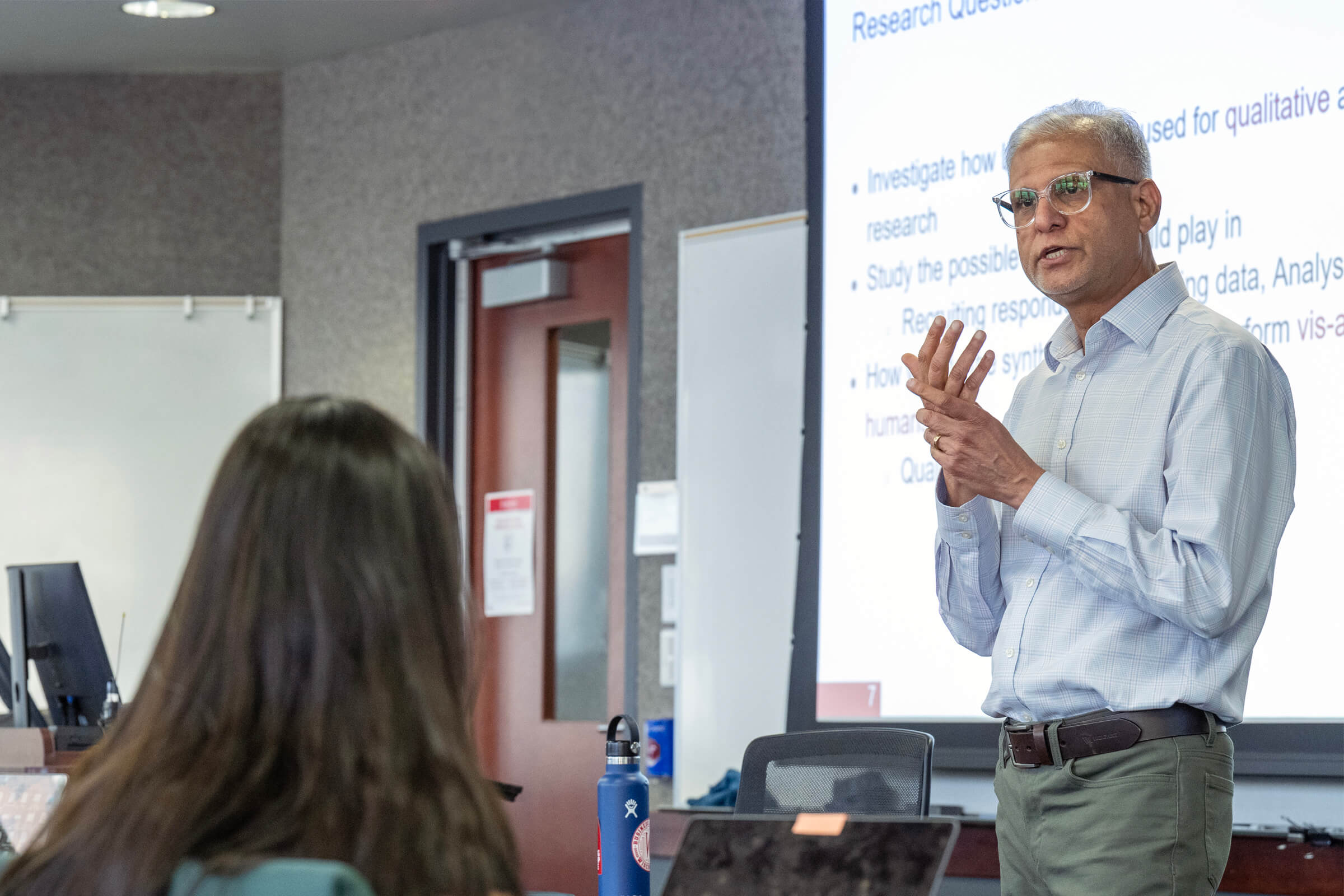
Top researchers combine their groundbreaking insights and industry experience to help you see the bigger picture. - Experts
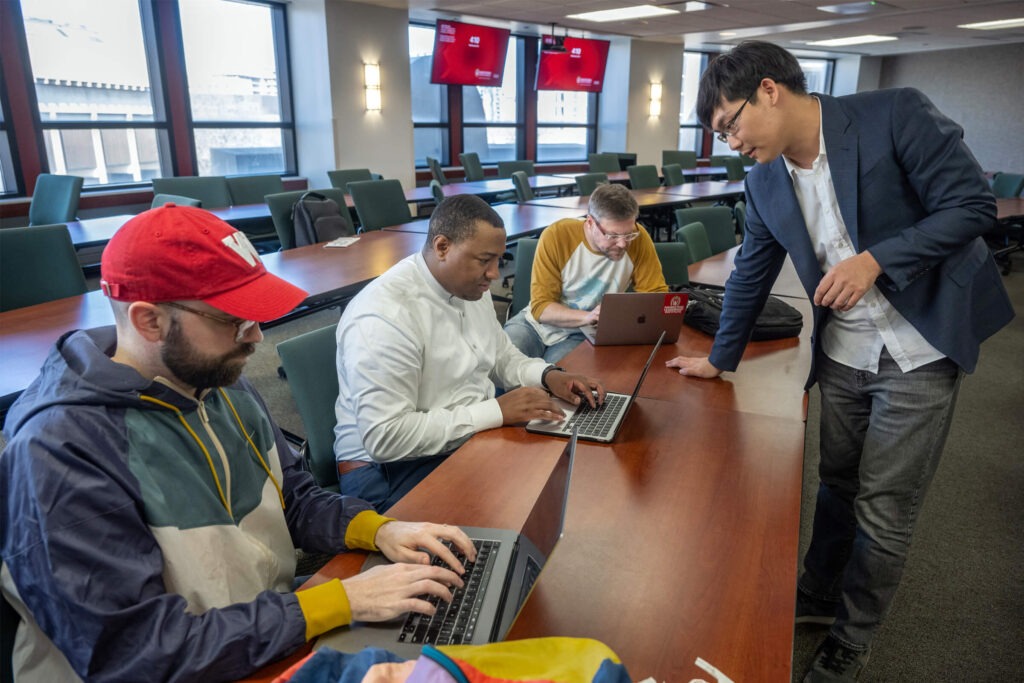
Learn from exceptional instructors who bring industry expertise and forward-thinking ideas to every class. - Connectors
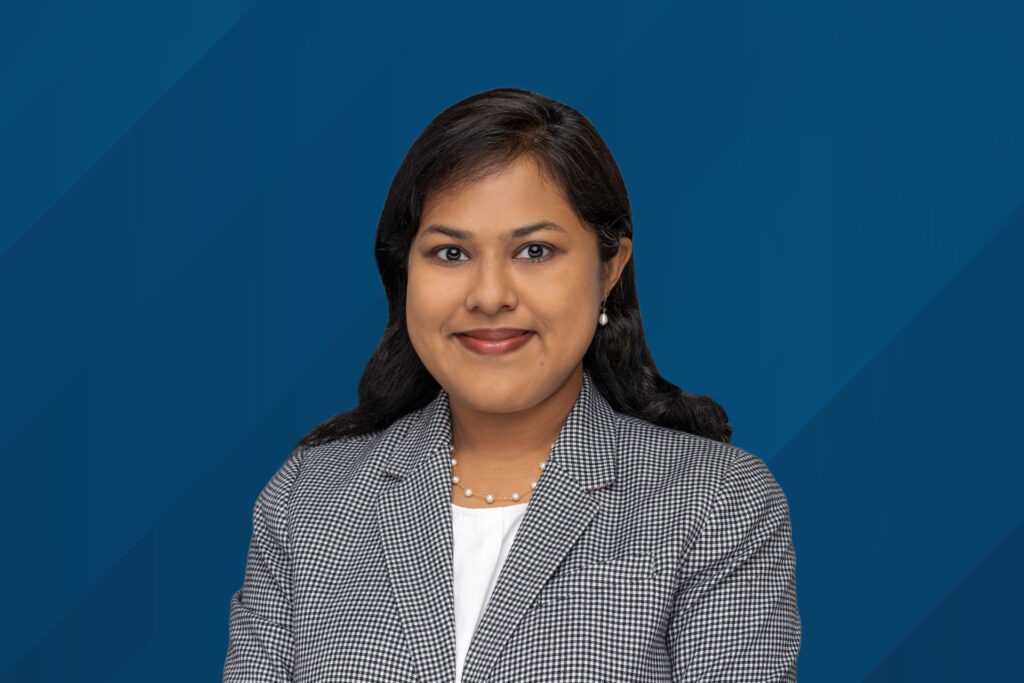
Your professors are part of your lifelong network. They know your goals and help connect you to opportunities.
Learn directly from industry experts
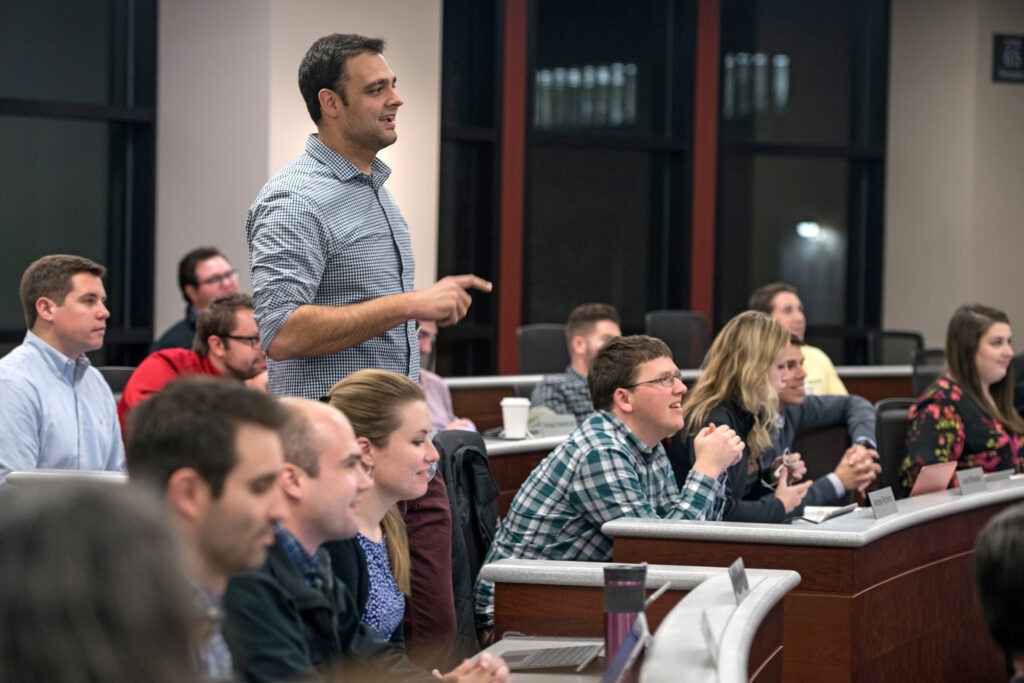
In addition to our faculty, you’ll learn from industry experts who have decades of applicable experience.

Alan Stoffer
Brand Management & Marketing Research and Insights
Alan Stoffer (MBA ’13) has more than 20 years of product marketing and brand campaign experience at Intuit, Waymo, Facebook, Procter & Gamble, General Mills, and elsewhere.

Andrea Sorenson
Corporate Finance & Investment Banking
Andrea Sorenson has more than 10 years of experience in student-centered program management at the Wisconsin School of Business and Wisconsin Army National Guard.

David Dwight
Product Management
David Dwight has more than 25 years of business development, project management, and management experience at startups and global companies.

Tanya Hubanks
Strategic Human Resource Management & General Management
Tanya Hubanks has more than 20 years of HR experience in corporations, banks, higher education, nonprofits, and more.

Jon Lulu
Real Estate
Jon Lulu has more than three decades of experience in real estate investment, research, and business development in private and public markets.

James Swanke
Risk Management and Insurance
James Swanke (BBA ’80, MBA ’81) retired as senior director at WTW in 2023 after more than four decades at the global advisory, broking, and solutions company.

Betsi Hill
Applied Security Analysis
Betsi Hill (BS ’87, MS ’89) has 35 years of experience in credit markets at Citigroup, Credit Suisse, AllianceBernstein, Wells Fargo, Liberty Mutual Insurance, and elsewhere.

Jake Dean
Supply Chain Management
Jake Dean (MBA ’09) has more than a decade of supply chain management experience at Cisco and Canadian Tire.
World-class insights with real-world impact
Our faculty serve as the leading voices and trusted authorities on today’s evolving business landscape.

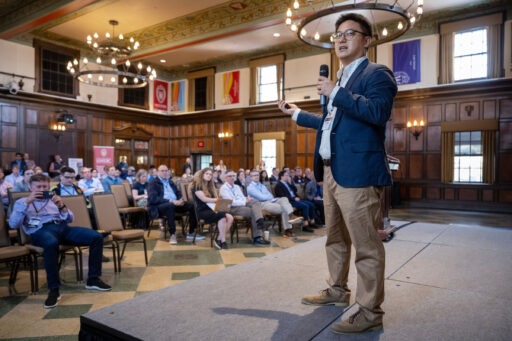
Will AI Allow Us to Have More and Better Ideas?
Powering innovation in AI through research
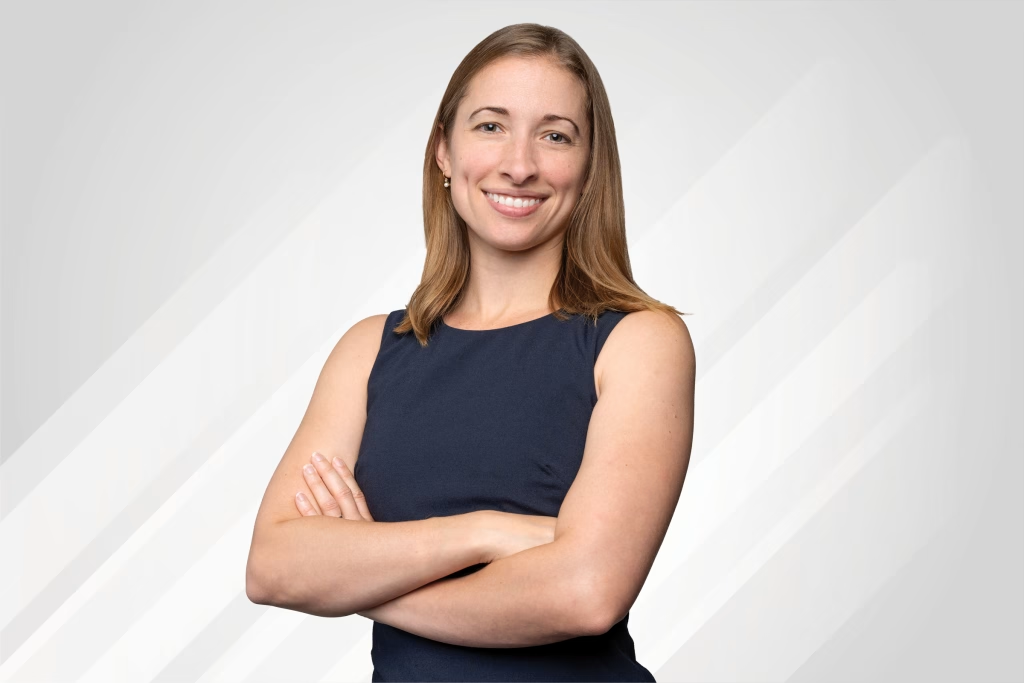
Using AI to improve and expand self-driving services
Featuring:
Kaitlin Daniels, Assistant Professor of Operations and Supply Chain Management
Listen to the full episode
Transcript
Kaitlin
Yeah. So first I think I should be clear about what I think AI means. I think of AI as any algorithm that makes it so that computers can perform as well as, or maybe even better than, humans at a task.
Katie Gaertner, Business Analytics Lecturer
Great.
Kaitlin
A particular version of AI that has been transforming how we think about supply chains is computer vision. So think of this in a production setting. We have had a long history of moving from manual tasks to automated tasks, and computer vision is one more step on that path. Some factories have even gone what they call “dark,” so not relying on humans to perform their tasks, instead primarily relying on robots. Dark because you don’t need to have the lights on if it’s only run by robots. Similarly, in warehousing, we see a move from humans navigating the aisles, picking items off of the shelf to robots bringing the shelves to human pickers who then assemble your order at, say, an Amazon warehouse. And then transportation, right? A move from humans driving the trucks to self-driving vehicles. And all of this use of computer vision has a few, I think, important implications. One is about the layout of space, how do we use our limited resources, especially in a physical space kind of setting? Dark factories can have a smaller footprint, which means they can actually be closer to their end consumers. Same idea with warehouses that have these robots that are moving shelves around. Kind of a similar idea when you think about transportation. Self-driving cars, the ideal version, they actually communicate with each other. And so an individual vehicle can take up less road space, because you need to leave less of a buffer between them, which is particularly important when we think about dense urban settings.
Katie
Sure, yeah.
Kaitlin
So I think that this is going to have, I mean, it is already having, but it is going to continue to have a huge impact on how we think about supply chains.
Katie
Yeah, those are some really interesting examples. It’s really got my brain thinking about oh, wow, all of the things that are possible and things that might change. Maybe you can share with me some examples of how AI is changing the way companies compete and pushing companies to adapt their traditional business models to a new landscape.
Kaitlin
Absolutely. So my favorite example of this is the one that I study, which is a ride-hailing marketplace. So you think you want on-demand transportation from point A to point B. Twenty years ago, you had to rely on a taxi, and that taxi was operating without any AI or any kind of sophistication. You would stand on the curb, and you would stick your hand out, and you would try to hail them down. Maybe you would call a dispatcher who then would send out some message on a radio, but we’re talking very low-tech kind of dispatch. Then about 10 years ago, Uber enters the scene. Uber enters the scene, and they introduce a new service that is really based on this idea of new technology, right? We all have smartphones, and so Uber is able to keep track of the location of where I, the passenger, am, where all of the network of drivers are so that they can use an algorithm to perform these matches between folks who want a ride and drivers who want to provide a ride, which makes the service much more appealing in a lot of settings. Makes it so that I, as the passenger, don’t have to wait as long. The driver doesn’t have to spend a bunch of time wandering around empty, not getting paid. And there are a bunch of downstream implications from this that I think a lot of people appreciate about the service: the fact that you have automatic payment, and rating system, etc.
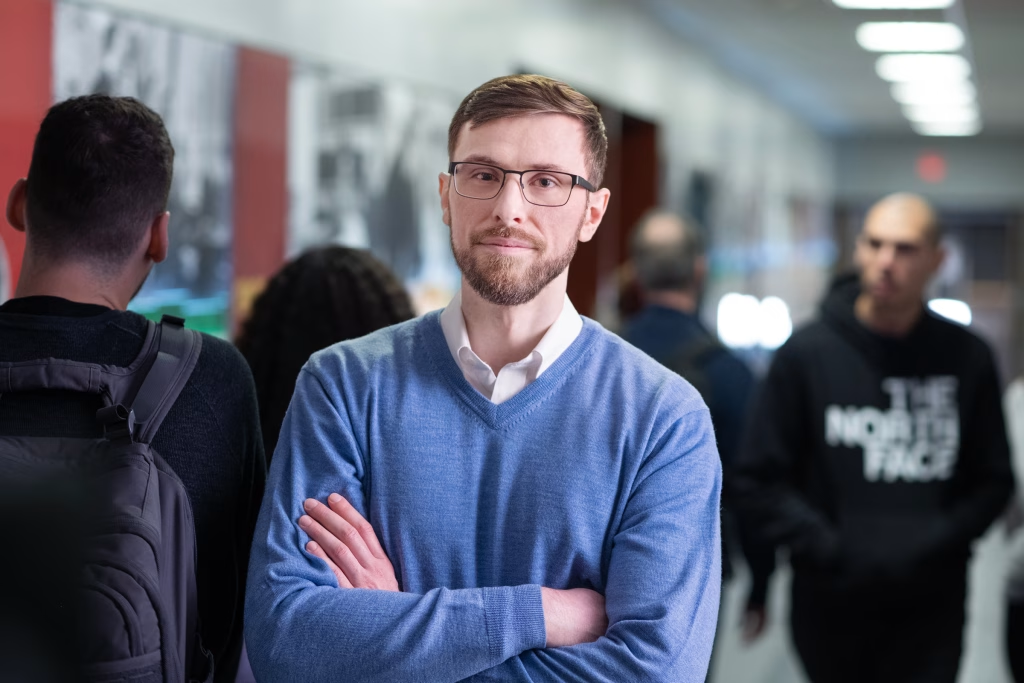
Using AI to personalize benefits and train employees
Featuring:
Jirs Meuris, Assistant Professor of Management and Human Resources
Listen to the full episode
Transcript
Katie Gaertner, Business Analytics Lecturer
How do you see AI being used in management and human resources?
Jirs
It’s an interesting time to kind of think about this, because there’s a lot of experimentation. And I think that’s true across any jobs and fields where people are trying to figure out: Where is the potential of this? I think there are three broad areas. One is think about these routine tasks, these day-to-day things that just take up time. And I think a lot of companies are starting to think of how can we use AI to take some of that load off of our HR function so that they can focus on some of the strategic things a bit more? A good example would be in benefits: Giving every employee personalized benefit recommendations. Something changes in your family; what is the best configuration of health insurance? Retirement? All these kinds of things using AI rather than having people in HR necessarily spending a lot of time on that. Answering questions. Responding to emails. You have these frequently asked questions, can you have AI build that up? So it’s these day-to-day things that HR professionals do that I think they’re trying to include AI to have professionals spend less time on that. So I think that’s one area. Then the second is around strategic decision-making, particularly when it comes to data and data analytics. I think AI is lowering the barrier for a lot of companies, particularly smaller companies who don’t just have a massive amount of people who work in data analytics, and it’s lowering the barrier to more advanced analytics. Thinking about turnover, for example, trying to predict who’s actually leaving? Why are people leaving? And doing these more advanced analytics on that that usually only was reserved for companies either who had a lot of people to do these, who had these skills, or who could hire McKinsey to come in and actually do that. But now these mid-sized, smaller companies get access to that because of AI. You can think about managing performance. We need to increase or try to optimize performance in our workplace. Well, can we develop personalized training and development programs for every employee depending on what they’re doing, what they’re working on, what their tasks are at that moment? That we can think about that. And then I think the third area, which is a little bit more controversial, is what I call managing people through AI. So think Uber for example. Who’s your manager? Well, it’s the AI. It’s a computer. It’s the app. And so I think right now that’s a little bit more reserved for these kinds of companies like Uber, you know, those kind of things, managing, getting managed through the app, through the computer. But you could imagine that maybe companies are going to start experimenting with that as well: How can we manage our employees using these AI functions? Which is a little bit more controversial, I think, but it’s another area that I see kind of AI starting to be used in HR.
Faculty in the news
-
Wisconsin Today/WPR
Social Security shortfall projected by end of 2032
Featured: Anita Mukherjee
June 15, 2026
-
WKOW Madison
How AI shaped learning for Wisconsin’s class of 2026 graduates
Featured: Min-Seok Pang
May 6, 2026
-
U.S. News
AI is a gold mine for spammers & scammers, but Google is using it as a tool to fight back
Featured: Matt Seitz
April 16, 2026
-
WKOW Madison
Universities of Wisconsin to embrace and expand on using AI
Featured: Min-Seok Pang
February 2, 2026
-
The New York Times
A Climate ‘Shock’ Is Eroding Some Home Values. New Data Shows How Much.
Featured: Philip Mulder
November 19, 2025
What we hear about our faculty

“The faculty bring a lot of experience into the room. Many have worked in the industry or continue to consult. They teach with a clear sense of what matters in today’s risk landscape, and they’re accessible outside of class. Their willingness to connect students with their networks is another way the program opens doors.”
Account Executive, Pathwork
Atlanta
Connect with us.
Get the latest infoGet the latest program info