
The Graaskamp Center Spring Board Conference in Chicago drew a capacity crowd of board members, alumni, industry leaders and real estate graduate students for connection, insight and forward-looking discussions. Attendees engaged across sessions and conversations focused on how capital, technology and evolving user demands are reshaping commercial real estate. Framed by the theme “Strategic Shifts: Investment Opportunities in a Changing Commercial Real Estate Landscape,” the program moved through the forces redefining the industry, from large-scale urban development to capital markets trends and emerging asset classes.
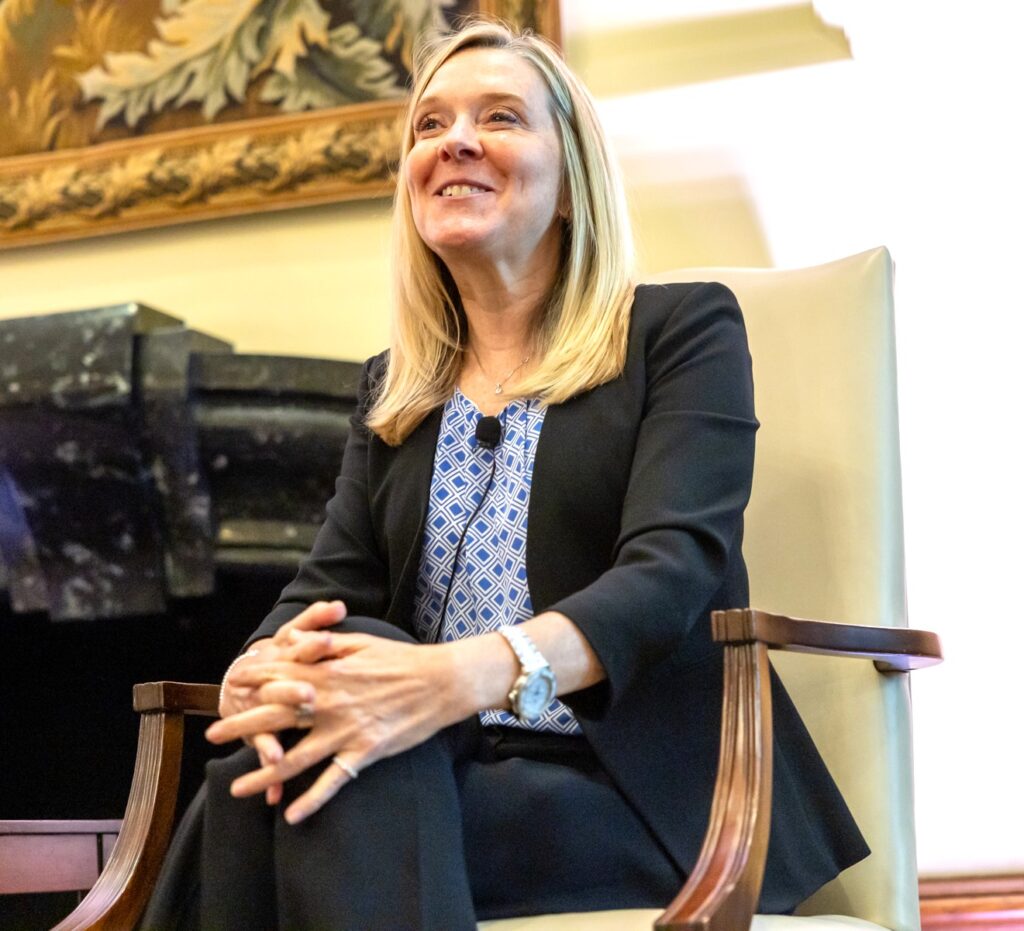
Dinner Keynote: Where Sports Meets Urban Strategy
The conference opened with keynote remarks from Chicago Bears Chief Operating Officer and EVP of Stadium Development Karen Murphy, who offered an inside look at the complexity behind modern stadium development. Moderated by Graaskamp Center Director Jacques Gordon, the conversation emphasized that today’s stadium projects extend far beyond sports venues, functioning instead as anchors for broader live-work-play districts. These developments require careful coordination across public and private stakeholders, significant capital planning and long-term urban integration strategies.
Murphy highlighted how risk, community impact and year-round activation now sit at the center of decision-making. This wholistic view reflectsa shift toward multipurpose venues integrated with experience-driven real estate. She also walked through the Bears’ evolving stadium options with notable candor and detail, giving attendees a behind-the-scenes perspective, though she kept the final destination under wraps, leaving the room both informed and curious about where the team will ultimately land.
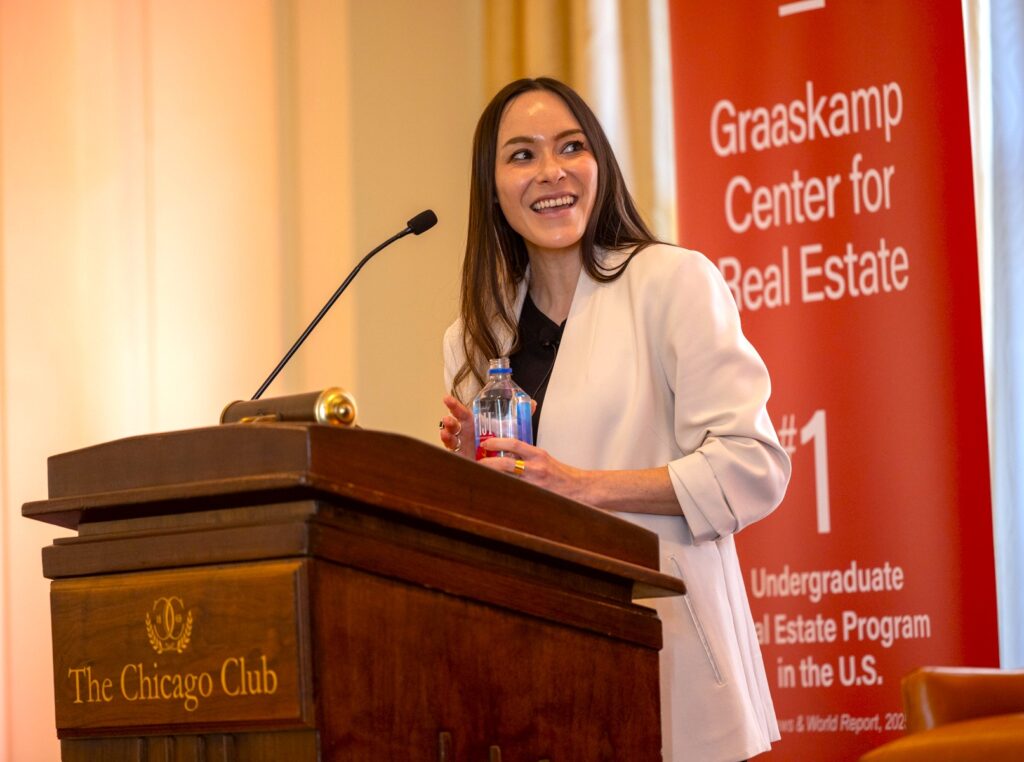
Morning Keynote: Where Capital Is Moving and Why
On Friday morning, Emi Adachi of Heitman delivered a global capital markets outlook that set the tone for the day. Her remarks underscored how capital is being reallocated across geographies and asset types in response to higher interest rates, shifting risk tolerance and evolving return expectations. Investors are increasingly focused on portfolio resilience, liquidity and long-term structural trends, with greater selectivity shaping where and how capital is deployed. The message was clear: capital is still active but moving with more discipline and precision.
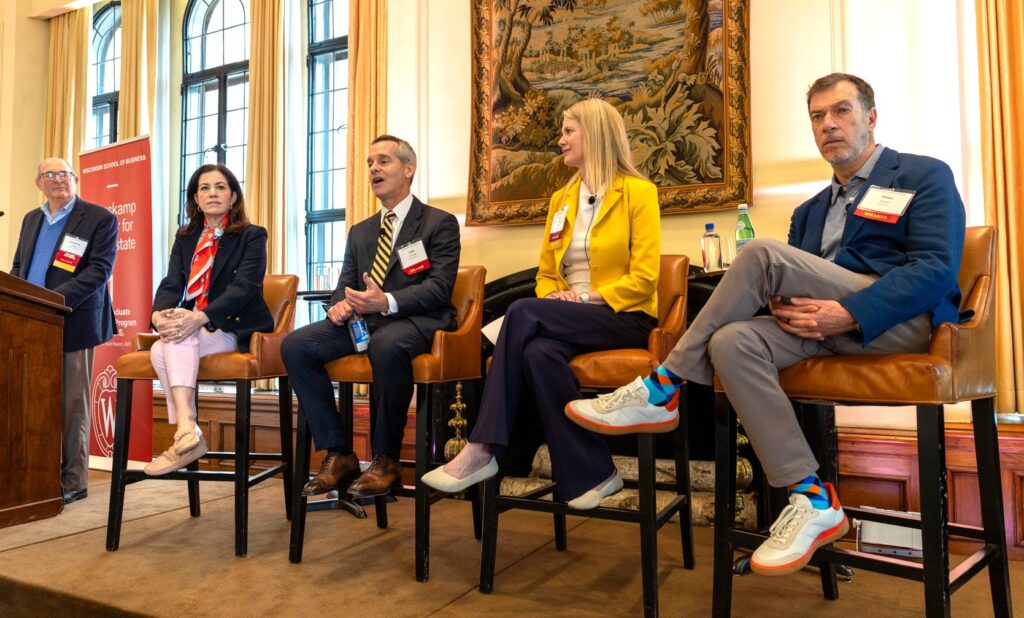
Session 1: Beyond the Big Four
The first panel explored how traditional property type distinctions are dissolving. As demographic changes and technology reshape how people live, work and spend time, real estate is being redefined around specialized use cases rather than legacy categories. Panelists noted growing investor allocations to alternative sectors and emphasized the importance of operational expertise, servicing diverse tenants, and flexible underwriting. In this environment, the definition of “core” continues to evolve, driven less by property type and more by durability of income and long-term demand drivers.
Session 2: Powering AI and Data Centers
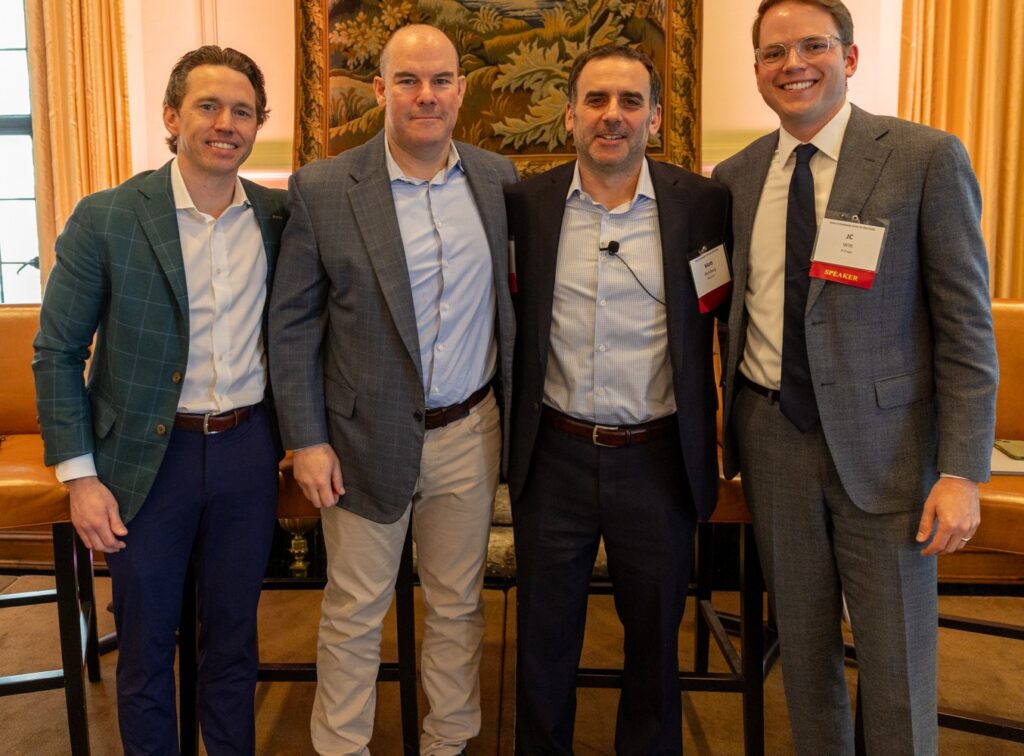
The conversation then turned to one of the most dynamic areas in the industry: data centers. As detailed in the session recap, artificial intelligence, cloud computing and digital infrastructure demand are rapidly positioning data centers as a foundational asset class. Panelists highlighted that power availability, not land, is now the primary constraint on development, fundamentally altering site selection and investment strategy. With supply struggling to keep pace and development timelines extending, investors must navigate higher upfront costs, infrastructure challenges and increasing global competition. The sector sits at the intersection of real estate, energy and technology, requiring a new lens on risk and return.
The conference concluded with a discussion on retail’s resurgence, pointing to strong fundamentals in well-located assets and the growing importance of experience-driven formats. From mixed-use developments to adaptive reuse, panelists emphasized that retail is regaining relevance within diversified portfolios. Tenants, owners, investors, and developers all contributed to this dynamic discussion. Together, the sessions painted a picture of an industry in transition, where flexibility, innovation and disciplined capital allocation are essential to navigating a rapidly changing landscape
Session 3: Retail Renaissance
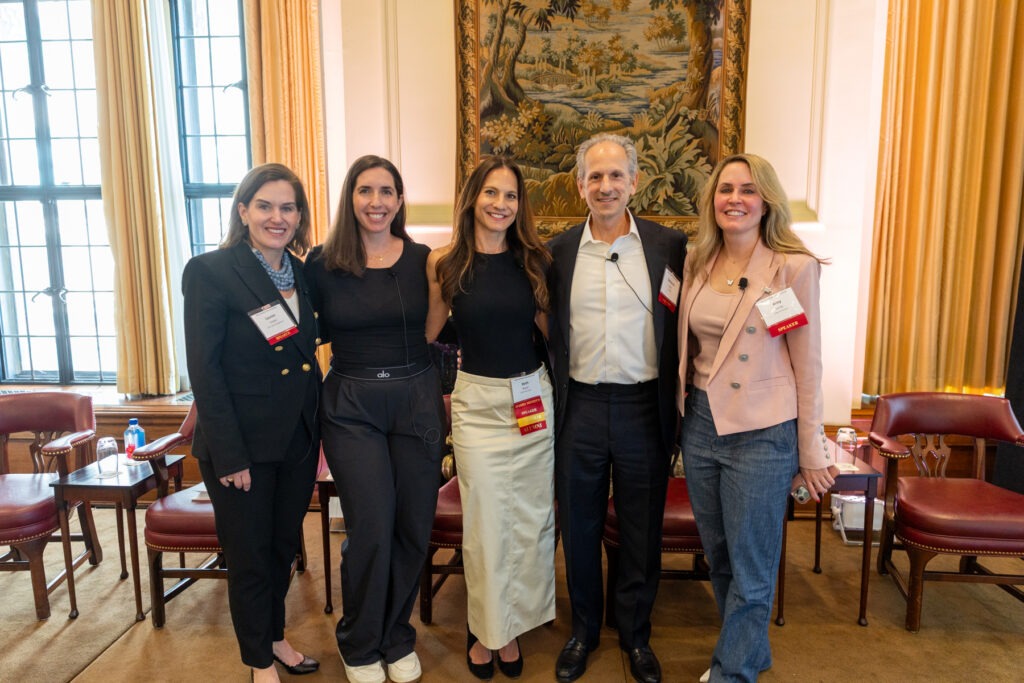
The conference concluded with a discussion on retail’s resurgence, pointing to strong fundamentals in well-located assets and the growing importance of experience-driven formats. From mixed-use developments to adaptive reuse, panelists emphasized that retail is regaining relevance within diversified portfolios. Tenants, owners, investors, and developers all contributed to this dynamic discussion.
Together, the sessions painted a picture of an industry in transition, where flexibility, innovation and disciplined capital allocation are essential to navigating a rapidly changing landscape.