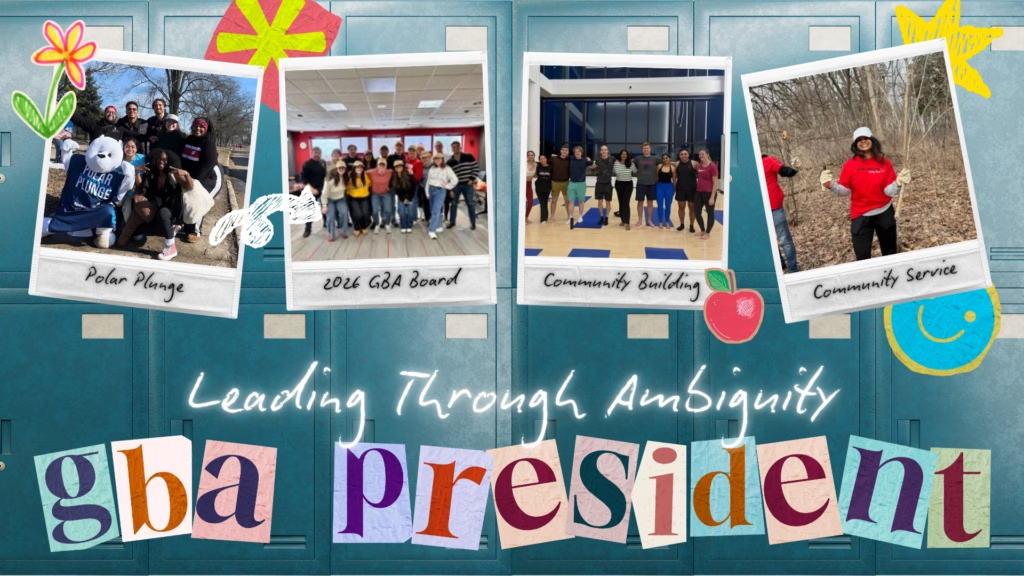

When I stepped onto campus for On, Wisconsin Weekend as an incoming MBA candidate, I was filled with excitement. Excitement at the prospect of being a student again, growing my career, but most importantly- to build a community of individuals with diverse backgrounds and experiences. Communication and Individualization are two of my top five Clifton Strengths. I thought to myself, how can I leverage these strengths while also placing myself in a stretch position where I learn? One of the first people I met when I visited campus, was the president of the Graduate Business Association. He spoke to the GBA being a community builder. From that moment on, I knew it was an organization I wanted to align myself with. I began that journey as first-year student representative for GBA, and I stepped into role of President in January 2026. Having served part of the previous semester on the board, I understood our strengths and areas of opportunity as an organization. This gave me a clear vision of what I wanted to accomplish during my tenure as president. Ultimately, I wanted GBA to expand from being just a social organization to a true connector: a space where people felt a sense of belonging as well as a place that added value to every person’s experience in the MBA program.
What I didn’t fully anticipate was how much of the role would be about navigating ambiguity, making trade-offs, and learning in real time.
Leadership Isn’t Always About Having All the Answers
Coming into the role, I felt a certain pressure to have everything figured out: to set direction, make decisions quickly, and lead with confidence. But very early on, I realized that leadership in this context wasn’t about having all the answers. It was about asking the right questions.
Some of the most important moments this semester came from listening: whether that was during feedback sessions, conversations with board members, or casual chats with classmates. Patterns started to emerge. Where people felt engaged, where they didn’t, and what they wanted from GBA.
That shift from assuming to listening changed how I approached almost every decision.
Balancing Vision with Execution
One of the biggest challenges this semester was balancing big-picture thinking with the reality of execution.
It’s easy to come up with ideas: new programming, stronger professional development, better ways to engage the broader student body. It’s much harder to implement those ideas in a way that’s sustainable, especially when everyone on the board is balancing academics, recruiting, and personal commitments.
I learned quickly that prioritization is everything. Not every idea needs to happen right now. In fact, trying to do too much can dilute impact.
Instead, we focused on a few key areas:
- Strengthening our core events and making them more intentional
- Beginning to integrate more professional and service-oriented programming
- Laying the groundwork for better communication and engagement
Progress in these areas may not always be visible immediately, but they are foundational to where GBA can go next.
The Importance of Structure
Another unexpected learning was how critical structure is to making an organization effective. Another unexpected learning was understanding how critical structure is. Without it, even the best intentions and the most passionate people struggle to move in the same direction.
Things like membership models, funding sources, and communication systems might seem operational, but they directly impact what an organization can deliver.
This semester, we started to question some of those structures:
- How do we define membership in a way that feels fair and valuable?
- How do we create more sustainable funding streams?
- How do we communicate in a way that reaches people?
We don’t have all the answers yet, but even starting those conversations felt like meaningful progress.
Leadership is a Team Sport
If there’s one thing this semester reinforced, it’s that leadership is never a solo effort.
The GBA Board is made up of people who care deeply about the student experience, and a lot of what we were able to accomplish came from their ideas, initiative, and willingness to step up.
My role wasn’t to do everything: it was to create clarity, remove roadblocks, and make sure we were moving in the same direction.
That shift in mindset: away from “doing” and toward “enabling” was one of the most important personal takeaways for me.
Looking Ahead
There’s still a lot of work to do.
We’re continuing to think about how GBA can:
- Better integrate MBA and master’s students
- Expand professional development opportunities
- Build stronger connections with the program office
- Create a more consistent and engaging experience across events
But if this semester taught me anything, it’s that meaningful change doesn’t happen all at once. It happens through small, intentional steps.
And often, it starts with simply paying attention.