
Real Estate Major
What will I learn as a real estate major?
Core principles
Learn to appraise property, broker transactions, and manage properties. Explore community planning, policy, and residential, commercial, and community development.
In-demand skills
Build analytical skills to evaluate deals, assess markets, and interpret data. Use tools for project and asset management, modeling, and analysis.
Advanced concepts
Be ready to assess feasibility, analyze financials and investments, forecast changes, and incorporate sustainable practices.
What’s the real estate major experience?
Average Starting Salary for Real Estate Majors
Employment Rate
Companies That Hire Wisconsin Real Estate Majors






What are popular real estate jobs?
- Acquisitions associate
- Development associate
- Financial analyst
- Real estate analyst
- Real estate valuation analyst
- Underwriting analyst
Common Real Estate Career Paths
Real estate investment is identifying, acquiring, and managing profitable real estate assets.
- Acquisition: Acquisition professionals identify and acquire commercial real estate. They work with investors to identify opportunities and negotiate deals.
- Asset management: Asset managers oversee the operation and performance of commercial real estate. They maximize asset value through leasing, management, and other strategies.
- Research: Analysts evaluate market data and provide insights on commercial real estate trends and opportunities. They help investors, developers, and other stakeholders find opportunities and make informed decisions.
- Portfolio management: Portfolio managers help define and take advantage of investment strategies and opportunities at the property level and across the entire investment portfolio. They are not only responsible for asset allocation, risk management, and transactions, but also deal directly with the land and structures on it.
Real estate development is the process of turning an idea into a reality by identifying sites, designing buildings, securing financing, managing construction, and then selling or leasing the final products.
- Development: Developers lead the process of bringing a new project from concept to completion—site selection, securing financing and permits, and managing construction.
- Construction: Construction professionals oversee the building process, from managing contractors to ensuring the project is completed on time and within budget.
- Project management: Project managers oversee the entire development process, from planning and design to construction and completion. They make sure the project is completed on time and within budget.
Real estate financing provides the capital needed to purchase or develop properties. Financial services firms lend capital to developers to build properties or to investors to purchase them. Investors can pool their resources in real estate investment trusts that manage portfolios of real estate assets on behalf of their investors.
- Lending: Lending professionals provide financing to investors and developers. This includes everything from traditional commercial mortgages to mezzanine financing (higher risk debt).
- Public capital markets: Professionals in this area analyze publicly traded commercial real estate companies and real estate investment trusts to make investment recommendations and decisions.
- Distressed real estate: Professionals in this area identify properties in financial distress, such as foreclosures or bankruptcies, and acquire them at a discount, and then turn them around and sell them for a profit.
Real estate brokerage involves helping clients buy, sell, or lease real estate. Brokers can represent a property, set of properties, or owners planning to sell or lease their property. Brokers working in debt or equity placement can be hired to connect development projects or either party involved in a real estate sale with investors.
- Debt and equity placement: Professionals in this area secure financing for real estate projects. They work with lenders, investors, and borrowers to identify the best financing options.
- Investment sales: Investment sales professionals help investors buy and sell commercial properties. They identify opportunities and negotiate deals.
- Leasing and tenant representatives: Leasing agents market properties on behalf of landlords and secure tenants. Tenant representatives work on behalf of tenants to find and secure space that meets their needs.
Real estate services support owners and investors outside of investment, development, financing, or brokerage. These services often include property management and real estate consultancy, appraisal, or valuation.
- Appraisal and valuation: Appraisers determine property value by analyzing market data, inspecting properties, and reviewing comparable properties and sales. Investors, lenders, and other stakeholders use their valuation reports.
- Property management: Property managers handle the daily operations of commercial properties. This includes leasing, maintenance, and tenant relations.
- Consulting/Advisory: Consultants and advisors provide strategic guidance on markets, investment strategy, and due diligence to investors and other stakeholders.
Certificates Commonly Paired With a Real Estate Major
For jobs such as real estate consultant, real estate development consultant, real estate finance consultant, real estate investment consultant, and real estate strategy consultant.
View the consulting certificateFor jobs such as property management data scientist, property valuation data scientist, real estate data analyst, real estate investment analyst, real estate market analyst, and real estate risk analyst.
View the data science certificateAlumni Are Trusted to Lead
Applied Learning Opportunities

Career treks
Visit between five and eight companies over two to three days in cities across the U.S. Past locations include Austin, Boston, and Chicago. Past employers include Avison Young, Colliers, Pearlmark, TA Realty, Wells Fargo, and 29th Street Capital. Twenty undergraduate business students go on each trek. The school covers the cost of lodging and part of your travel.
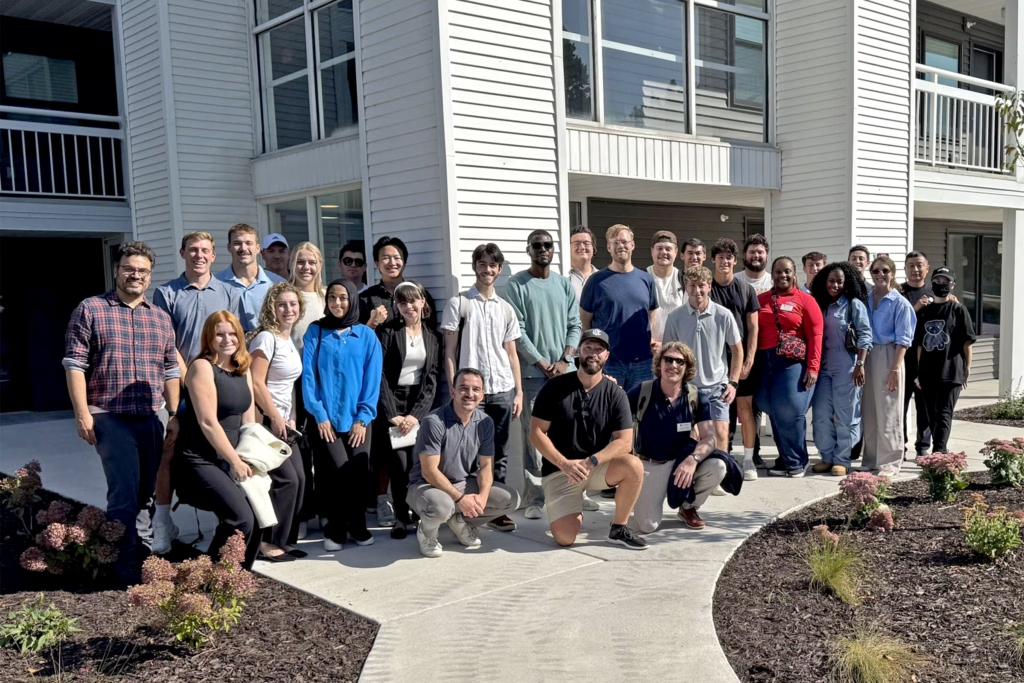
Job site visits
Meet with developers and project managers to learn about projects that address real community needs. During past site visits, students have gained insight into the complexities of affordable housing developments and seen how thoughtful redevelopment can improve housing, transit, and public parking.

Case competitions
Put your business skills to the test in national case competitions where you solve real-world challenges or case studies. Showcase your analytical, problem-solving, and presentation skills. Competitions have included the Real Estate Private Equity Club Case Competition, NAIOP Minnesota Chapter Development Case Competition, and Boston University Global Hospitality Real Estate Competition.

On-campus events
Attend employer coffee chats, speaker series, and workshops to grow your network and sharpen your skills. Students participate in annual events—including career fairs, industry events, and conferences—hosted by the Real Estate Club and Wisconsin Real Estate Alumni Association. These events provide direct access to recruiters, real estate professionals, and alumni.

Mentorship programs
Learn the commercial real estate business firsthand. In the Real Estate Mentor Program, you are matched with a Wisconsin real estate alum or Graaskamp Center Advisory Board member.
The Wisconsin Real Estate Alumni Association Student Mentorship Program also connects students with alumni. These programs are opportunities for you to explore career paths, grow your network, and gain industry knowledge and professional insight.
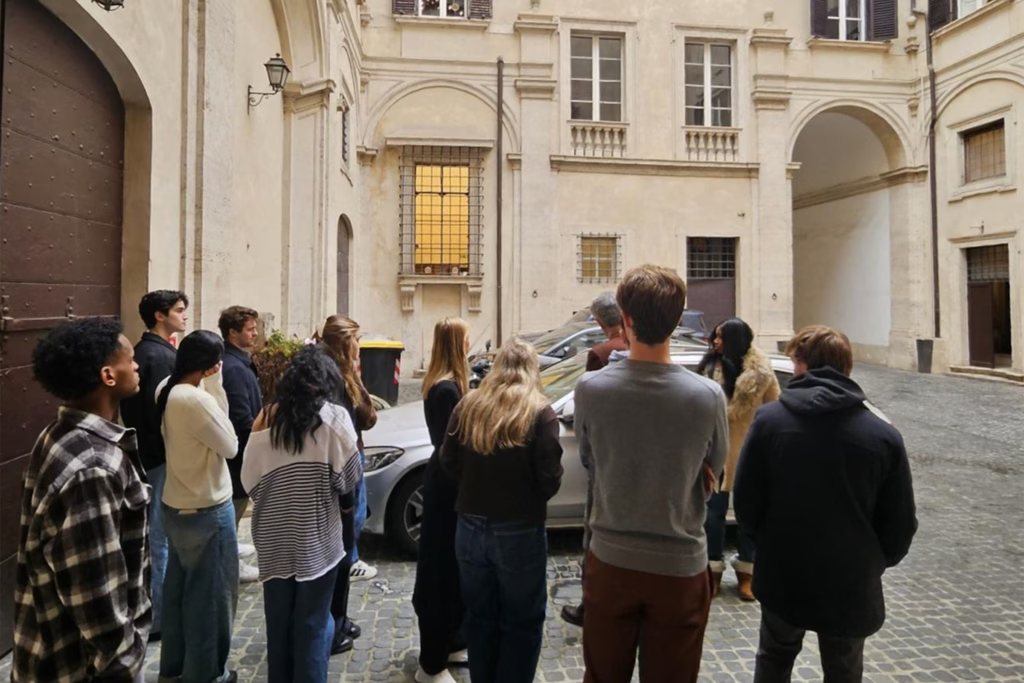
Global immersion
Complete your core real estate coursework while spending a semester abroad in Rome. Taught by UW–Madison faculty and enriched by local experts, UW Real Estate in Rome blends classroom learning with site visits to connect global development practices to real-world examples.
Real Estate Student Organizations
Popular Master’s Programs for Real Estate Majors

MS in Business Analytics
Excel in a data-driven business world. Harness the power of data to address complex questions and contribute strategic insights in any industry in this one-year program.

MS in Real Estate
Deepen your understanding of real estate through four tracks: commercial development, private equity, affordable and sustainable housing, and applied real estate investment. Focus your career in this one-year program.
Who can help me with my real estate major?


Pathway consultant