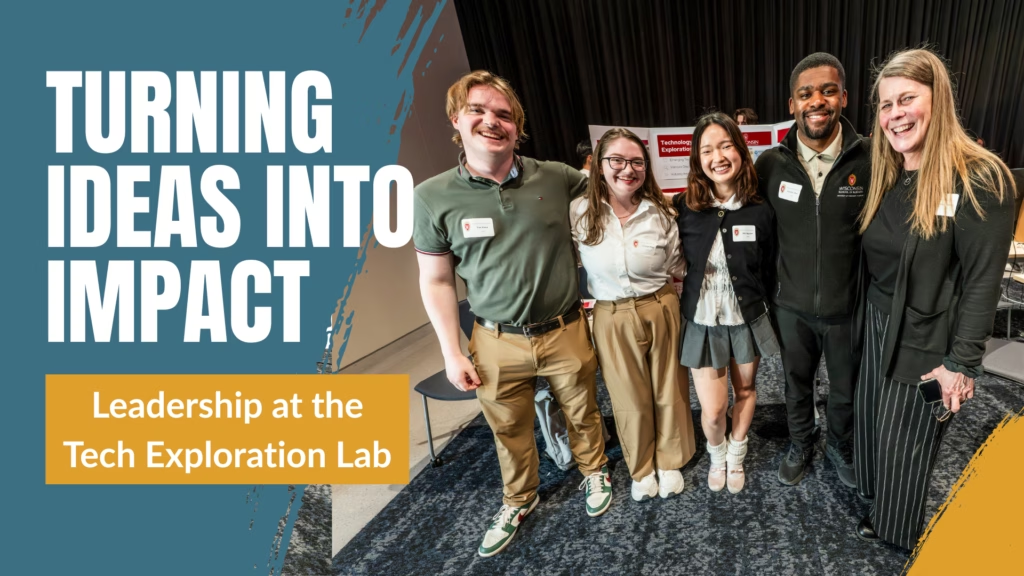

At the beginning of the semester, I was introduced to a new corner of the University of Wisconsin–Madison ecosystem, one that sits at the intersection of student creativity, emerging technology, and industry engagement. The Tech Exploration Lab (TEL) had recently completed its first functional semester on campus, under the leadership of Director Sandra Bradley, and the Lab was gaining momentum. As student interest surged, it became clear that sustaining and scaling TEL’s mission would require intentional operational support. That recognition opened the door for me, a first-year MBA student specializing in Strategic Human Resource Management, to step into a newly created role and apply human resources (HR)concepts beyond the classroom.
After early conversations with Sandra, we decided to create a position that did not previously exist: the Operations and Engagement Fellow. Alongside three other graduate fellows, I joined TEL at a moment of growth and experimentation. While much of my HR experience had previously been discussed hypothetically, through case studies, frameworks, and lectures, this role required action. I was tasked with helping transform what had been built “out of thin air” into something sustainable. TEL’s move into a larger space at 1403 University Ave. created both opportunity and urgency: students had ideas, energy, and ambition, and now the Lab needed systems to support them.
As TEL expanded, undergraduate students, mostly STEM majors, began using the Lab as a place to tackle real-world problems through innovative solutions. They arrived with bold ideas and a desire to make a meaningful impact, and my role as a fellow became twofold: support their work and design the infrastructure that allowed that work to thrive. While students focused on developing applications and solutions, meaningful labor happened behind the scenes. From an HR operations perspective, the Lab needed structure to function effectively. While this process is still ongoing, we agreed that clear documentation, consistent workflows, and shared understanding of responsibilities would be beneficial to all stakeholders in the lab.
One of my first priorities was organizing internal documents and creating a logical flow of work. This echoed a core lesson frequently emphasized in business school: small improvements in process design can significantly reduce friction across teams. Applying a “leave it better than you found it” mindset, I began codifying processes that had previously lived informally. I then developed standard operating procedures for the fellow roles, aiming to communicate not only what each position did, but why it mattered. These documents became foundational tools—clarifying expectations, reinforcing accountability, and enabling TEL to scale without losing coherence.
With those fundamentals in place, our work evolved toward higher-impact initiatives, and the experience I am most proud of. It came later in the semester with the development of a Pitch Workshop in preparation of TEL’s end-of-semester showcase, Demo Night. In the Wisconsin School of Business, we emphasize the importance of communicating clear and compelling value, especially to audiences unfamiliar with technical detail. Many TEL students had spent months immersed in the intricacies of their projects, yet struggled to articulate the broader need and impact of their work. Using principles of change management and audience-centered communication, I worked closely with students to refine their pitches and translate their technical brilliance into narratives that resonated.
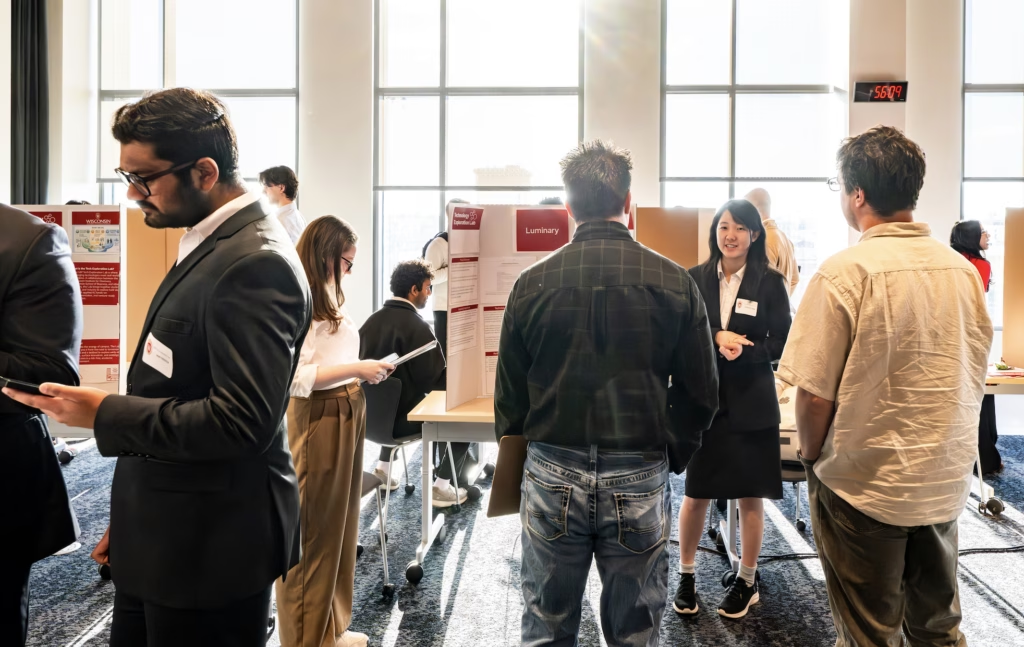
Planning Demo Night itself became an exercise in applied HR strategy and operations. From sourcing an appropriate venue to securing equipment and preparing for contingencies, I also recognized that our fellows were the most valuable resource of the lab. I delegated responsibilities across the team, assigning clear ownership while remaining available for support. This internal consulting approach, balancing structure and adaptability, allowed the event to run smoothly and reinforced our collective accountability.
Working in the technology space was new territory for me. My previous experience working on a U.S. Senate Campaign and being employed at The Walt Disney Company had not prepared me for the technical vernacular and engineering processes. Still, I found that the essence of HR work translated seamlessly. My role as an internal partner remained the same: listen carefully, build trust, and deliver value to my clients. In this context, my clients were students, fellow staff members, and Lab leadership.
Demo Night ultimately brought together months of preparation, collaboration, and learning. Watching students showcase their ideas to the broader community was deeply fulfilling. Several students shared that the Pitch Workshop had helped them communicate their value with greater confidence, a reminder that thoughtful support behind the scenes can have lasting impact. For me, TEL became a living laboratory where HR theory met practice, and where I discovered greater confidence not only in my professional capabilities, but in myself.
As I look ahead to my upcoming internship, I carry TEL with me as a defining experience of my MBA journey. The Lab gave me space to experiment, apply strategic HR concepts in real time, and learn through service. More than anything, it affirmed why I chose this path. I believe in the power of collaboration, the value of community, and possess a genuine desire to support innovative organizations on their pathway to success.