
Think about your first week at a new job. The nerves, the information overload, the quiet anxiety of not knowing what you don’t know. Maybe training went smoothly, but then real life started and it looked less like what you practiced. Maybe you had questions you were embarrassed to ask your supervisor. Maybe the unwritten rules of the workplace took months to figure out, or you never figured them out at all.
Now imagine that job involves navigating a 40-foot bus through city traffic, managing frustrated passengers, and doing it all on a grueling, non-traditional schedule, often alone.
That was the reality facing new operators at Madison Metro Transit. And this past semester, I had the privilege of being part of a team that helped work toward a solution that may address some of these challenges.
The Problem We Were Asked to Solve
In January, Bryan Mulrooney, the Chief Operating Officer of Madison Metro Transit, came to our MHR 776 capstone class with a real challenge: new bus operators were leaving at high rates before completing their first year. Through our research, we learned this is not necessarily uncommon. The data told a clear story: if an operator made it past year one, the likelihood of staying increased dramatically. The question was what was making that first year so difficult?
The challenges were multilayered. Operators face high-stakes onboarding, informal workplace practices that are not always documented, a gap between classroom training and real-world operations, and limited access to supervisory support during their shifts – primarily because of the nature of the job. When Bryan walked us through this, I felt the weight of it immediately. The idea that people were leaving not because the job was wrong for them, but because it was difficult to overcome these challenges during the early months, was both frustrating and motivating. It transformed the project into something that felt personally meaningful, not just academically valuable
Our Solution: The Madison Metro Mentorship Program
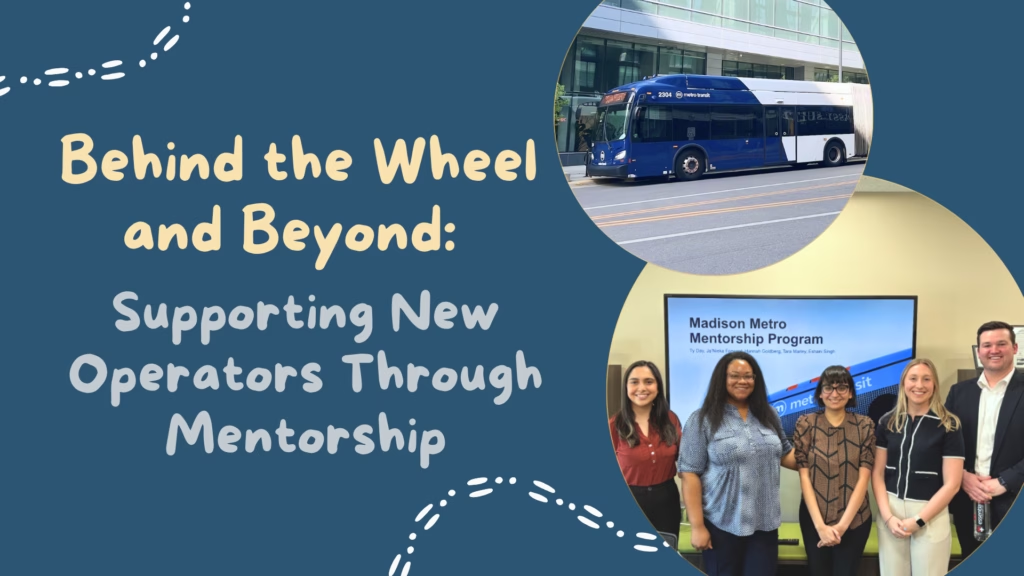
For the project, our HR Capstone team (Ty Day, Hannah Goldberg, Tara Marley, Ja’Nieka Forward, and I) completed research on mentorship programs and talked with other city transit organizations. At Bryan’s request, we then developed a mentorship program that paired new operators with experienced, high-performing colleagues during their first year. We intentionally ensured that this would not be a supervisory relationship. It would be a peer-based, supportive connection designed to give new operators someone to turn to who had navigated the same learning curve and could share the type of practical, candid guidance no training manual can fully capture.
We built a 12-month curriculum from scratch, covering everything from trust-building in month one to stress management, customer interaction, and long-term career reflection by year’s end. The goal was for mentees to have such a positive experience that they would one day choose to become mentors themselves, creating a self-sustaining culture of support within Metro Transit.
The Work Behind the Work
While designing this mentorship program, something that I did not anticipate was just how interconnected every decision would be. You cannot design mentor training without first defining mentor expectations. You cannot define expectations without understanding the program workflow. You cannot build the workflow without understanding union and operational constraints. Progress in one area would consistently surface new questions in another.
As a result of this challenge, our team made the deliberate choice to do most of our work together, in the same room. We held long in-person working sessions where we brainstormed collectively and ensured all deliverables were cohesive. There were times we ordered pizza and pushed through together, which honestly made the work feel much more manageable.
By the time we completed, we had produced over 20 deliverables, including a full implementation guide, a 12-month mentor curriculum, mentor application and interview materials, training guides, evaluation surveys, FAQ documents, and executive briefing materials. No deliverable was finalized without Bryan’s review and approval, which kept the program grounded in Metro Transit’s specific context throughout.
The Presentation and What It Reinforced
On April 22, we presented the completed Madison Metro Mentorship Program to Metro Transit’s leadership team. The room was warm and enthusiastic. They responded positively and expressed genuine interest in implementing the program (or at least a meaningful iteration of it) once they secured the necessary stakeholder buy-in. Hearing that felt meaningful, not because it was a perfect ending, but because it was a realistic one. Real programs require alignment, budget conversations, and time. We knew that going in and I respect that Metro Transit is approaching implementation thoughtfully.
What stayed with me after that presentation was less about the deliverables and more about what the project reaffirmed for me personally. Designing something that could have a direct, tangible impact on how confident and supported an employee feels in their first year is the kind of work I want to do. This project reinforced my passion for early careers, talent development, and employee experience, and showed me how HR, when approached with both intentionality and genuine care, can be a meaningful driver of business outcomes, not just a support function.
If you are considering the Wisconsin School of Business MBA, I cannot speak highly enough of the capstone experience. Getting to work with a real client, navigate real constraints, and building something that could be used by real employees is an irreplaceable form of learning. I am genuinely grateful to our SHR Center leaders for creating the conditions that made this project possible.
Starting a new job is never easy. But with the right structures and human resources professionals who genuinely care, it can be a whole lot better. That is what I hope the Madison Metro Mentorship Program becomes for the operators who need it most.