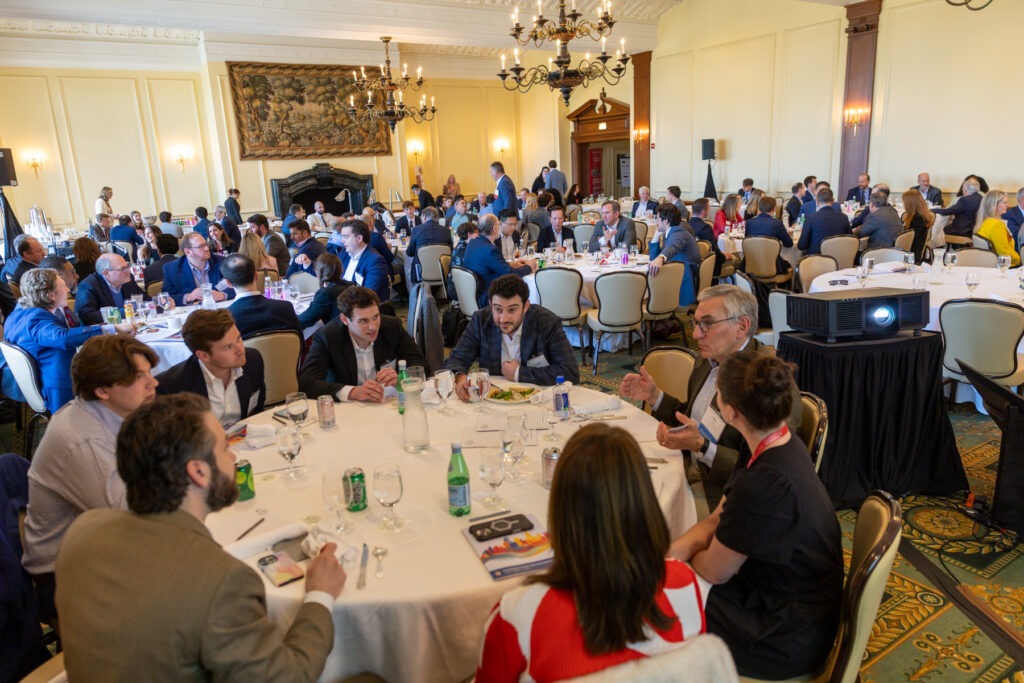
This year’s Graaskamp Center Spring Board Conference introduced a new “Table Topics” lunch session designed to spark conversation and connection. The goal was simple: encourage attendees to exchange ideas on some of the most pressing and fast-evolving issues in real estate today. The result was a dialogue across sectors and perspectives with insights captured by our graduate student note takers and reflected in the themes below:
Retail Renaissance
Retail fundamentals continue to strengthen as consumer preferences shift toward experience-driven environments centered on hospitality, entertainment and social interaction. Grocery-anchored retail remains one of the most stable and attractive formats, with the quality and positioning of the anchor tenant significantly influencing co-tenancy demand, customer traffic and long-term asset performance. Strong grocery anchors are increasingly attracting complementary higher-end retailers and service-oriented tenants.
Investor sentiment toward retail has improved considerably, with large-format retail assets drawing renewed institutional interest and competitive bidding activity. Mixed-use retail environments, private social clubs and hospitality-oriented concepts continue to blur the lines between retail, office and entertainment uses. Omnichannel retail strategies are now viewed as standard operating practice, while landlords are placing greater emphasis on tenant curation and merchandising strategy to create differentiated consumer experiences.
AI in the Real Estate Workplace
Artificial intelligence adoption continues to expand across commercial real estate operations, particularly in data aggregation, workflow integration, leasing analysis, market research, document review and underwriting support. Firms are increasingly incorporating AI into day-to-day decision-making processes to improve efficiency, consistency and speed. Some organizations are also developing internal databases and platforms to strengthen research capabilities and competitive positioning.
At the same time, firms remain cautious regarding reliability, governance and overdependence on AI-generated outputs. Core real estate skills, judgment and relationship management continue to be viewed as essential capabilities that cannot be replaced by automation. While certain remote and administrative roles may face greater automation pressure over time, firms still expect to invest in junior talent development to support long-term organizational growth and succession planning.
Sports & Real Estate
Sports venues continue evolving into broader mixed-use development anchors that drive surrounding economic activity and neighborhood investment. Stadium and arena developments are increasingly integrated with residential, hospitality, retail and entertainment components designed to activate districts year-round rather than solely during sporting events.

Public-private financing structures remain a central consideration, particularly regarding the allocation of development risk and the long-term distribution of value created through surrounding real estate appreciation. Corporate naming rights agreements and long-term franchise leases were also identified as important factors influencing asset valuation, financing structures and investment stability.
Work From Home / Office Market Trends
Office market performance continues to diverge significantly between high-quality, well-located assets and commodity office product facing long-term occupancy challenges. Buildings with a lot of amenities in strong locations remain relatively resilient, while weaker office assets increasingly require case-by-case evaluation and may face prolonged periods of underinvestment and declining utilization. Comparisons were drawn to the long-term evolution of underperforming retail malls where ownership groups continue operations despite weakened fundamentals and limited capital reinvestment.
Emerging concepts such as tokenization and fractional ownership platforms may expand retail investor participation in commercial real estate over time. Participants also noted that currently favored sectors, including data centers, are not immune to unforeseen structural disruptions, reinforcing the importance of disciplined underwriting and long-term risk assessment across all property types.
The “Living” Sector: Multifamily and Residential Trends
Housing affordability challenges continue to be driven in large part by insufficient supply and development bottlenecks. In some markets, staffing shortages within municipal approval agencies are slowing project approvals and delaying occupancy of completed affordable housing units. At the same time, luxury multifamily product has generally continued to lease successfully despite broader affordability concerns.
Rent control policies were viewed by many participants as limiting institutional capital investment in affected markets and reducing incentives for new development. Additional focus centered on the operational and scalability challenges associated with build-to-rent housing and manufactured housing communities, particularly from lending, monitoring and asset management perspectives.
Health + Wellness in CRE

Health, wellness and lifestyle considerations are playing an increasingly important role in real estate planning and design. Demand continues to grow for walkable communities, access to nature and environments that support both physical and mental wellbeing. Development strategies are increasingly centered on creating community-oriented experiences rather than simply delivering physical buildings.
Differences between U.S. and European development patterns highlighted varying approaches to density, transportation, housing preferences and quality-of-life priorities. Younger demographics continue driving demand for “live, work, play” environments and more integrated urban experiences, while transit access and infrastructure quality remain critical differentiators in long-term livability and economic competitiveness.
Capital Raising & Investor Flows
Fundraising conditions have begun to stabilize, though recovery remains uneven across strategies and manager types. Core open-end funds continue facing pressure from redemption activity, while niche and alternative investment strategies have generally demonstrated greater resilience. Valuation stabilization and selective asset sales have helped improve liquidity conditions and reduce redemption backlogs.
Fee compression remains significant across the industry, contributing to increased demand for co-investment structures and alternative liquidity solutions such as secondary market transactions. Institutional capital continues concentrating around either large-scale platforms or highly specialized managers with differentiated expertise. Launching new investment funds remains challenging due to lengthy fundraising cycles, regulatory requirements and increasing barriers to attracting institutional limited partner capital.
Affordable Housing
Affordable housing development continues to depend heavily on layered financing structures involving nonprofit organizations, for-profit developers, CRA-driven bank investment and public-sector allocation processes. Qualified Allocation Plans (QAPs) and local housing authorities remain highly influential in determining project feasibility and capital allocation outcomes.
High construction costs, policy rigidity and complex tenant approval systems continue creating barriers to project execution and housing accessibility. Strong municipal partnerships and alignment between general partners and development stakeholders were identified as important factors in managing entitlement risks and minimizing value engineering pressures. Participants also noted ongoing gaps in systems designed to help tenants identify and secure available affordable housing opportunities.