
Information Systems Major
What will I learn as an information systems major?
Core principles
Learn to manage data, build information models, and use technology to solve problems. Understand business operations and how technology supports strategies.
In-demand skills
Develop technical and business skills to drive growth, including database management, systems analysis, programming, design, and project management.
Advanced concepts
Be prepared to lead the design, development, and management of information systems that support an organization’s operations, decision-making, and planning.
What’s the information systems major experience?



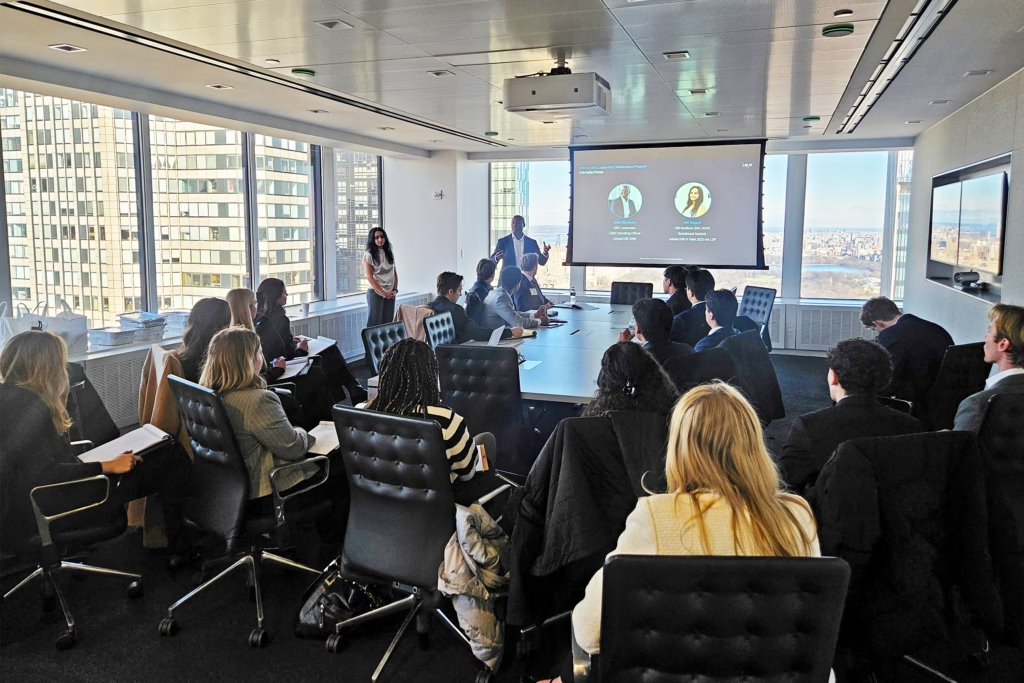
Top left and top right: Undergraduate business students participate in a career trek to New York where they visit several companies and network with employers. During the trek, students visited Carlyle, a global investment management firm, and saw the famous Charging Bull near the New York Stock Exchange in New York City’s Financial District. Bottom: Two students network during the Information Systems Case Competition hosted by Church Mutual Insurance at Grainger Hall on campus. Nearly 40 students across 10 teams explored the intersection of data, technology, and insurance. Photo credits: Ashley Wilcox/WSB and Lamont Johnson Jr./WSB
Top left and bottom left: Undergraduate business students participate in a career trek to New York where they visit several companies and network with employers. During the trek, students visited Carlyle, a global investment management firm, and saw the famous Charging Bull near the New York Stock Exchange in New York City’s Financial District. Right: Two students network during the Information Systems Case Competition hosted by Church Mutual Insurance at Grainger Hall on campus. Nearly 40 students across 10 teams explored the intersection of data, technology, and insurance. Photo credits: Ashley Wilcox/WSB and Lamont Johnson Jr./WSB
Average Starting Salary for Information Systems Majors
Employment Rate
Companies That Hire Wisconsin Information Systems Majors






What are popular information systems jobs?
- Business analyst
- Business process management specialist
- Business systems developer
- Database administrator
- Information technology analyst
- Project manager
- Systems analyst
- Technical services manager
Common Information Systems Career Paths
IT business analysts: These business analysts act as a bridge between business users and technical teams. They work with users to understand business processes and reporting needs. Then they translate those needs into technical specifications and solutions.
IT business analysts help with system design, validation, and training. They also assess the impact of software updates, system upgrades, and patches. They may work on multiple systems and decide how to integrate them to improve efficiency and business value. IT business analysts provide data and insights on costs and the potential return on investments for IT-related projects.
Computer programmers: Programmers develop and test computer programs that solve problems. They also create documentation for programs they write and work with other team members to build and maintain large-scale software systems.
Technology consultants: These consultants help organizations use information technology to meet their business objectives. Technology consultants often estimate, manage, implement, deploy, and administer IT systems for their clients. Their work often includes areas such as enterprise reporting platforms, cloud, and systems design and implementation.
Product managers: Product managers combine business strategy, design knowledge, and customer needs to create products that are relevant, feasible, and valuable. They make sure the product meets customer needs and business goals while maximizing the return on investment.
Project managers: Project managers work with clients throughout an entire project, from planning through implementation and delivery. They define the scope of client engagements, allocate resources, and choose the best approaches to completing tasks. Project managers collaborate closely with clients, developers, and other departments and must be able to meet deadlines. They may design performance and expense comparisons. Above all, project managers are responsible for ensuring the accuracy and quality of client deliverables.
Professionals working in systems analysis and design roles use computer programming and business skills to plan, develop, test, and document programs. They also evaluate new or updated programs to determine cost, time requirements, feasibility, and compatibility with the organization’s current system.
Database analysts: These analysts gather data to create databases. They design database structures so information can be stored and retrieved easily. Database analysts maintain and update databases as needed for businesses.
Certificates Commonly Paired With an Information Systems Major
For jobs such as cloud solutions architect, database administrator, enterprise architect, IT consultant, software engineer, and systems architect.
View the computer science certificateFor jobs such as business systems consultant, cloud consultant, digital transformation consultant, enterprise resource planning consultant, IT consultant, and IT project manager.
View the consulting certificateFor jobs such as business intelligence developer, data architect, data engineer, data scientist, information systems analyst, and machine learning engineer.
View the data science certificateFor jobs such as manufacturing IT systems manager, production IT support specialist, and smart factory specialist.
View the manufacturing engineering certificateFor jobs such as digital media specialist, IT communications specialist, public relations specialist, and technology educator.
View the science communication certificateApplied Learning Opportunities

Job shadows
Experience a company’s day-to-day operations, tour facilities, network, and more through half- or full-day site visits. Past employer participants include Marcus Corp. and Spaulding Ridge. Employers host between five and 20 undergraduate business students at a time.

Case competitions
Put your business skills to the test in national case competitions where you solve real-world challenges or case studies. Showcase your analytical, problem-solving, and presentation skills. Competitions have been sponsored by Church Mutual Insurance and the Information Systems Society.

On-campus events
Attend employer coffee chats, industry panels, and workshops to grow your network and sharpen your skills. Previous events include mentorship opportunities, club socials, and lunch and learns with industry professionals. Direct access to recruiters and alumni opens doors to internships and full-time positions.
Career treks
Visit between five and eight companies over two to three days in cities across the U.S. Past locations include Chicago and New York. Past employers include Barclays, Google, JPMorgan Chase, Loreal, Nomura, Ovative Group, PwC, and Webull Financial. Twenty undergraduate business students go on each trek. The school covers the cost of lodging and part of your travel.
Information Systems Student Organizations
Popular Master’s Programs for Information Systems Majors

MS in Business Analytics
Excel in a data-driven business world. Harness the power of data to address complex questions and contribute strategic insights in any industry in this one-year program.

MS in Supply Chain Management
Have a dynamic, exciting career in supply chain. Learn to lead the high-powered systems that make businesses thrive in this one-year program.
Who can help me with my information systems major?

Pathway consultant