
As we walked into Grainger Hall on a crisp fall morning, there was a sense of anticipation in the air. My classmates and I eagerly filled up on coffee and pastries, exchanging guesses about what our first Wisconsin School of Business case competition might entail. We had just wrapped up finals and were mentally brushing up on accounting concepts we thought might come in handy. As the organizers introduced consulting frameworks and outlined the day’s goals, one thing quickly became clear: we would have to get comfortable making decisions in the face of ambiguity. Just a few weeks earlier, I had been asked in an interview, “Tell me about a time when you had to make a recommendation with incomplete information.” I gave my best example then, but little did I know I’d soon gain first-hand experience doing exactly that.
Before receiving the case prompt, we were given a crash course on how to approach any business problem. The facilitators emphasized the importance of identifying the core problem, conducting structured analysis, selecting the right decision frameworks, engaging in meaningful team discussion, and, of course, delivering a clear and compelling presentation. We were also challenged to reflect on our own experiences — when was the last time we identified a problem and worked collaboratively toward a solution? It was a simple question, but it grounded the exercise in real-world decision-making. A key part of this prep session focused on cognitive biases. How do we ensure that overconfidence, confirmation bias, anchoring, and the status quo bias don’t quietly shape our conclusions? This reminder struck me — strategic decision-making isn’t just about frameworks; it’s about self-awareness and actively checking the assumptions that can cloud judgment.
Once we were given the details of the case, we had the opportunity to ask the representative from FreshFin any clarifying questions to help us arrive at a solution. Coming from a human resources background, my mind immediately went to workforce constraints and the HR implications of the problem at hand. However, as I listened to the questions from my classmates, I arrived at my second significant takeaway of the day — cross-functional collaboration can widen your personal lens and help you see perspectives you may not have considered before. As I heard questions about marketing, finance, and technology constraints, the story that had started forming in my head became more holistic. What began as a workforce problem was suddenly part of a much more complex, interconnected picture.
After this group session, we were released to work with our teams. My team consisted of five talented individuals who each brought unique and diverse perspectives to the table. There was a member from each specialization — real estate, marketing, corporate finance, technology strategy, and of course, HR. We immediately decided to put the advice we’d received into practice and work backwards: define the hypothesis first and then build our case to support it.
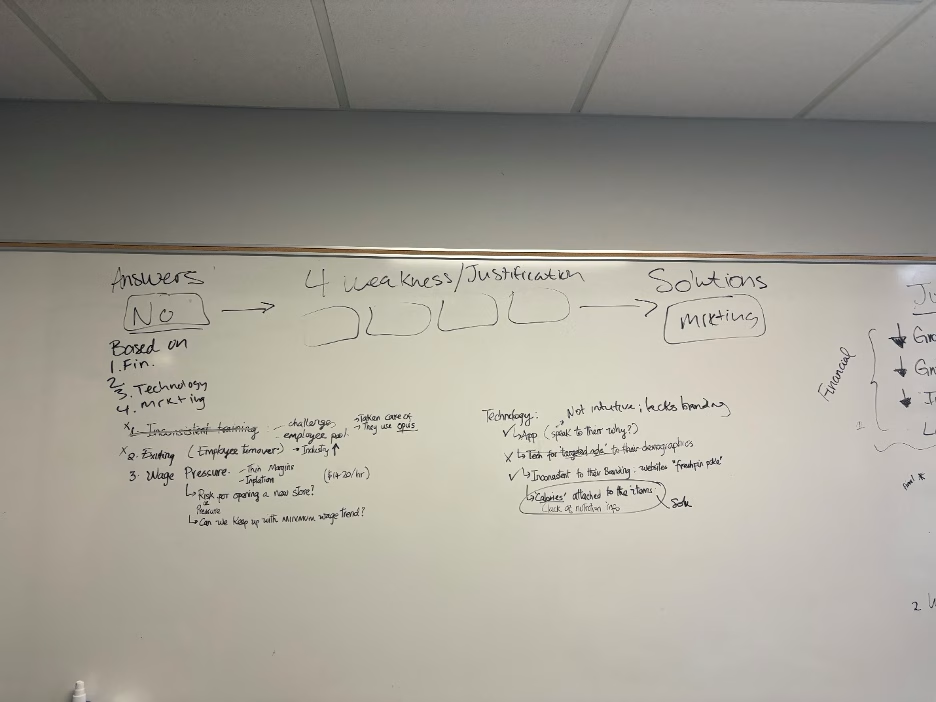
It wasn’t long before we hit our first disagreement. In that moment, all the teamwork exercises and conversations we had throughout the semester came to the forefront. I understood why we’d taken a dedicated course on working in teams. While our assignment was to develop and deliver a clear business recommendation, even more valuable was the process of engaging in collaboration across functions, disagreeing and compromising productively, and leveraging each other’s knowledge and experience. As we brainstormed, we realized that each of us brought a distinct perspective to the table — and together, those perspectives created a much stronger, more well-rounded analysis than any of us could have produced alone.
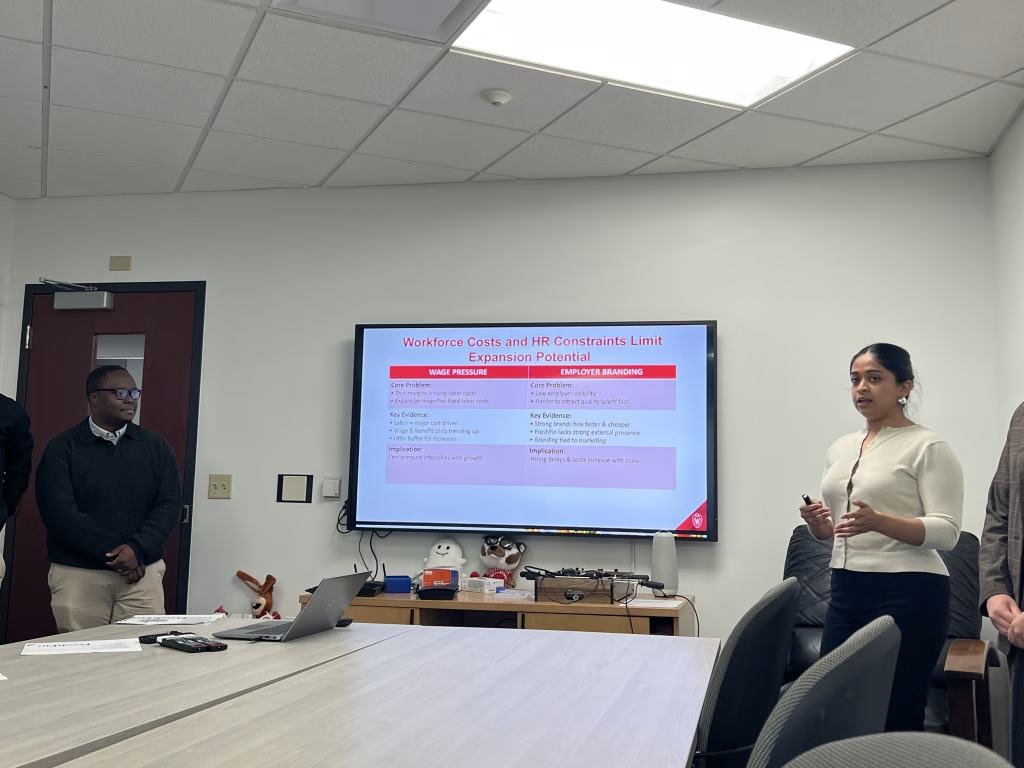
A project that had seemed like a beast when we first received it slowly started to feel more manageable as we worked together, tackling one task at a time. I considered myself incredibly lucky to have a team that was equally committed to the project and willing to stay at Grainger Hall late into the night, fueled by multiple cups of coffee, to produce a strong and well-rounded final product. On Wednesday morning, I walked back into Grainger Hall to practice our presentation. It was another cool, crisp morning, and that same sense of anticipation filled the air. The difference was that this time, I could confidently say that my team and I had tackled a complex business case, collaborated effectively, and delivered a thoughtful recommendation in the face of ambiguity. Our solution may not have won any awards, but it brought our team closer together and taught me the true value of cross-functional collaboration — skills I know I’ll carry with me long after my time at the Wisconsin School of Business.