October 23, 2025
I am teaching a class called “Real Estate Capital Markets” this semester and am enjoying the process of digging deeply into each of the quadrants. I had the opportunity to organize my thinking further, when the Milwaukee Chapter of NAIOP asked me to speak at their October chapter meeting and suggested that “The Outlook for the Capital Markets” would be the ideal topic.
The attached slide deck contains the results of my thinking, with the generous assistance of contributions from the Federal Reserve Bank of St. Louis, JLL, MSCI, and NAREIT.
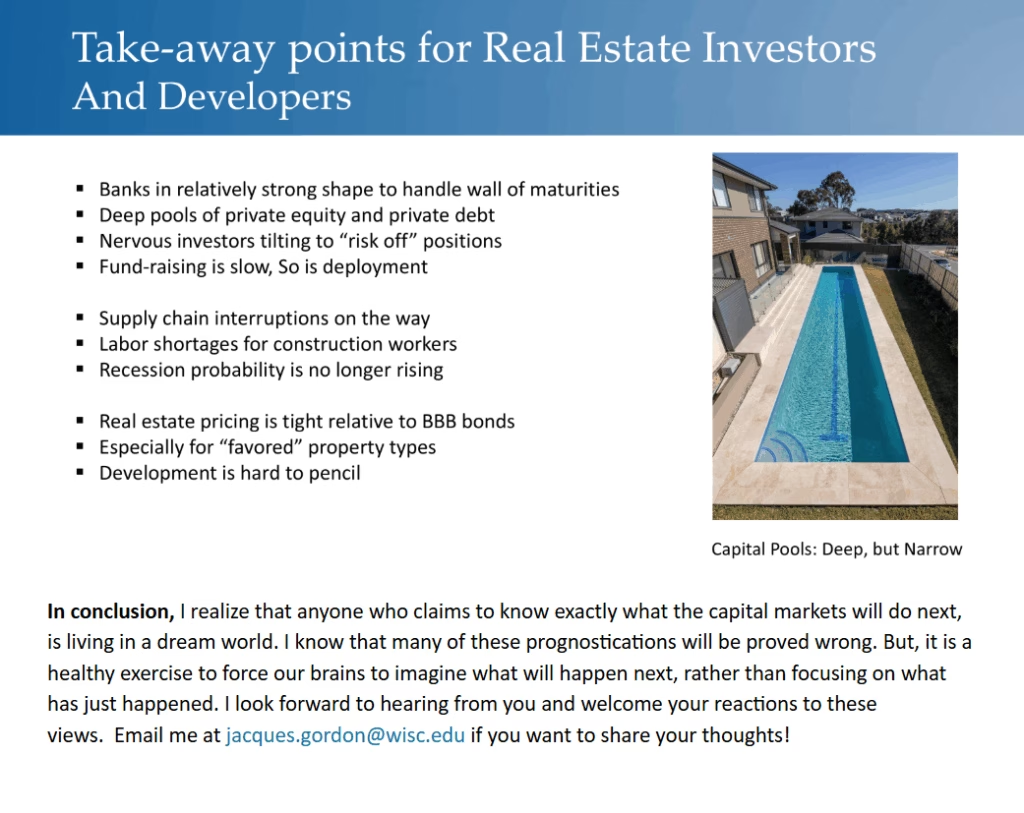
In short, the deck shows how the capital markets are deep but narrow—capital has decided what it wants to fund and what it does not.
Key takeaways include:
- Shift from equity to debt: A significant amount of capital has been re-directed from equity investments to debt.
- Private equity challenges: Fundraising remains difficult, though transaction volume is finally picking up in 2025.
- Good news:
- The interest rate outlook is improving.
- Market fundamentals are in decent shape—or recovering from a trough in the case of shopping centers and offices.
- Capital appears ready to move off the sidelines and back into the markets within the next 12 months.
- Bad news:
- Construction costs continue to spike, making development hard to pencil.
- Ongoing uncertainty from tariffs and immigration policy contributes to a general “risk off” mentality in the markets.
- A shift toward specialty sectors: The most striking difference in this recovery is the rising interest in specialty sectors, while demand for traditional “four food group” real estate remains modest. NAREIT data points to continued strength in sectors that require deep operating expertise, including:
- Data Centers
- Senior Housing
- Healthcare Real Estate
- Industrial Outdoor Storage
- Single-Family Rental and Build-to-Rent Residential
- Student Housing
- The investment themes that I believe are most important to pay attention to in the year ahead:
- Rise of the role of Artificial Intelligence across the entire economy
- Rise of a “Real Assets” approach to investing (grouping real estate with infrastructure)
- Rise of “Family Office, High Net Worth , and Retail” capital
- Slowing demographics of an aging society
- Massive capital for labor substitution
- Higher for Longer Interest Rates
- The sudden drop in capital availability for life science real estate illustrates how quickly sentiment can shift when demand softens.