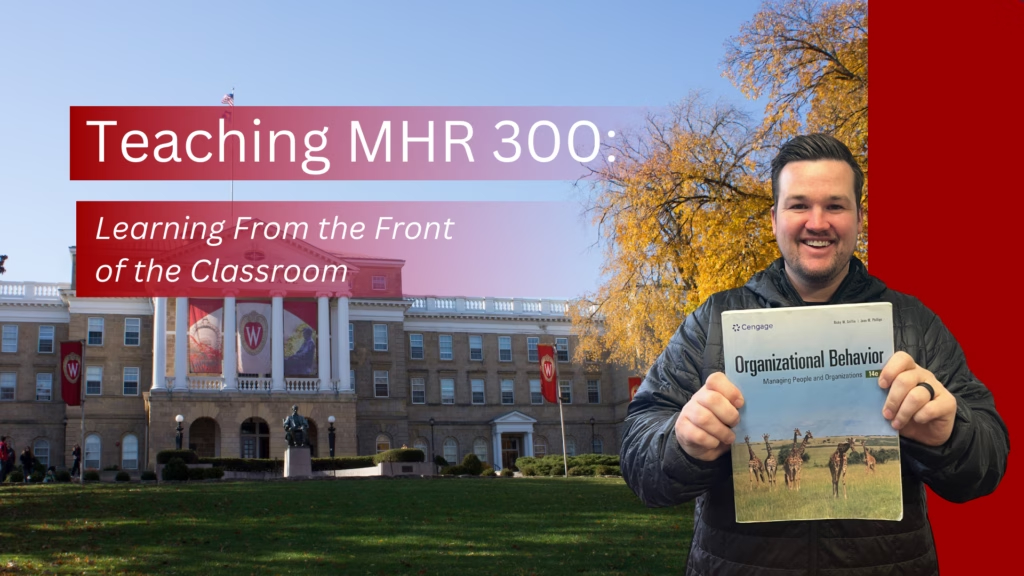

When I started the Wisconsin School of Business MBA program, I expected to spend most of my time learning from professors, classmates, and real-world projects. What I didn’t expect was the opportunity for the roles to be reserved and that I would be the one standing at the front of the classroom. This fall, I had the opportunity to serve as an instructor for MHR 300: Managing Organizations, a required course for business students (and an elective for others) that teaches principles of managing people and organizations, including collaboration, decision-making, teams, inclusion, change management, and more.
This experience was not just academic, nor did I want it to be. The classroom became a space where I saw leadership principles come to life right in front of me. Where theories about motivation, teamwork, and communication suddenly became real, personal, and sometimes difficult. Every Tuesday morning, I had the privilege of teaching, and I was pushed to grow as a communicator, a mentor, and even a leader. And more than anything, it reminded me why I chose Wisconsin: this program doesn’t just teach leadership, it gives students real responsibility to practice it.
Even after one semester, this has quickly become one of the most impactful experiences of my time as an MBA student.
Learning to Lead From the Front of the Room
Walking into a classroom of undergraduates for the first time was both exciting and humbling. I had taught before, but never to students as talented as those at the Wisconsin Business School. I am sure every classroom is different, but my students brought a wide range of life experiences, varied exposure, and interest in the content. I believed it was my role to make concepts like team dynamics, conflict resolution, and effective collaboration feel relevant to their lives, whether they were preparing for internships, working part-time jobs, or navigating group projects. A common denominator with all my favorite professors was their ability to bring material to life. I wanted to be that instructor for my students.
I quickly learned that standing up and regurgitating content from the course textbook would be ineffective. Teaching requires adaptability, patience, and an ability to read the room. Some days, discussions flowed effortlessly. Other days, I had to adjust mid-lesson, change the structure of an activity, or find new ways to spark energy and participation. This was especially true for an 8 am start time that guaranteed I would not have the same classroom dynamics two weeks in a row. I found myself constantly reflecting: What kind of environment do I want to create? What do I hope they walk out of the classroom understanding?
These questions pushed me to grow just as much as they pushed my students.
Putting Team and Leadership Principles Into Practice
One of the best parts of teaching MHR 300 was watching classroom dynamics mirror the kinds of concepts I have learned during my MBA courses. I saw teams navigate early uncertainty, learn how to communicate expectations, and work through disagreements. I watched students discover the impact of psychological safety, shared goals, and peer accountability. Here are some of the moments that will stick with me.
- A student came to me asking for advice about how to handle a job interview after our class discussion.
- A student who received negative feedback after the first team project internalized that feedback and then became the MVP of the second team project.
- Finally, building relationships with these students was incredible. Particularly, a student gifted me a Packers onesie for my unborn child because I am a die-hard Bears fan. That showed me a connection deeper than the classroom had formed.
Seeing them grow reminded me of why people development is such a powerful part of business. The lessons weren’t abstract or academic. They were happening in real time, and I had a front-row seat. I have never been more excited about a career in Human Resources.
Not only did my students learn, but this experience gave me an incredible opportunity to develop my skills and abilities.
Teaching helped me become a clearer communicator. It pushed me to stay calm and composed when things didn’t go exactly as planned. It taught me to give feedback thoughtfully and receive it openly. And it reinforced the importance of authenticity because students can tell right away whether you’re showing up fully or not. It shaped the kind of HR leader I want to be: someone who can make complex ideas accessible, who invests in relationships, and who creates environments where people feel supported and challenged.
Why This Experience Matters for Wisconsin MBA Students
The Wisconsin MBA is built around experiential learning and hands-on opportunities that stretch students beyond the classroom. Teaching MHR 300 was the embodiment of that mission for me.
As the semester wrapped up, I felt incredibly grateful to the students who showed up morning after morning, for the WSB faculty who trusted me with their classroom, and for the SHR program that believes students are capable of more than we even realize when we show up on that first day of our first year.
Teaching MHR 300 will be one of the highlights of my Wisconsin MBA. The opportunity didn’t just reinforce what I had learned in my first year of the MBA; it expanded it. It deepened my appreciation for the work of educators and HR leaders. It reminded me that leadership is as much about service as it is about strategy. And it gave me a clearer sense of who I am as a human being and what kind of impact I hope to make as I continue my career in human resources.
And for that, I’m truly grateful.