
Introduction & Professional Background
Continuing with the Nicholas Center Speaker Series, John Weyers, CFO of Industrial Physics, visited Grainger Hall on November 5th to share more about his career journey, insights, advice, and the importance and opportunity of 13-week cash flows.
A Wisconsin native, John is a true double badger, graduating with a BBA in Finance and Accounting in 2006 and a Master of Accounting in 2007. Following graduation from the master’s program, John worked for over 14 years at 3M. His storied career at 3M included a wide array of roles with increasing responsibility ranging from plant controller to senior finance manager for corporate FP&A to the director of finance for display materials & systems division which is a role that led him to live overseas in Tokyo, Japan. Following his time at 3M, John pivoted to FMI Aerostructures as a CFO before taking his current role as CFO of Industrial Physics.
Lessons & Career Takeaways
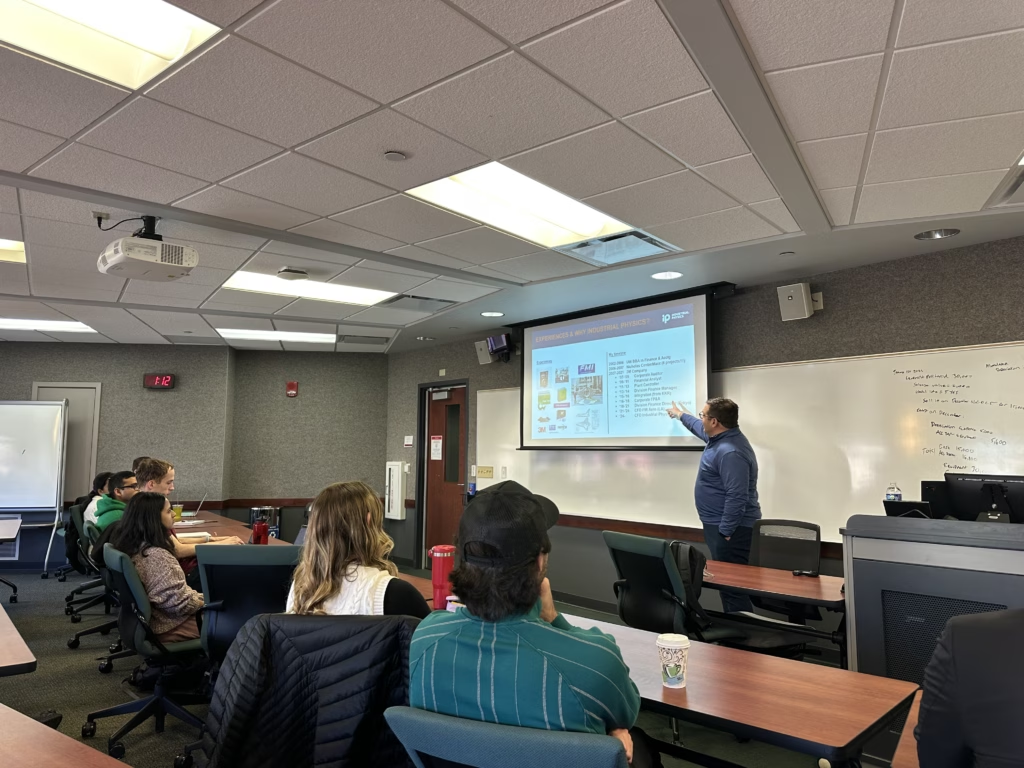
Through his walkthrough of his personal career journey, John emphasized some key learnings that led him to where he is today. One of the many key takeaways was the importance of identifying company culture. John shared that through his career he has identified his preference for substance over formality noting that this can look different at different firms and that it will be different for different people. John also mentioned true opportunity does not lie in the size of the firm but rather the people and team that exists to learn from. He further emphasized this point noting the importance for students to learn and make decisions based on what will make them happy over their career. Lastly, one of the key highlights of the conversation was the emphasis and discussion of 13-week cashflows through the lens of low middle market companies.
13-week Cashflows
John walked the students through the who, what, when, where, and why of the 13-week cashflows highlighting some key points of this important liquidity management tool. He defined 13-week cashflows as a short-term financial planning tool that projects both cash inflows and outflows and emphasized how it should be conducted on a weekly basis with a keen focus on accuracy for the forecast. He closed out with an example 13-week cashflow detailing how it was built, the tool’s evolution over time, and the use cases for the tool both internally and externally.
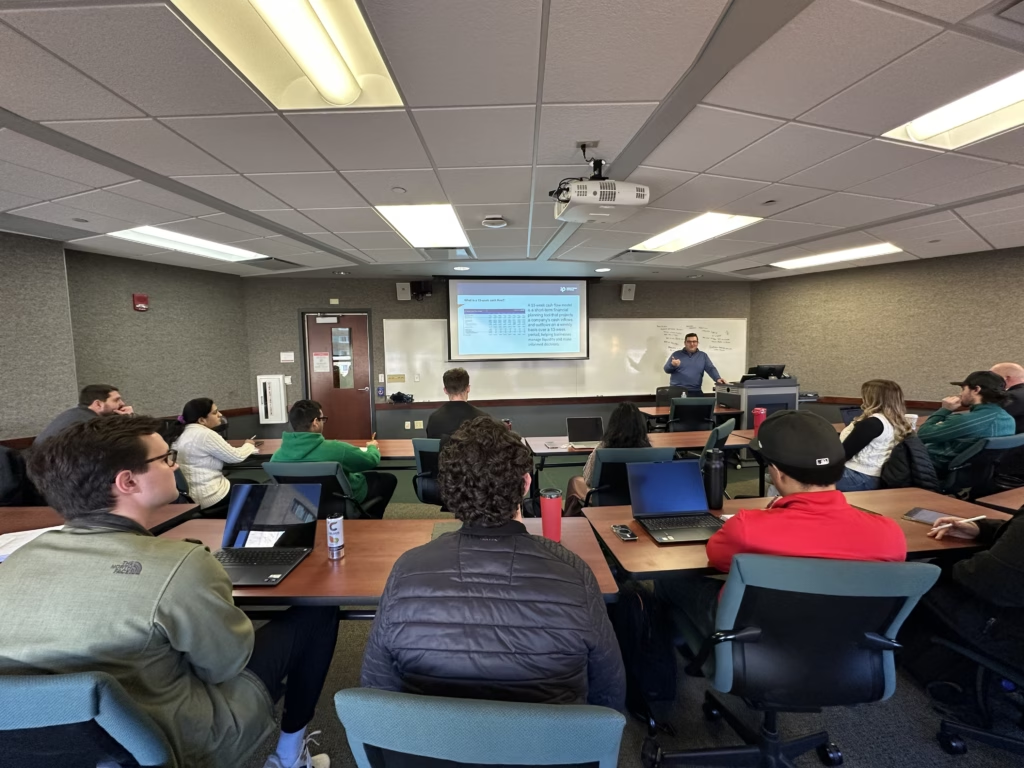
From this discussion, John left the students with incredible career advice and a spark of entrepreneurial spirit with a new idea and opportunity to utilize in the workforce. As a truly seasoned professional with clear enthusiasm for not only 13-week cashflows but for mentoring others, learning from and engaging with John during this event was a great opportunity for students.
Categories: