Earlier this month, Wisconsin School of Business MBA students embarked on a week-long international immersion across two of Europe’s most influential financial and policy hubs: London and Brussels. Guided by Nicholas Center program leaders Barbara Bolens and Andrea Sorenson, students explored the interconnected worlds of capital markets, regulation, innovation, and global commerce through a blend of cultural experiences and high‑impact corporate visits.
The trip offered a rare opportunity to see how classroom concepts translate into real‑world decision‑making — from fintech and venture building to insurance, trade policy, and investment banking. What follows is a day‑by‑day look at the experiences that shaped this year’s journey.
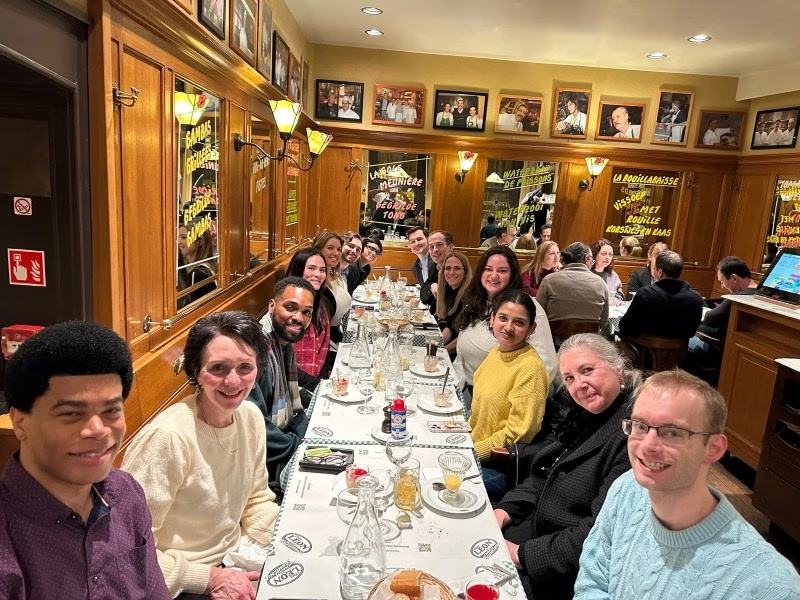
London
Sunday: Cultural Tour — Legendary Landmarks
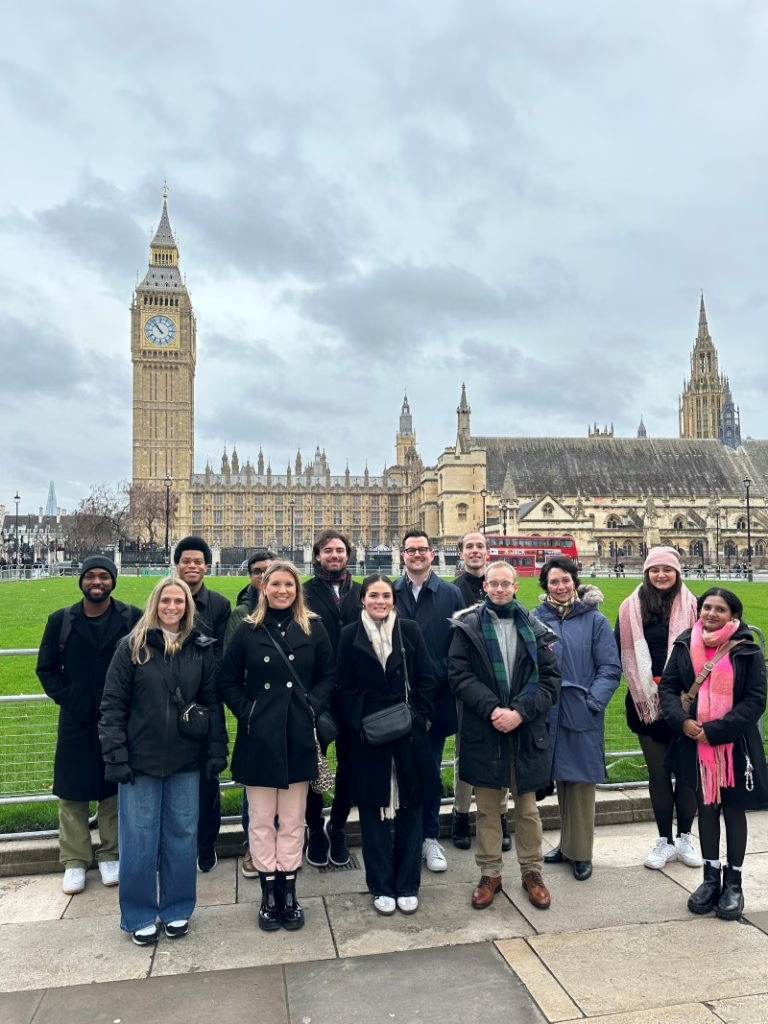
Students began their immersion with a sweeping introduction to London’s historic and political core. The tour wound from the quiet paths of Green Park to the gates of Buckingham Palace, where stories of royal tradition set the tone for the day. From there, the group followed the Royal Mall into Trafalgar Square and continued through the government corridor of Whitehall. The walk opened into Parliament Square, offering striking views of the Palace of Westminster, Big Ben, and the London Eye before concluding at Westminster Abbey — a site that encapsulates more than a thousand years of British history. The experience provided a vivid sense of London’s evolution and its enduring role as a global capital.
Day 1: AFME, London Stock Exchange, and Zilch
At AFME (Association for Financial Markets in Europe), Carlo De Giacomo, Elena Travaglini, and Pete Tomlinson discussed how trade associations shape financial regulation and market standards across Europe. Students gained insight into AFME’s role in advocating for transparent, efficient capital markets and learned how policy developments—from Basel III to ESG disclosure—impact investment banking operations and cross-border dealmaking.
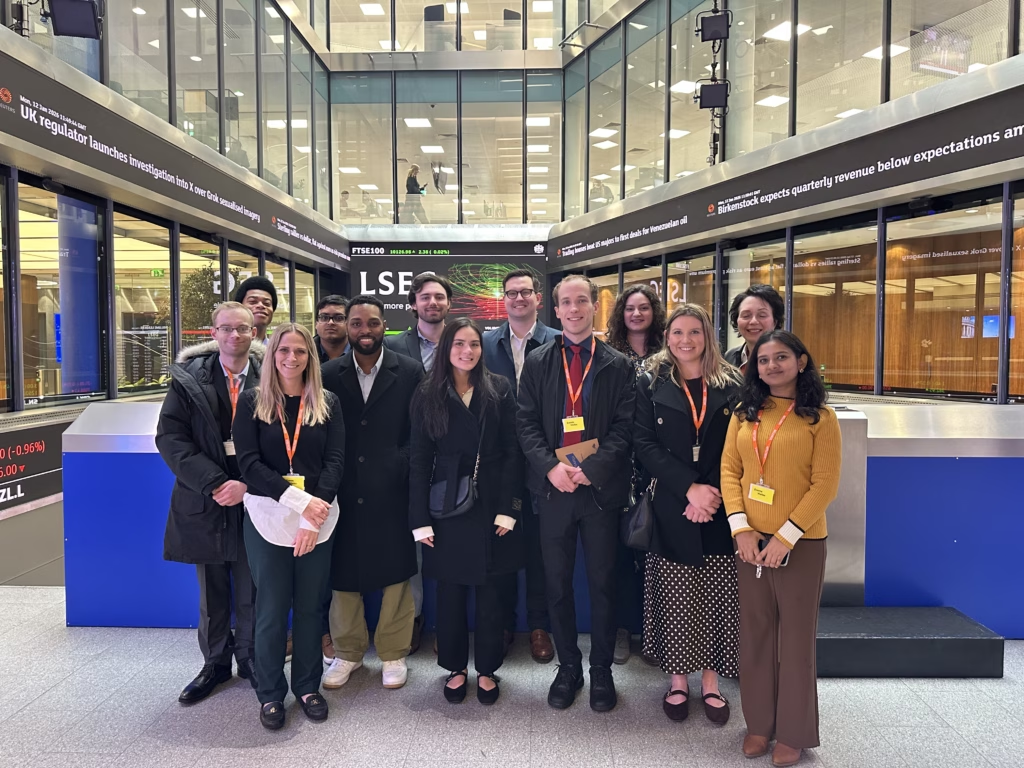
A visit to the London Stock Exchange offered insight into the structure and function of UK capital markets. Students met with Lauren Crawley-Moore and examined current IPO and M&A trends, discussed listing requirements and investor dynamics, and reflected on how the LSE’s global reach influences corporate finance strategy and capital formation across sectors.
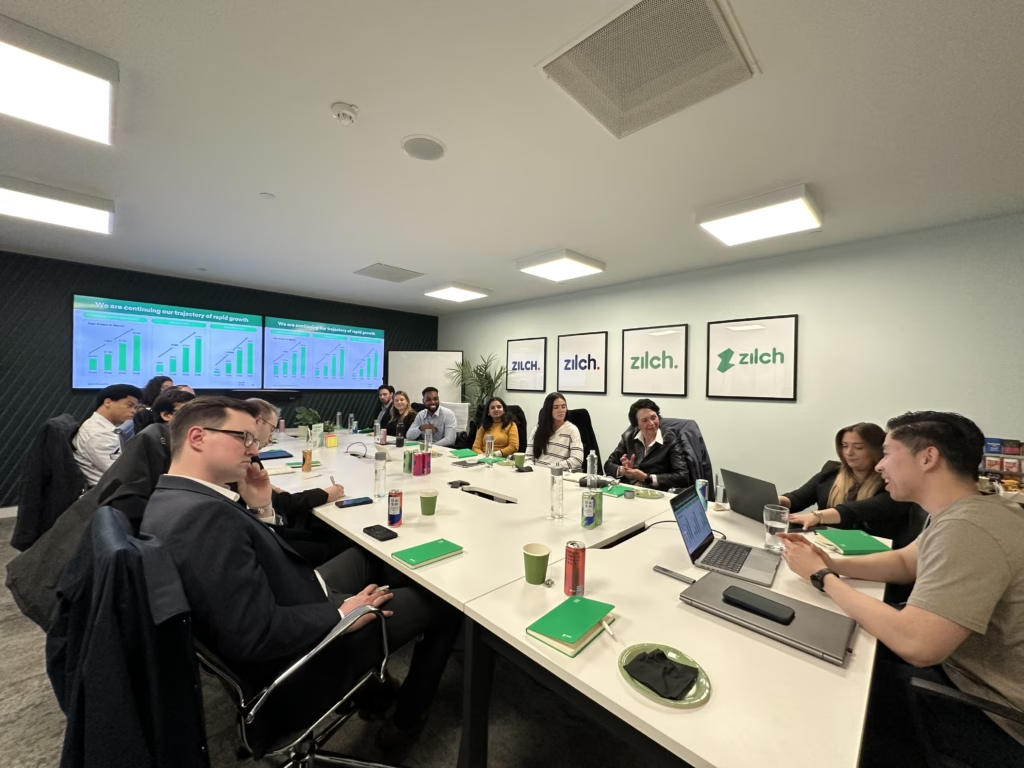
At Zilch, students met with C-suite leaders (Helen Pericleous, Boriana Tchobanova, Desmond McNamara, Alex Ivison, and Will Tran) to examine how fintech is transforming consumer finance, credit underwriting, and payments. The conversation highlighted Zilch’s rapid growth, its approach to responsible lending, and the strategic challenges of scaling a BNPL model in a competitive and highly regulated environment.
Day 2: Cambridge Future Tech, Hampden Agencies, and Lloyd’s of London
At the Royal Ocean Racing Club, we were hosted by Cambridge Future Tech, a venture builder focused on deep tech and impact-driven innovation. Students engaged in discussions with Francisco Portillejo Hoyos around venture economics, startup selection, valuation, and deal structuring—gaining firsthand exposure to how early-stage companies navigate capital needs and commercialization pathways in the UK ecosystem.
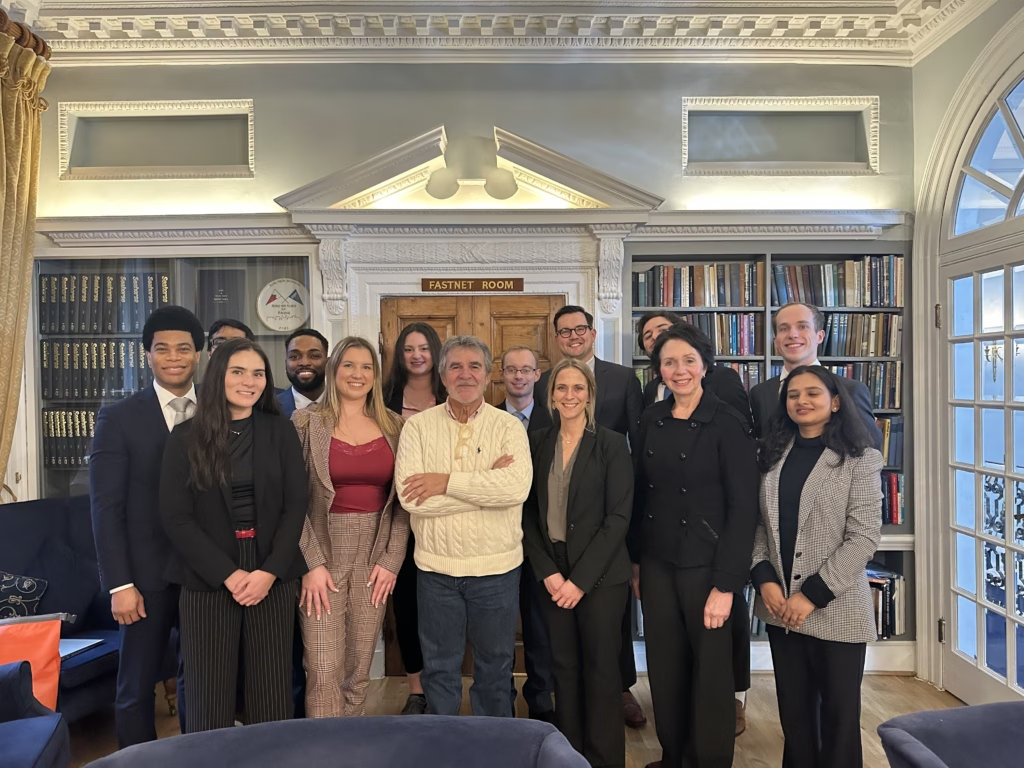
Our final visits in London to Hampden Agencies Limited and the Lloyd’s of London trading floor provided a firsthand look at underwriting, risk transfer, and the regulatory forces shaping global insurance markets. Students met with Alistair Wood and Fabian Roberts and learned how capital is deployed through Lloyd’s syndicates, how risk is priced and diversified, and how the Lloyd’s model intersects with alternative investment strategies and global financial stability. We ended with guided tours around Lloyd’s by William Lewis, John M, and Stephen Wilcox.
Brussels
Cultural Tour: Medieval Roots to Modern Europe
Our student group continued the second half of our international immersion in Brussels — the heart of European policy, finance, and innovation. The Brussels cultural tour traced the city’s transformation from a medieval trading hub to the administrative heart of modern Europe. Beginning in the old harbor district around Sainte‑Catherine and the Halles Saint‑Géry, students explored the commercial roots that shaped early Brussels. The group then climbed toward the Mont des Arts, passing the beloved Manneken Pis and taking in panoramic views of the city center. The walk continued through the Royal Quarter and Place Royale before moving into the tree‑lined Parc de Bruxelles and the Cathedral of St. Michael and St. Gudula, a landmark tied to centuries of imperial influence. The tour ended in the Grand‑Place, where the ornate guildhalls and towering town hall offered a dramatic reminder of Brussels’ cultural and architectural legacy.
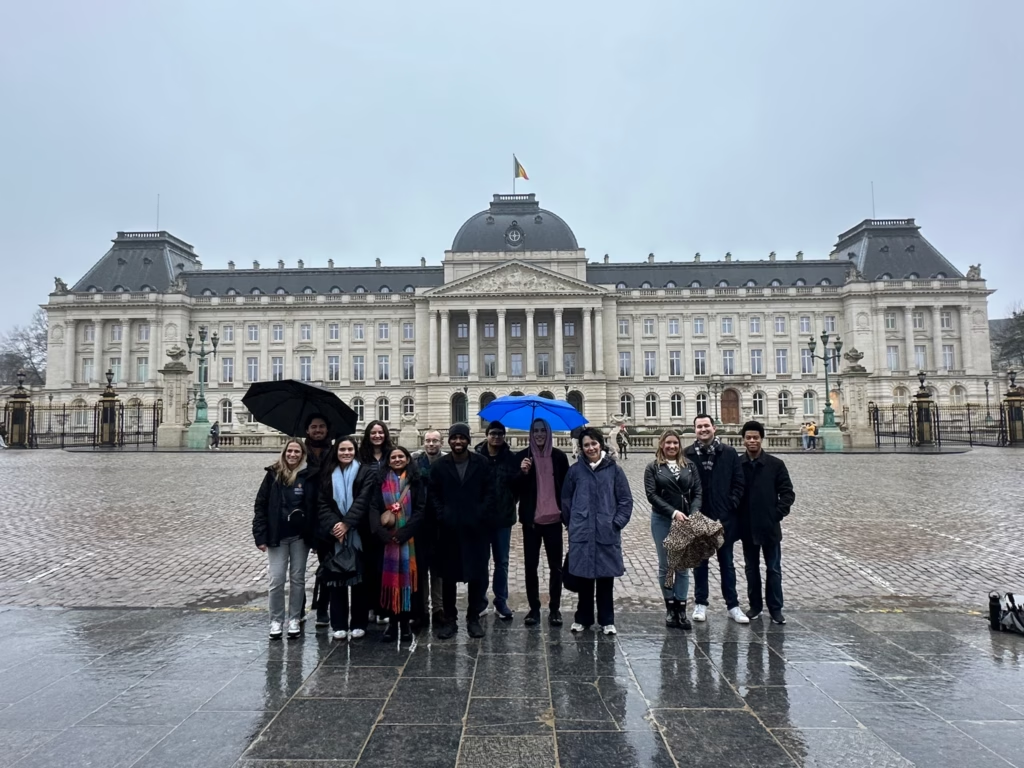
Day 1: AmCham Belgium, Allianz Trade, and PwC
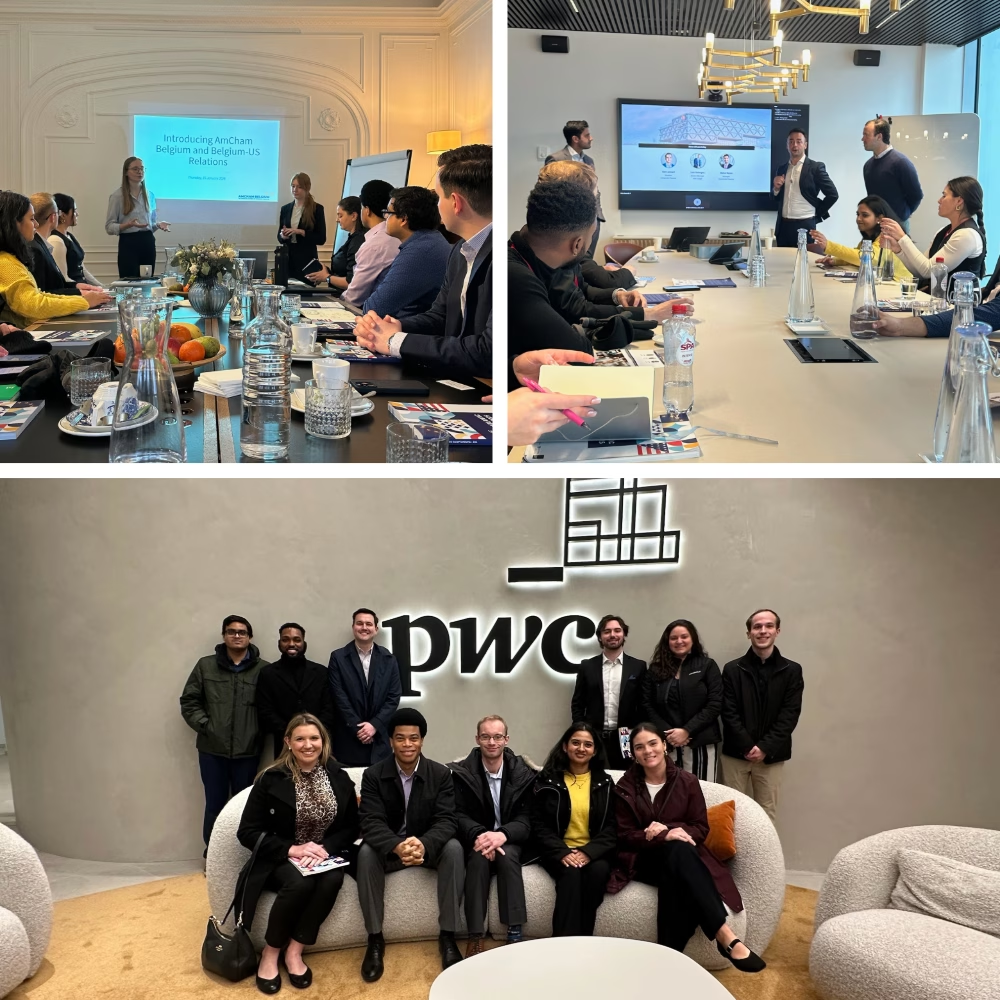
At AmCham Belgium, students explored the dynamics of EU–U.S. economic relations and gained insight into how multinational firms navigate the European business landscape. Géraldine Wambersie and Amelia Borchers highlighted the Chamber’s role in fostering transatlantic dialogue, advocating for pro‑business policies, and supporting companies as they adapt to evolving regulatory frameworks and geopolitical shifts.
At Allianz Trade students explored the company’s legacy as a global leader in trade credit insurance and risk management solutions from the Allianz team (Ellis Roudasev, Yannick Vermetten, Arnout Busscher, Frederic De Craene). Students gained insight into trade services related to fidelity and fraud, and examined how risk products — including surety and guarantee instruments — remain critical tools for large corporations.
During our visit to PwC Belgium, Ben Leonard, Loïc Delanghe, and Mehul Naran shared how advisory teams guide firms through M&A, valuation, sustainability reporting, and regulatory transformation across the EU. Students received an introduction to core corporate finance concepts and had the opportunity to work through a business case study that highlighted valuation, strategic decision‑making, and the legal considerations that influence complex transactions.
Day 2: Mastercard and KBC Securities
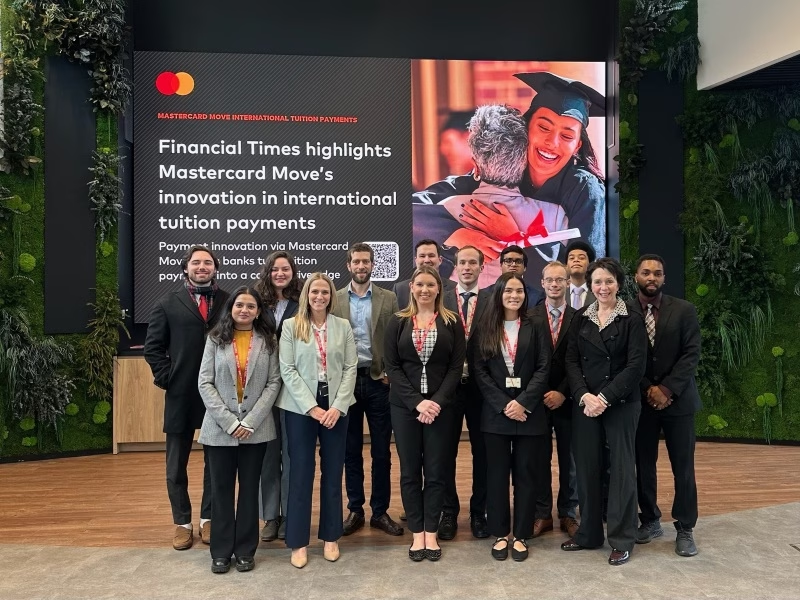
At Mastercard, students examined the future of payments, digital commerce, and the innovations reshaping both consumer and corporate financial ecosystems. Benjamin Dessy and Domenico Paparella provided an engaging introduction to Mastercard’s global business model, highlighting the company’s role in enabling secure, seamless transactions across markets. The session also explored the strategic vision behind the recent Mastercard Move, offering insight into how the firm is evolving its platform, partnerships, and product offerings to meet the demands of a rapidly digitizing economy.
We concluded with KBC Securities, where students gained firsthand exposure to Belgium’s capital markets, investment banking practices, and current deal‑making trends across Europe. CEO Geert Cleuren spoke about their strategic update, a joint venture with Van Lanschot Kempen, and walked students through the role of the CEO in navigating through this business transition.
Closing Reflections
Throughout London and Brussels, students engaged with leaders shaping the future of finance, policy, and innovation. These conversations — paired with cultural exploration — deepened their understanding of global markets and expanded their perspectives on the forces influencing corporate decision‑making. The Nicholas Center is grateful to all our hosts for their time, generosity, and commitment to experiential learning. This immersion continues to be a defining experience for our MBA students, equipping them with the global mindset essential for today’s financial landscape.