2025-26 NFLPA Data Analytics Case Competition
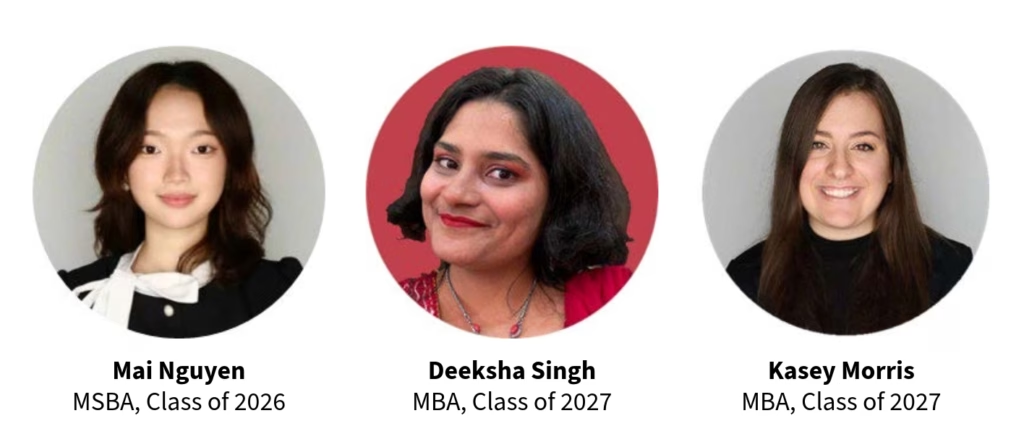
The NFLPA held its second annual case competition, attracting applications from undergraduate and graduate-level teams across the country. This year’s prompt focused on the effects of cumulative workload on key metrics such as player performance, injury risk, and earnings. As an avid football fan, the opportunity to dive deep into this data alongside a team of fellow Badgers was one I could not pass up. Teaming up with Mai Nguyen, MSBA ’26, and Deeksha Singh, TSPM ’27, we spent hundreds of hours collaborating to tackle a complex and meaningful analysis.
Project Kickoff
Beginning in late 2025, we met as a team to start dissecting the competition prompt. This initial phase involved extensive research into professional football, the NFLPA, the most recent Collective Bargaining Agreement (CBA), and historical case studies related to player wellbeing. As we built a strong foundation of knowledge, we began prioritizing key areas of focus for our analysis. In particular, we were interested in identifying “controllable” factors, elements that could be isolated and addressed through policy proposals in the next CBA.
Data Analysis
Following the research phase, we transitioned into data analysis, which proved to be the most extensive stage of the project. This work involved aggregating and cleaning large datasets, followed by many hours of exploratory and statistical analysis. Our focus on controllable factors helped narrow the scope to a select set of variables and ultimately led us to develop a new metric we called “Red Flag Games.”
This metric captures the combined burden of two core stressors:
- Short rest, defined as six or fewer days between games, and
- Travel, defined as crossing two or more time zones from a team’s home stadium. Using this metric, we analyzed the impact of Red Flag Games at multiple levels of aggregation, including individual players, position groups, and teams. Through this process, we identified meaningful gaps in equity, exposure, and sensitivity across the league. These insights served as the analytical foundation for our policy recommendations.
First Round Research Paper
After reviewing the 2020 CBA, we proposed several policy recommendations aimed at further protecting players from the cumulative effects of combined workload burdens. We summarized our findings and recommendations in a research paper submitted for the first round of the competition on January 6. One week later, we learned that our team had advanced to the final round, where we would present our work directly to the NFLPA.
Final Round Presentation
To prepare for the final round, we developed a slide deck that detailed our analytical journey and highlighted our policy proposals for player advocacy. With the support of faculty and staff at the university, we practiced our presentation multiple times in advance. A huge thank you goes to Douglas McLeod, Professor of Journalism and Mass Communication, and Anita Mukherjee, Associate Professor in Risk and Insurance, whose feedback was invaluable as we refined our slides and key messages.
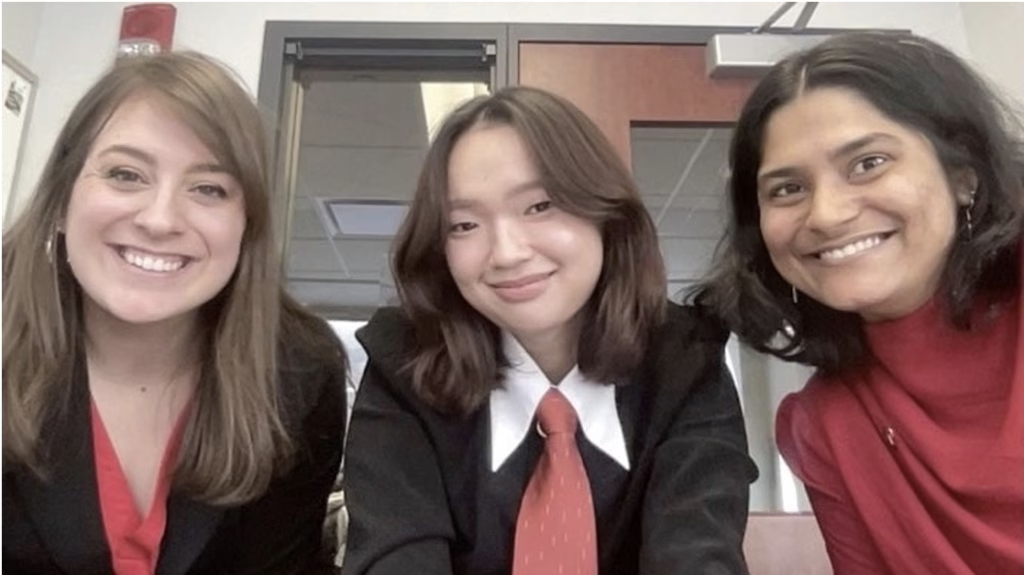
The final presentation was held virtually on January 28. On February 5, we learned that our team had been selected as the graduate-level winners of the competition.
Key Takeaways
This experience reinforced the importance of relationship-building, teamwork, and data-driven decision-making. Over hundreds of hours of collaboration, I deepened my relationships with my teammates, Mai and Deeksha, and gained exposure to new faculty members and resources across the university. These connections helped me expand my network both on campus and beyond. Data analysis was a consistent throughline throughout this journey. As analytical tools, coding languages, and AI continue to evolve, it is essential for business professionals to stay current, adaptable, and willing to learn. I am incredibly grateful to the NFLPA for this opportunity, to our fellow competitors for their insightful presentations, and to my teammates for their dedication and partnership over the past few months.
On, Wisconsin!