Jerry Weidmann’s career presentation offers MBA students a compelling narrative on professional development, demonstrating how diverse experiences across financial services, entrepreneurship, and operations can catalyze exceptional leadership qualities. As CEO of Wolter, Inc., Jerry’s journey illustrates the power of strategic thinking, M&A execution, and disciplined growth in building enterprise value.
Background
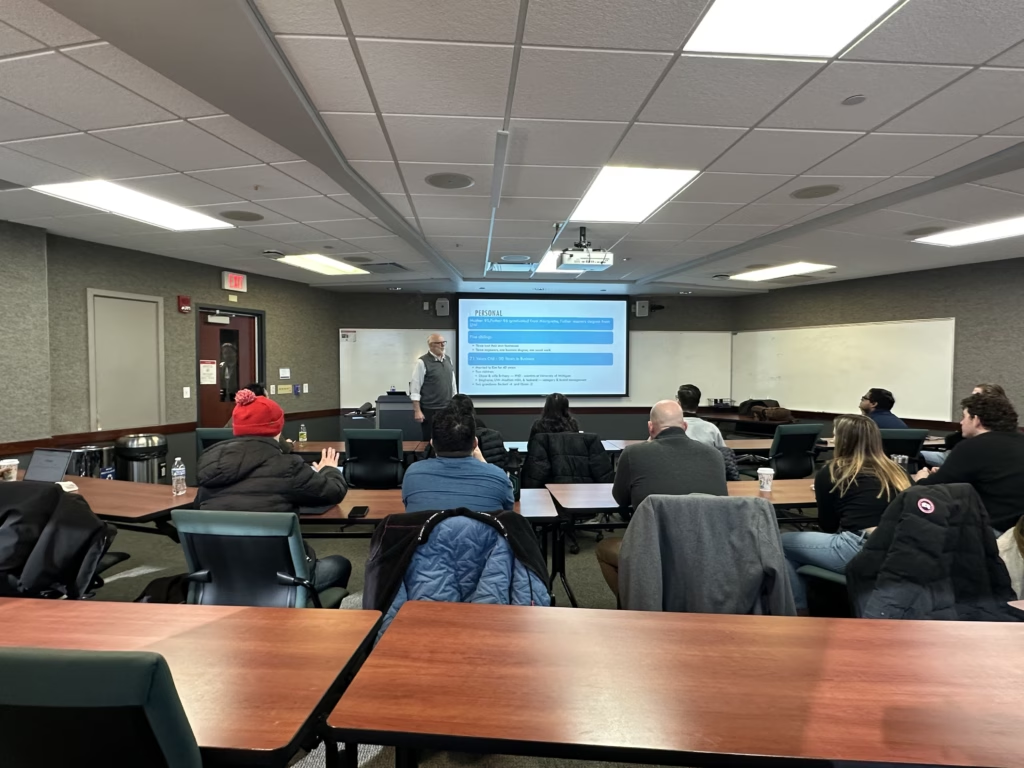
Jerry’s professional foundation was shaped by his undergraduate degree in Finance & Economics from St. Norbert College and multiple graduate certificates in Project Management, Logistics, Supply Chain, and Operations from the University of Wisconsin-Madison’s Fluno Center. His career began in financial services as a representative at Cigna, specializing in succession planning, business continuity, and retirement planning for business owners. He later pivoted to high-net-worth financial planning at Robert W. Baird & Co. This experience enabled him to identify a market gap and develop an innovative wealth management software solution, launching him into entrepreneurship. After successfully selling that business, Jerry joined his wife’s family business, Illinois Life Truck Corporation, where he served as VP and General Manager. Illinois Life Truck Corporation eventually became part of what is now Wolter, Inc., setting the stage for his transformative leadership in the organization.
M&A as a Growth Strategy
Over several years, Jerry helped transform the business through successful acquisitions and integrations, achieving 200% increased revenue and 252% increased gross profit. He describes this period as an evolution from unconscious incompetence to unconscious competence. At Wolter, Inc., Jerry championed M&A as the primary strategy for driving revenue growth, leading his team to complete 20 acquisitions in the Midwest and 3 in the Southeast, with multiple LOIs currently active. This strategy emerged in direct response to shifting customer expectations and industry pressures. Customers increasingly demanded broader geographic reach, deeper solution capabilities, and faster response times—needs that could not be met quickly enough through organic expansion alone. At the same time, demographic trends created a skilled-trade deficit, with fewer people entering the workforce and making it more difficult to staff new operations from scratch. Jerry emphasized that M&A offered a practical and accelerated path forward: it allowed Wolter to enter new markets rapidly, acquire experienced teams already embedded in their regions, and build operational density without the risks and delays associated with greenfield development. His acquisition philosophy centers on identifying companies with aligned strategies and management philosophies in markets where Wolter is not yet serving customers, ensuring both cultural fit and strategic expansion.
Jerry candidly addressed the challenges of simultaneous acquisitions during his presentation, including pre-acquisition preparation, post-acquisition integration, cultural alignment, leadership transition, and operational integration across multiple ERP systems.
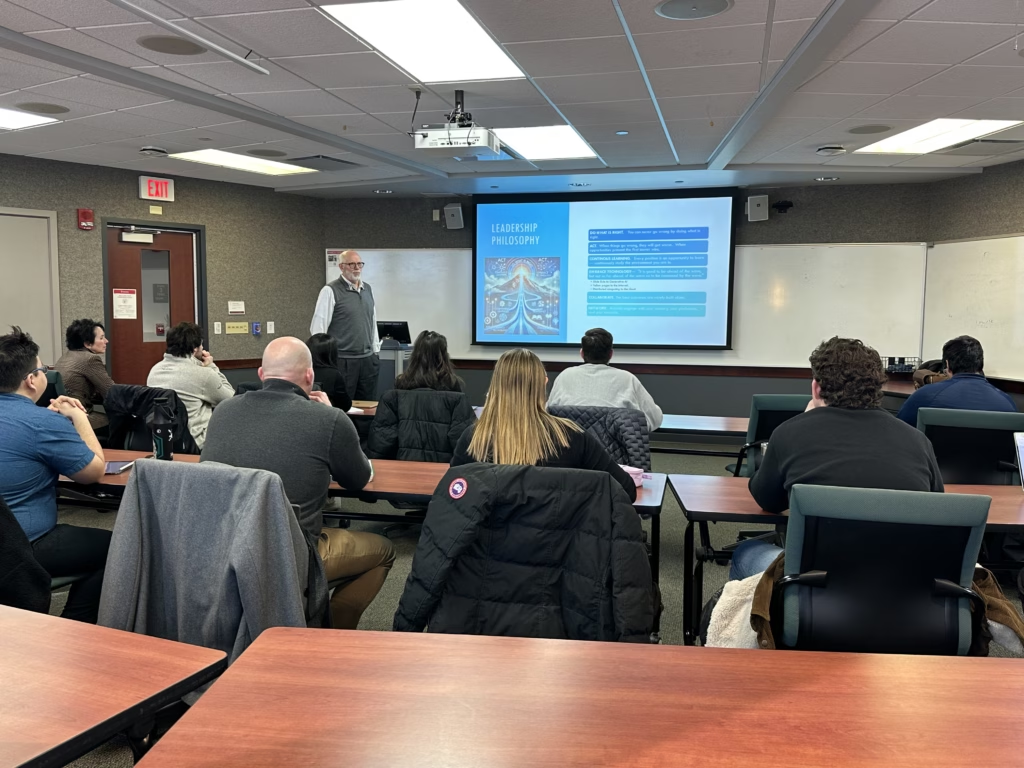
Leadership Philosophy
Jerry summarized his leadership philosophy to students in the following manner:
- Do What is Right: “You can never go wrong by doing what is right.”
- Act: “When things go wrong, they will get worse. When opportunities present, the first mover wins.”
- Continuous Learning: “Every position is an opportunity to learn – continuously study the environment you are in.”
- Embrace Technology: “It is good to be ahead of the wave, but not so far ahead of the wave as to be consumed by the wave.”
- Collaborate: “The best outcomes are rarely built alone.”
- Network: “Actively engage with your industry, your profession, and your interests.”
Advice for MBA Students
Jerry also addressed the challenges MBA students face and how they should manage them by enhancing their skills in financial modeling and analytics, developing cash flow literacy and lending basics. Most importantly, he emphasized the importance of understanding contracts and how to negotiate for better pricing.
Conclusion
Jerry’s career demonstrates that value creation requires more than financial acumen—it demands the ability to execute strategy, integrate acquisitions, and maintain discipline during rapid growth. His journey from insurance representative to CEO highlights that diversity in experiences can become a strength throughout one’s career to drive transformational change.