“You’ve all parked here before.” That familiar phrase rang true for many who remembered the old Lake Street parking ramp in downtown Madison – the City’s oldest parking structure constructed in 1964 and at the end of its useful life. Replacing a pedestrian eye sore and poorly designed lot and paired with the need for a permanent bus station to replace the curbside pick at Gordon Common that left riders waiting in the rain, the city embarked on an ambitious redevelopment of the Lake Street parking ramp. That redevelopment required that no parking stalls were lost, the construction of a permanent bus station, and monetizing the air-rights above the parking ramp site.
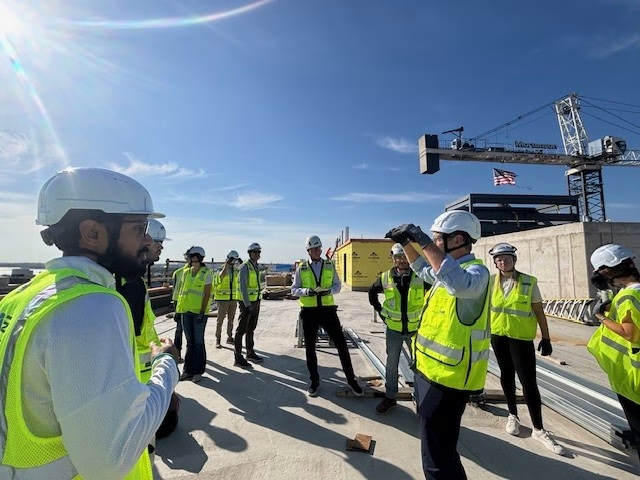
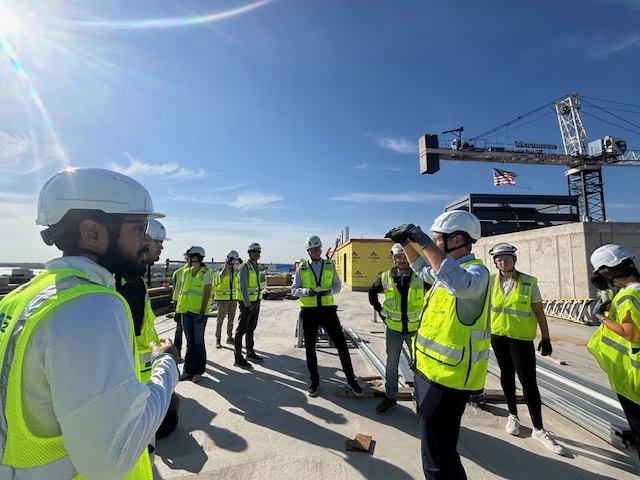
On September 30 and October 2, 2025, students from Mark Eppli’s Real Estate 530 Capstone Class at the Wisconsin School of Business toured the construction site of Theory Madison which was led by Mortensen and were presented a redevelopment case study for the site by Northwestern Mutual Real Estate
A Redevelopment Born from a City Vision
In July 2021, the City of Madison issued an RFP to replace the failing parking structure and received seven responses. While most RFPs focused on maximizing monetization of the site from student housing, Mortenson’s plan stood out due to its overall use and thoughtful design. According to Nate Gundrum of Mortenson, “We had to replace parking, monetize air rights, and provide affordable and market rate student housing using best in class sustainability practices.”
The proposal ultimately went forward after 50 public meetings that were held over the course of a year. Added complexity of the site redevelopment was ensuring the historic Church Key building maintained its integrity, which required Mortenson to work directly with its owners to address preservation concerns.

Mark Eppli, Teaching Faculty
Real Estate Capstone Course
“Having students analyze a complex project like Theory Madison up close is exactly the kind of hands-on learning this course is designed to deliver.
We want students to really understand the layers of operational, financial, and design decisions that shape a project’s success—or expose its friction points. This site was once just a parking ramp many of our students used, and now it’s a case study in how to balance public infrastructure, affordability, sustainability, and private investment. Experiences like this push students to think critically about what worked, what didn’t, and how they would approach it differently as future industry leaders.”
An Active and Integrated Urban Design
Theory Madison is designed as a partial wrap product with more than 75 percent of the Lake Street frontage activated by townhouse-style units. This thoughtful design ensures that, while a parking structure occupies much of the lower levels, the street presence remains engaging and residential in feel.
Included in the development is a new regional bus station that can simultaneously accommodate three buses into the building’s ground floor. Regional buses such as the Badger Bus will now operate from a modern station connected to both the public garage and located adjacent to campus.
Building sustainability features bird-safe glass up to 75 feet among many others.
Delivering Affordability and Premium Living
The development will include 100 affordable beds across two tiers, priced at 80 percent and 60 percent of market rate. Qualified applicants will be determined through the UW-Madison Financial Aid Office.
Alongside this affordability, Theory Madison is set to deliver best-in-class finishes and amenities, including:
- A level-seven pool deck with BBQ grills
- A rooftop deck with sweeping views of Madison and Lake Mendota
- A resident coffee shop
- A full-size fitness center
- Private below-ground parking for residents in addition to the public garage
Unit types range from studios to five-bedroom apartments, with current listings showing studios starting at $1,959 per month and five-bedroom units at $1,499 per person per month. Leasing has already begun with strong tenant demand, underscoring the property’s appeal.
A Learning Opportunity for Students
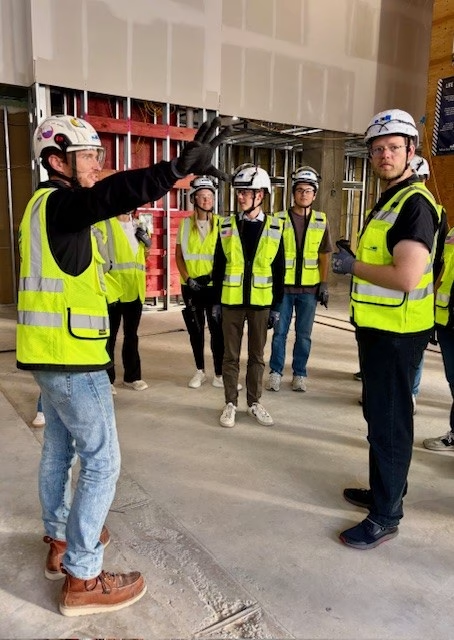
During the site visit, students toured the ground-level public spaces, rooftop and pool amenity decks, a two-bedroom model unit on the seventh floor, and a model two-story, five-bedroom townhouse unit. The tour concluded with a stop at Theory’s leasing office on State Street, where students viewed a finished model unit and discussed the project’s lease-up and management strategy with Peak Campus, the future operator of the property.
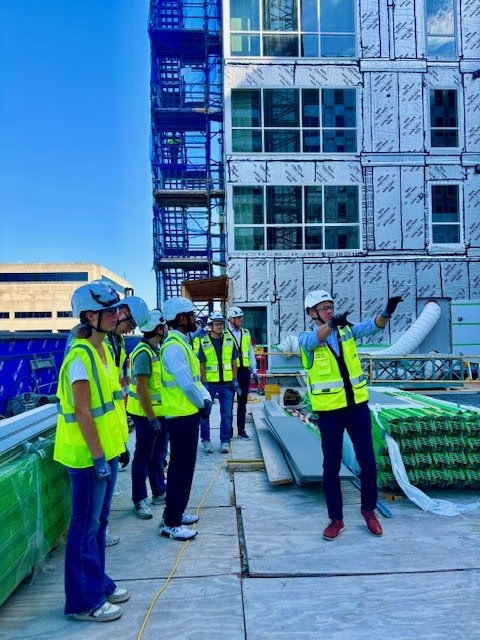
The project’s leaders also described the design and construction challenges of integrating a public garage that was built by a different construction company, a regional transit hub, and private student housing into one structure, noting that all three of the site’s former shortcomings (the outdated parking ramp, the curbside bus station at Gordon Commons, and functionally obsolete parking structure) are now solved.
Some Student Learning Outcomes
In addition to the rich, hands-on learning on site visit led by Nate Gundrum of Mortensen, the students analyzed the Lake Street parking lot site for the Real Estate 530 class. Tom Zale and Dan Soyka constructed a case study analysis that required the students to determine the site massing, unit mix, and property value for the Lake Street parking structure site. Touring a live construction site with 180 construction workers plying their skills and then analyzing the development feasibility of the site prepares our students with real development challenges that require use to address the many fussy details that industry professionals like to see in new hires.
The Wisconsin School of Business extends thanks to Tom Zale and Dan Soyka of Northwestern Mutual and Nate Gundrum of Mortenson, whose time and expertise helped make classroom concepts real for students. Opportunities like this underscore why the UW-Madison Real Estate Program is ranked the number one undergraduate real estate program in the nation.
The Graaskamp Center invites others in the industry to engage with students in similar ways, helping ensure that the next generation of real estate leaders learns not only from textbooks but also from real-world projects shaping communities today. If you’re interested in student engagement, contact Lee Gottschalk at lee.gottschalk@wisc.edu.