This November, more than 50 undergraduate students from the Wisconsin School of Business competed in the third annual Real Estate Private Equity Club Case Competition, co-sponsored by Harrison Street and Capital One. Students were challenged to value and structure the acquisition of 627 Langdon Street, a hypothetical student housing asset in the heart of Madison, WI.
Students were grouped intentionally based on academic year, prior coursework, and internship experience, creating teams that blended technical skill with fresh perspectives. Throughout the two-week period, teams developed an underwriting model, wrote an in-depth business plan, and prepared a full presentation. A few graduate students acted as mentors offering high-level guidance, but teams ultimately took ownership of their overall project.
Student Perspectives: What Shaped Them Most?
For many participants, the most impactful lessons came from the process, not just the results.
Tony Fuentes-Flores (BBA ’28), a first-time competitor, explained that the pressure of presenting shaped him more than anything else. Speaking in front of judges elevated the stakes, but collaborating with his teammates helped him approach the material more clearly. Moreover, learning how others framed their assumptions and communicated their analysis gave him new confidence.
Charles Bennett (BBA ’26), who joined the competition specifically to mentor younger undergraduates, described the experience as a full-circle moment. He remembered being in their shoes during his early years in the club, when a senior student helped him understand the fundamentals of underwriting. As a result, guiding his team through this year’s case allowed him to recreate that same learning environment and watch his teammates grow throughout the process.
Vanessa Geich (BBA ’26), a senior who was also a first-time competitor, noted the impact it had on her personal and professional journey. She highlighted that everything she worked on throughout the competition will translate directly into future interviews, reinforcing her curiosity and her dedication to learning and growing in the commercial real estate space.
First Round Presentations and Reception
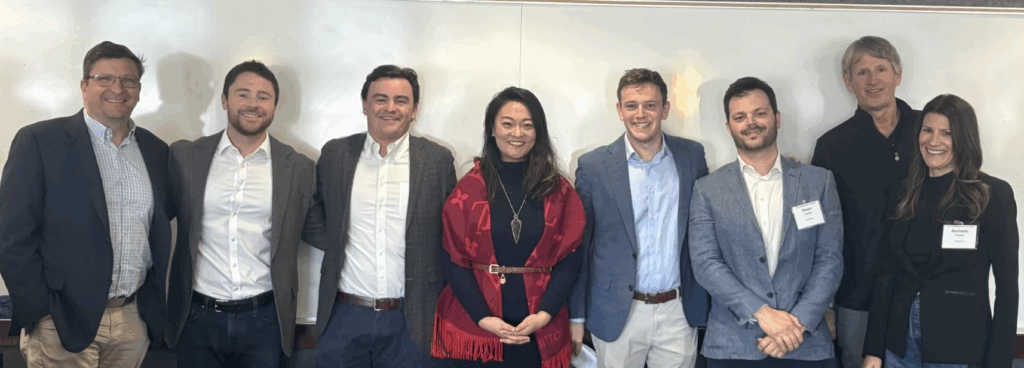
Teams delivered their first-round presentations on Thursday afternoon. Each group had 15 minutes to present, followed by Q&A with judges from Harrison Street, Capital One, UW faculty, and student leaders. Judges remarked on the thoughtful analysis, strong communication, and professionalism displayed across all teams.
That evening, participants attended a networking reception at the Fluno Center hosted by Harrison Street and Capital One. The event offered students a chance to decompress and engage with industry professionals in a more informal setting. During the reception, the four finalist teams were announced.
The Final Round
Finalists returned Friday morning to present again, this time in front of all judges, mentors, and fellow competitors. With the broader audience and elevated stakes, the atmosphere was energetic and engaging. Each team delivered a polished, cohesive presentation that reflected a deep understanding of the materials.
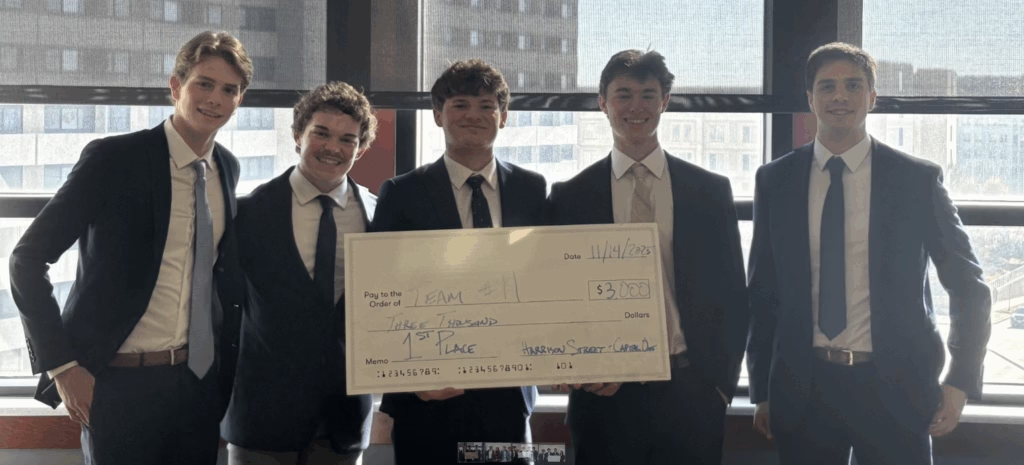
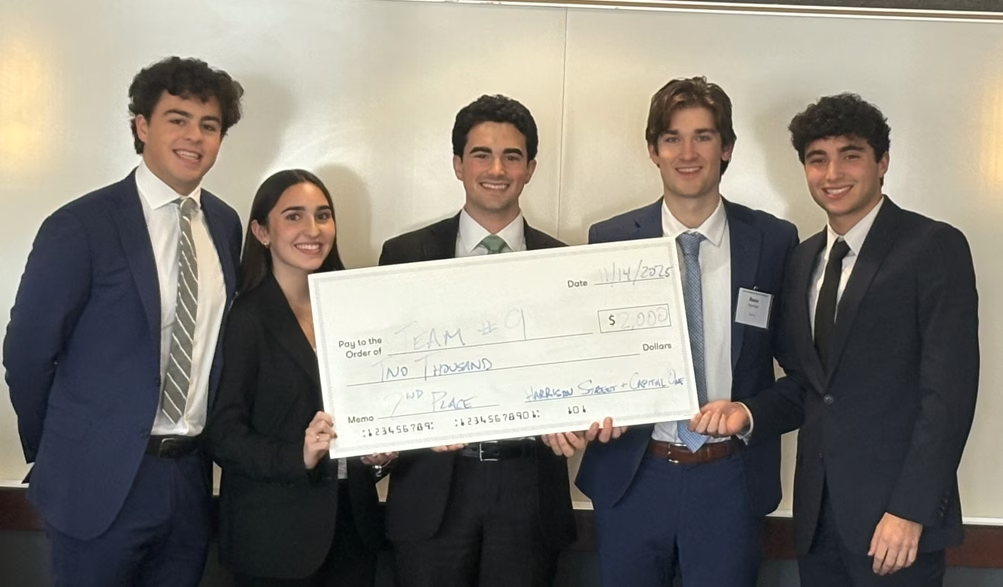
After careful deliberation, the judges determined the top teams.
Congratulations to all the finalists of the case competition:
First Place ($3,000): Joe Thousand, Daniel Everson, Ryan Tarantino, Bo Bainbridge, Collin Marquardt
Second Place ($2,000): Gavin Dempsey, Johnny Rolfes, Rees Horman, Sofia Gianini, Zach Ehrlich
Third Place ($1,000): Giovanni Russo, Will Vu, Ayanna LaPointe, Tony Fuentes-Flores
(All teams received a participation award of $500)
Takeaways and Appreciation
For all competitors, the case competition was an opportunity to apply classroom concepts, sharpen communication skills, collaborate under pressure, and think like investors. The event once again showcased the strength of Wisconsin’s real estate community and its commitment to preparing students for careers in real estate investment, development, and capital markets.