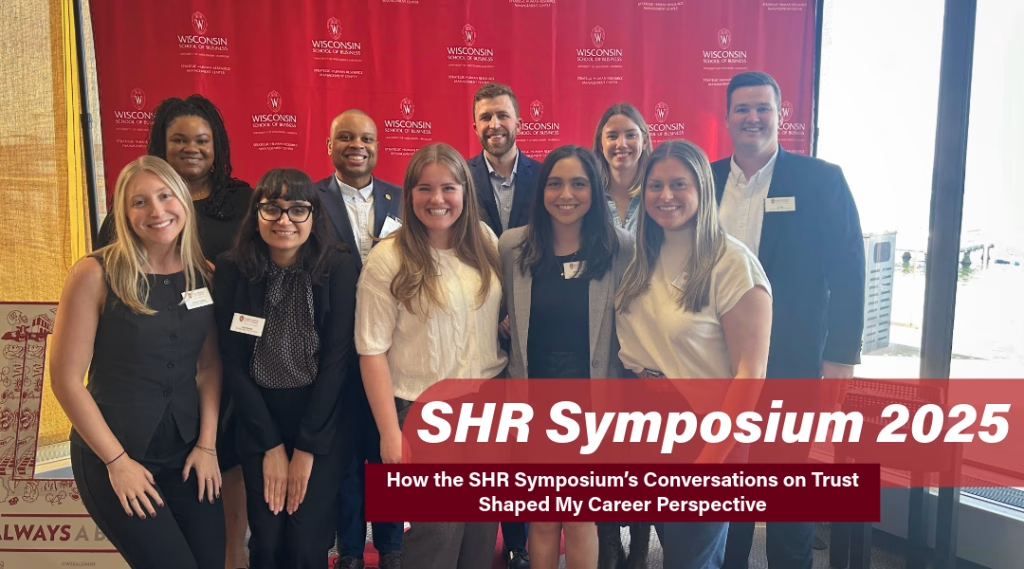
The Wisconsin School of Business’s brand campaign, “Trusted to Lead,” with its call to action to create lasting impact, has taken on new meaning for me this year. As I have started the process of re-recruiting for a post-MBA role, I’ve been reflecting on what it means to be trusted to lead: to lead teams, make decisions, and represent an organization’s values. At this year’s SHR Symposium, this idea came to the forefront. Across every session, from early career panel discussions to talks about diversity and inclusion, one theme kept surfacing: trust isn’t just a leadership trait, but rather it’s the foundation of great organizations.
The SHR Symposium is one of the most rewarding days of the semester, where students, alumni, faculty members, and Human Resources professionals come together to connect, learn, and reflect on the evolving landscape of HR. The day began with a networking breakfast, after which everyone migrated to the conference room where Tanya Hubanks, Mahina Adams, and Charlie Trevor opened the day with introductions. Next up, Heather Wollerman, Chief People Officer at McGraw Hill, started the sessions with a keynote, where she spoke about the importance of exploring different areas of HR to be an effective leader. Her message was powerful: we should focus on doing good work, and success will follow. She described the importance of curiosity, cross-functional learning, and staying close to the people side of business as organizations scale and evolve. Towards the end of her session, she asked us to turn to the people at our table and discuss what we, as employees, look for in a company. The very first thing my tablemates brought up was being able to trust in the company goals and the leadership.
The early career alumni panel that followed offered a candid look into what HR leadership looks like in practice. Bethany Bernklau, Harry Wolfe, and Masuma Zulfakar shared valuable lessons from their post-MBA journeys about setting boundaries, influencing without authority, and earning credibility by doing good work and following through on commitments. Their advice was grounded and practical; they built influence in their roles by being consistent and authentic. These first sessions shed light on how trust weaves through all these ideas. Trust allows new professionals to take ownership of projects. It allows leaders to delegate, mentor and empower their employees. Finally, it allows HR to serve as a credible partner across the business.
One session that solidified these ideas was “Trust: The Currency of HR Leadership,” led by Claudia Montgomery. She reminded us that trust isn’t a soft concept, but rather one that is measurable, actionable, and financially impactful. Claudia defined trust as the willingness to be vulnerable to others’ actions and intentions, and introduced a framework built on four pillars: competence, motives, means, and impact. HR, she said, must act as the voice of trust in leadership conversations and ask how various policies, decisions, and behaviors will influence trust. Consistent and trustworthy actions lead to emotional buy-in and trust in leadership. As a student preparing to re-enter the workforce, this resonated with me. Building trust doesn’t start once you have authority; it starts with commitments you keep, the good work you do, and moments you lead with integrity.
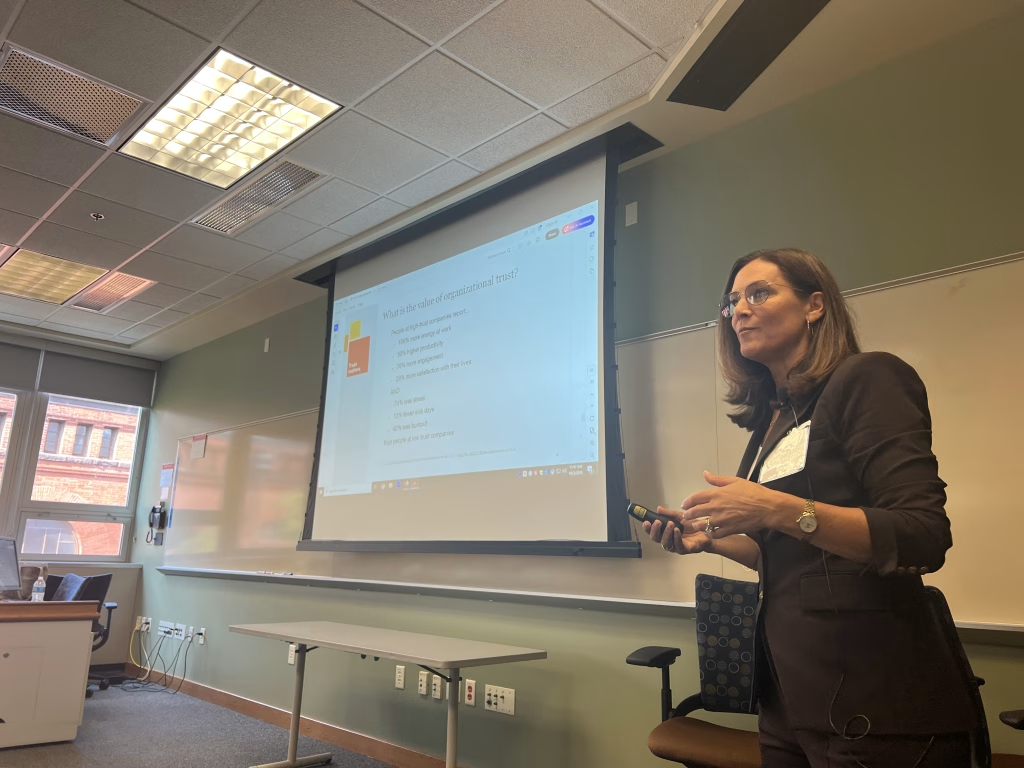
Later in the day, I attended a session called “From Awareness to Action: Building Neuroinclusion at Work,” led by Dr. Angela Marx, Jenn Streator, and Matt Huston, which highlighted that trust is built when people feel seen, heard, and supported in the workplace. The speakers emphasized that inclusive hiring and communication practices benefit everyone, not just neurodivergent employees. Trust grows when people can be open about their needs without fear of bias or judgment. The final session “Leading for Dignity,” led by Jirs Meuris, nicely tied all the ideas from the day together. Something that stuck with me was the statistic Jirs shared: as people feel more valued and respected, the more they believe others can be trusted. The simple idea underscores the theme of the day.
As the day concluded with a networking reception, I found myself reflecting on how much the theme of trust connects to my own professional journey. As I continue in the job search process, I’ve realized that trust is the core of what I’m seeking in a company. I want to work somewhere that leads with transparency, where employees feel empowered to speak up, and where values are not just words, but are reflected in daily actions. The Symposium reinforced how vital HR is in building the values and culture across every level of an organization. HR has the ability, and the responsibility, to ensure that trust isn’t just assumed, but earned and nurtured over time. This idea of trust is what makes work meaningful. It’s what enables people to take risks, share ideas, and build communities in the workplace. As HR continues to evolve in a world of so much change, trust remains our most valuable currency and the foundation of the kind of company I hope to join.