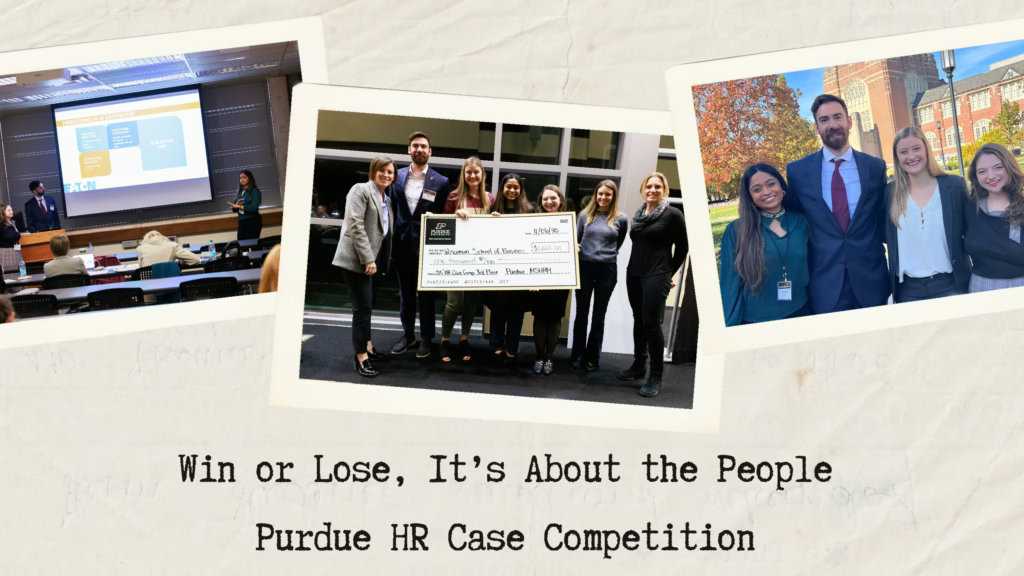

Case competitions are part of the quintessential MBA experience, and for Strategic Human Resource Management (SHR) “Business Badgers,” they present an opportunity to prove our standing as one of the strongest HR MBA programs in the country. The process of preparing for a case competition involves assessing and evaluating a complex, nebulous problem, collaborating on a diverse team, and proposing a robust recommendation flexible and adaptable enough to fit a range of possible future courses of action a decision-making entity might pursue. Yes, might. In other words, case competitions test crucial professional skills and reward teams who apply those skills appropriately and communicate effectively, with poise and persuasion.
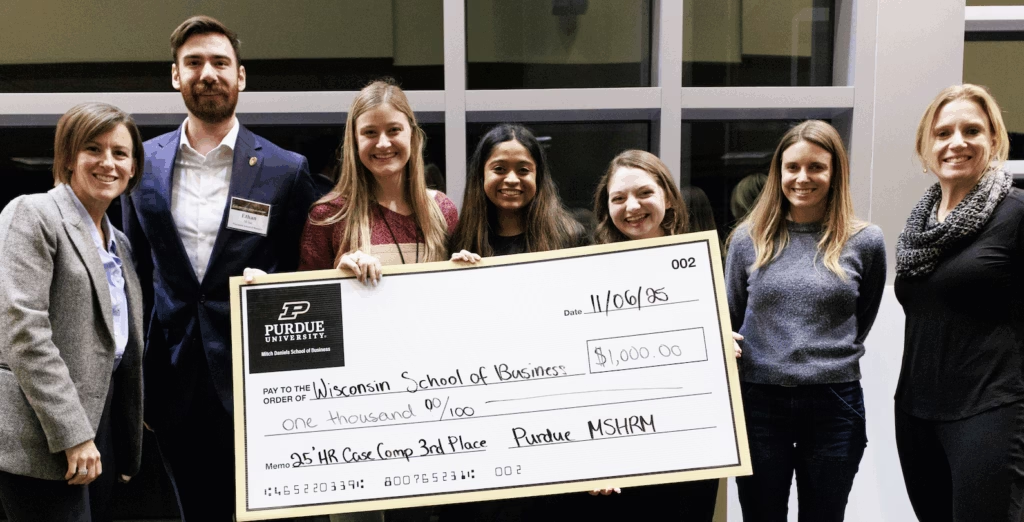
In early November, I participated in the annual Purdue HR Case Competition, sponsored by Eaton Corporation, a power management company, along with four of my classmates, Ethan, Janani, Ashleigh, and Ellen. Our objective was straightforward: propose a change management strategy to increase adoption of generative artificial intelligence (AI) across Eaton’s global managerial pool while contending with workforce resistance, leadership misalignment, initiative overload, and privacy concerns. The catch? We had only one week to build our recommendation and deliver a thoughtful presentation to a panel of Eaton judges at the Mitch Daniels School of Business.
Before receiving the case materials, our team scheduled a series of meetings and developed a loose timeline to track our progress. Those early steps were critical in setting us up for success, and we hit the ground running as soon as the case reached our inboxes. From the start, we recognized our success hinged on our ability to correctly identify the reason Eaton had historically struggled to integrate AI across its managerial pool. It was easy to get lost in peripheral issues or become hyper-focused on vague solutions; the challenge we faced was a simultaneous overload of irrelevant information and lack of useful data. To avoid these pitfalls, we started by dumping our initial reactions onto a whiteboard, and, strengthened by our different perspectives, evaluated the case from a variety of angles. Common themes began to emerge, and we used these ideas to formulate our initial assessment of the problem. We characterized Eaton’s primary obstacle as a “knowledge problem,” with the inputs being lack of manager readiness, trust, and awareness of AI tools. While this estimation remained largely the same throughout the planning process, our recommendation strategy evolved significantly.
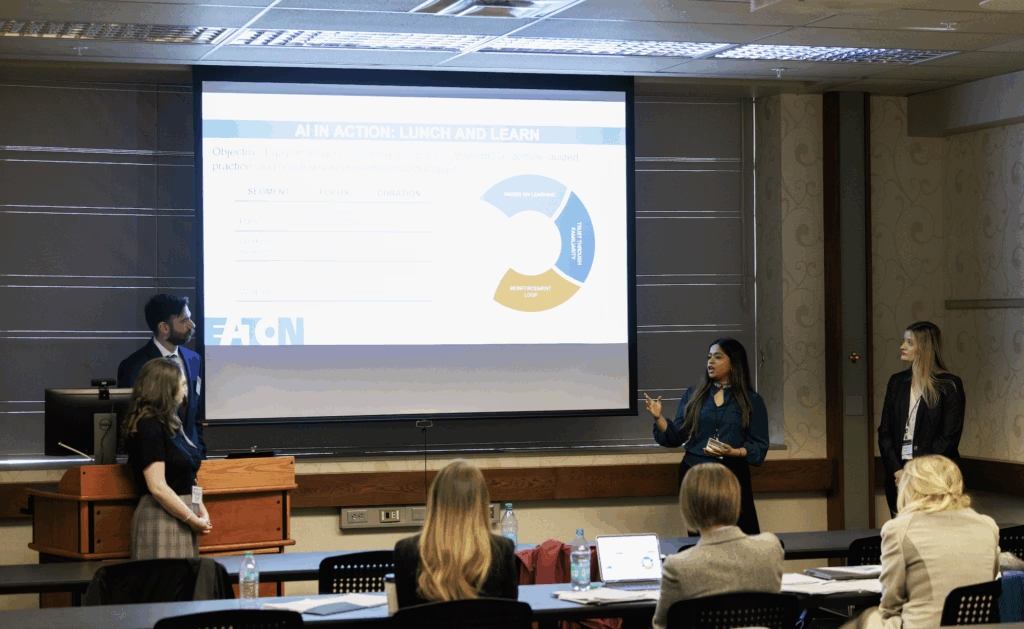
For the seven days leading up to the competition, our team worked tirelessly, putting in hours of overtime on top of coursework, interviews, and personal demands. We often had to split work, delegating tasks based on individual availability. For example, when Eaton hosted open office hours, we created a Google Doc for our most pressing questions, and our teammate, Janani, represented our entire team on the virtual call. Before creating a slide deck, we wrote a white paper, which helped us organize our analysis. After much deliberation, independent and collaborative research, and feedback, we articulated our recommendation for Eaton as a four-pronged communication-based strategy to build manager trust, confidence, and readiness to scale AI adoption across the company. Once we were satisfied with the paper, we transferred our key findings into a presentation template and began thinking of creative ways to display information as concisely as possible.
Our final team meetings were spent practicing our presentation and dedicating painstaking attention to minute PowerPoint details, such as font size, formatting, and color scheme. In all of our meetings, but especially as we approached the competition date, we “red celled” our work, challenging our own assumptions and considering possible questions that could offset our conclusions if asked. We were fortunate to have the support of the Wisconsin School of Business (WSB) faculty, who offered their professional expertise for navigating the iterative construction and editing processes and served as a mock panel of judges for a practice run before the team left for West Lafayette. Unfortunately, I was unable to travel with my team to present our solution to Eaton in person due to a competing MBA program conflict; however, my classmates represented WSB and the SHR Center proudly, securing a third-place win out of eight graduate teams from across the Midwest, Texas, and Utah. Of her experience at Purdue, my SHR classmate, Ashleigh, said, “I loved meeting other grad students and talking about what their classes look like. Most people are getting a masters in HR and have a deep well of knowledge.” Her perspective is reflective of the spirit of continuous learning in the SHR Center, and I think our team would agree case competitions are less about winning and more about connecting with people, the ultimate mission of HR management.