Three Corporate Finance & Investment Banking (CFIB) MBA Students (Kasey Morris, Andrew Sternaman, and Ryan Naidu) and other University of Wisconsin-Madison students attended along with fellow leaders at the University Club of Chicago to discuss the state of AI.

This wasn’t just a closed-door executive session. The AI Hub invited multiple Corporate Finance & Investment Banking MBA students along with other students to sit in on these board presentations, giving them a front-row seat to high-level strategic conversations. This was part of a broader experience where these three CFIB MBA students, along with other University of Wisconsin-Madison students, toured the offices of Google and mHub to see innovation in practice.
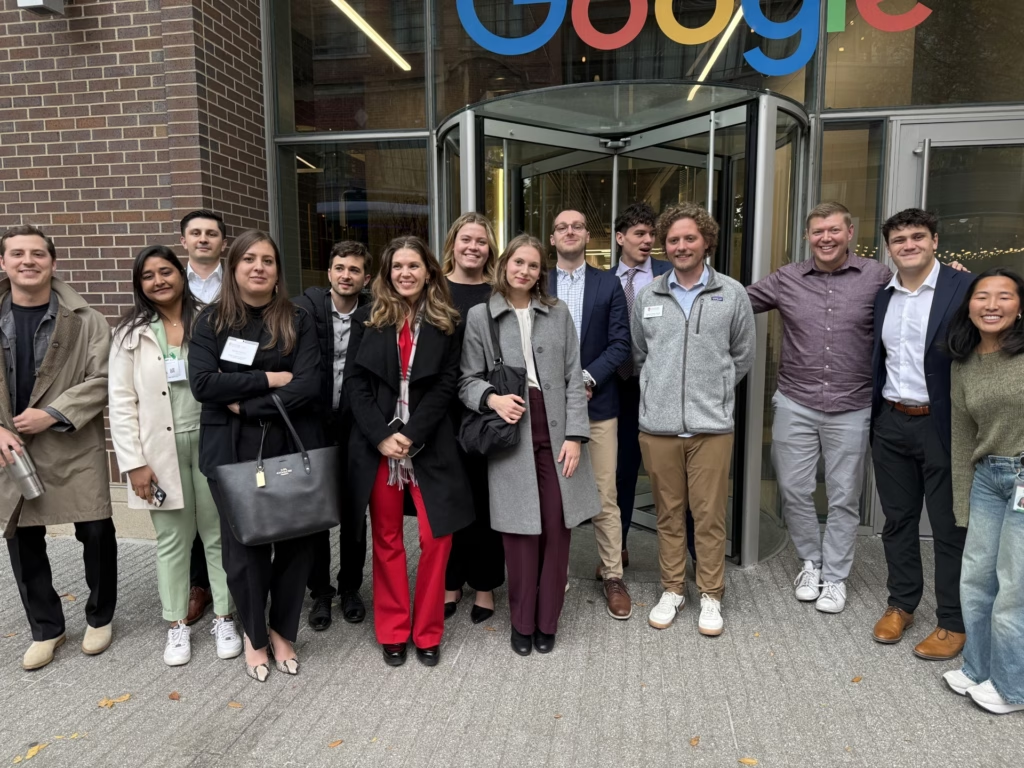
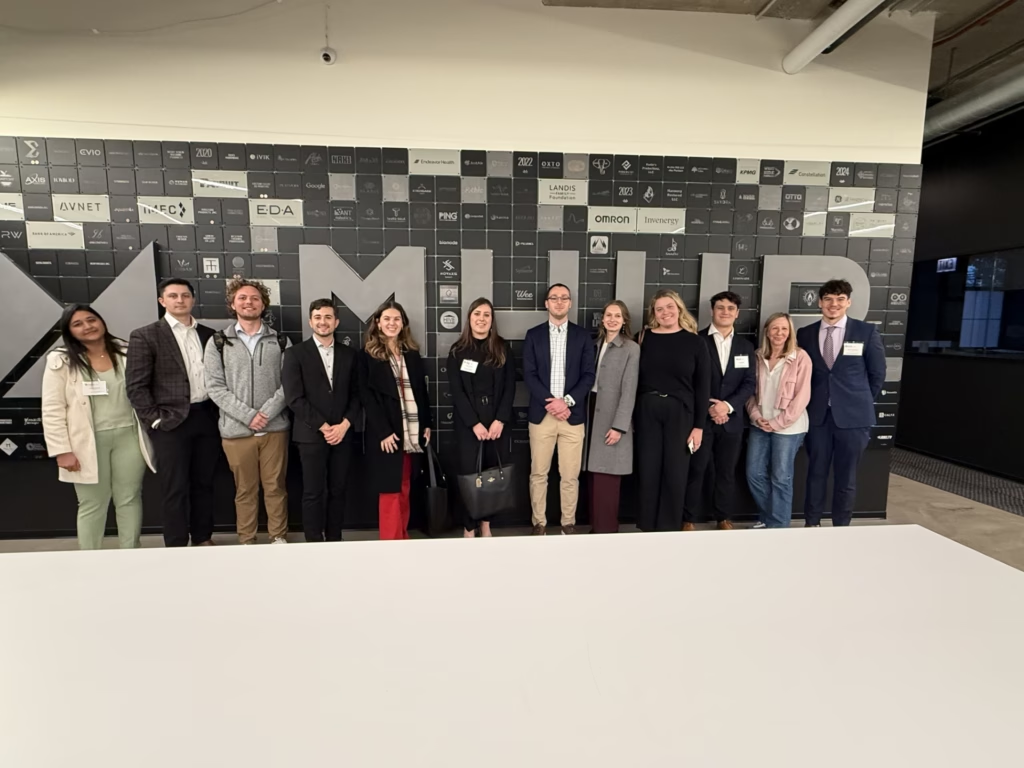
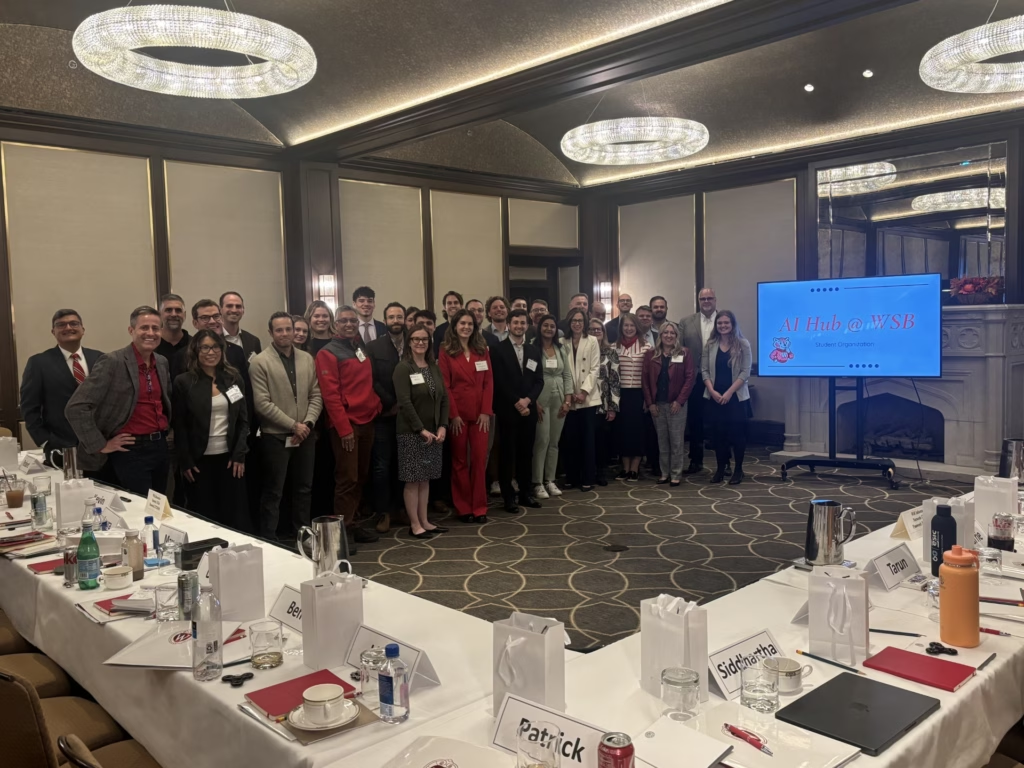
Having the next generation of finance leaders in the room changed the energy. The board members and presenters moved past the buzzwords to discuss the actual AI Mindset required in the future. The conversation wasn’t about which LLM is the best; it was about integration, workforce evolution, and the ruthless efficiency of business economics.

Here are my takeaways from the presentations.
1. Defining “Adoption” (It’s not just ChatGPT)
One of the first questions raised was simple but critical: How do you define AI adoption?
Too many companies think “adoption” simply means giving employees access to Enterprise GPT. But the consensus in the room was that true adoption is far more structural. Board members noted that adoption requires a strategy for:
- Everyday Use: How to make it a daily habit, not a novelty.
- Licensing & Low Code: Navigating the legalities and democratizing the tech through low-code approaches.
- Integration: The hardest part—getting AI into the actual platform, not just sitting in a browser tab.
AI isn’t a vertical; it’s a “collection of different disciplines.”
2. The Workforce Shift: Talent Over Skill
We spent a significant amount of time discussing AI in the Workforce. There is a shift happening where we are valuing “Talent over Skill.”
Why? Because of skill contraction. Specific technical skills have a shorter half-life than ever before. If AI can handle the rote technical work, the human premium shifts to intangibles. We discussed what to look for in this new era:
- Curiosity: The desire to ask the right questions.
- Cultural Fit: Can they navigate the human element?
- Problem Solving: How do you use AI to actually solve the problem, not just generate text?
Interestingly, while we value intangibles, the roles themselves are getting more technical. It’s a paradox: the tools are easier to use, but understanding how to audit and direct them requires a deeper technical baseline.
3. The “Small Business” Advantage
We debated a provocative question: Do you consider a large business an advantage in the AI era?
The answer was mixed. Some board members argued that “smaller is better for learning from quick failures.” Othersechoed this, noting that smaller firms possess the agility required to pivot when the technology changes every six months. Large organizations are often bogged down by legacy systems and “systems that don’t talk to each other”—a major barrier we identified.
4. Consumer Behavior vs. Corporate Reality
A profound insight from the meeting was that “Our AI behaviors as consumers are now being brought to the workforce.”
Employees are used to AI working instantly and intuitively in their personal lives, and they are frustrated when enterprise systems don’t talk to each other. The barrier isn’t the technology; it’s Change Management.
The Verdict
As a leader, your job isn’t just to buy the software. It’s to understand the landscape and decide the best route. It involves navigating legal licenses, fostering curiosity over rote skill, and making hard decisions about resource allocation to protect margins.
The “AI Mindset” isn’t about magic; it’s about agility.
Where is your organization on the adoption curve? Are you still in the “Enterprise GPT” phase, or have you moved to full platform integration?
Categories: