Transcript
Kaitlin
Yeah. So first I think I should be clear about what I think AI means. I think of AI as any algorithm that makes it so that computers can perform as well as, or maybe even better than, humans at a task.
Katie Gaertner, Business Analytics Lecturer
Great.
Kaitlin
A particular version of AI that has been transforming how we think about supply chains is computer vision. So think of this in a production setting. We have had a long history of moving from manual tasks to automated tasks, and computer vision is one more step on that path. Some factories have even gone what they call “dark,” so not relying on humans to perform their tasks, instead primarily relying on robots. Dark because you don’t need to have the lights on if it’s only run by robots. Similarly, in warehousing, we see a move from humans navigating the aisles, picking items off of the shelf to robots bringing the shelves to human pickers who then assemble your order at, say, an Amazon warehouse. And then transportation, right? A move from humans driving the trucks to self-driving vehicles. And all of this use of computer vision has a few, I think, important implications. One is about the layout of space, how do we use our limited resources, especially in a physical space kind of setting? Dark factories can have a smaller footprint, which means they can actually be closer to their end consumers. Same idea with warehouses that have these robots that are moving shelves around. Kind of a similar idea when you think about transportation. Self-driving cars, the ideal version, they actually communicate with each other. And so an individual vehicle can take up less road space, because you need to leave less of a buffer between them, which is particularly important when we think about dense urban settings.
Katie
Sure, yeah.
Kaitlin
So I think that this is going to have, I mean, it is already having, but it is going to continue to have a huge impact on how we think about supply chains.
Katie
Yeah, those are some really interesting examples. It’s really got my brain thinking about oh, wow, all of the things that are possible and things that might change. Maybe you can share with me some examples of how AI is changing the way companies compete and pushing companies to adapt their traditional business models to a new landscape.
Kaitlin
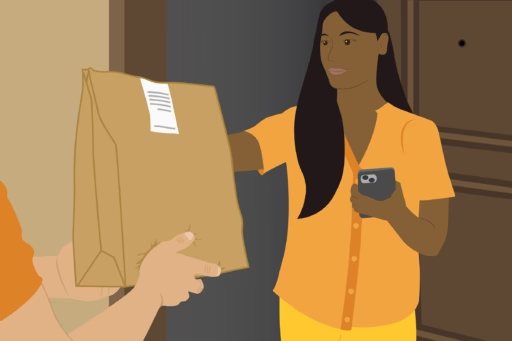
Absolutely. So my favorite example of this is the one that I study, which is a ride-hailing marketplace. So you think you want on-demand transportation from point A to point B. Twenty years ago, you had to rely on a taxi, and that taxi was operating without any AI or any kind of sophistication. You would stand on the curb, and you would stick your hand out, and you would try to hail them down. Maybe you would call a dispatcher who then would send out some message on a radio, but we’re talking very low-tech kind of dispatch. Then about 10 years ago, Uber enters the scene. Uber enters the scene, and they introduce a new service that is really based on this idea of new technology, right? We all have smartphones, and so Uber is able to keep track of the location of where I, the passenger, am, where all of the network of drivers are so that they can use an algorithm to perform these matches between folks who want a ride and drivers who want to provide a ride, which makes the service much more appealing in a lot of settings. Makes it so that I, as the passenger, don’t have to wait as long. The driver doesn’t have to spend a bunch of time wandering around empty, not getting paid. And there are a bunch of downstream implications from this that I think a lot of people appreciate about the service: the fact that you have automatic payment, and rating system, etc.