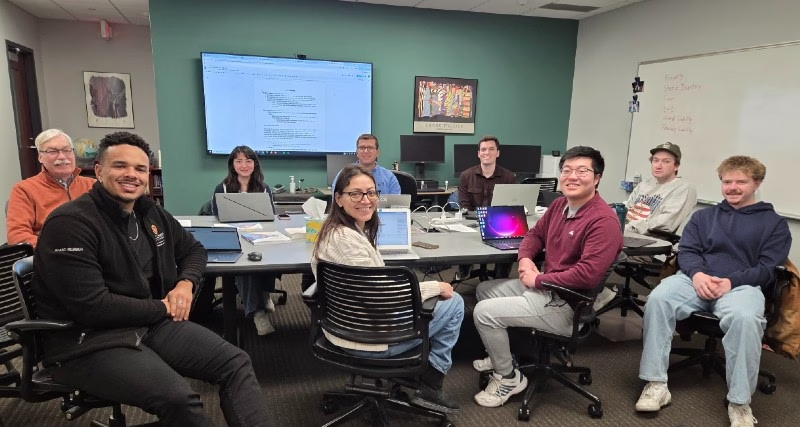
This semester, I have the privilege of leading the Applied Learning Project for RMI 875. The project involves carrying out a risk optimization study for a Fortune 500 company with a group of seven students, including two undergraduates. We began the project by setting goals and objectives with a company representative, focusing on understanding the organization’s risk appetite and tolerance. Early engagement with the client allowed our team to ask meaningful questions and identify the specific lines of insurance to be included in the study. Having direct access to the client has been invaluable in ensuring that the work we produce is relevant, practical, and truly beneficial to the organization.

Last semester, I took RMI 655, Risk Financing Techniques, which involved completing a hypothetical risk optimization study for a simulated company. The project was highly involved and required extensive data analytics, Monte Carlo simulations, and the use of @Risk in Excel. While it was challenging, it was also extremely rewarding to see the analysis come together at the end of the semester. This experience provided a strong foundation, and I am excited to apply those same analytical tools and concepts to a real company where the results can create immediate, tangible value.
I am particularly excited to lead a cross-level team in delivering a completed project for a real client. One of the main reasons I returned to school to pursue an MBA was to develop leadership and managerial skills that I can carry into any career path. The Applied Learning Project provides a unique opportunity to organize and guide a team from start to finish, something I expect to do many times throughout my professional life. This role will require coordinating tasks and timelines, working with team members who bring different strengths and perspectives, and translating technical risk analysis into insights that are actionable for senior decision-makers. I am eager to see how collaboration and diverse viewpoints ultimately strengthen the final outcome.
Unlike traditional classroom cases, this project involves real data, real constraints, real tradeoffs, and real stakeholder expectations. Navigating these challenges will help build my confidence as I take on my first truly client-facing project. More importantly, it reinforces the value of applied learning by bridging theory and practice, allowing students to move beyond academic exercises and engage directly with the kinds of problems faced by organizations every day. This experience will not only deepen my understanding of risk management but also better prepare me for leadership roles where clear communication, sound judgment, and practical application are essential.
Categories: