Spend any time at the Wisconsin School of Business and one theme quickly emerges: Standing still is not an option. As one of the nation’s first business schools, WSB has shaped business education through listening, innovation, and action. That spirit endures. As the school celebrates its 125th anniversary, it matters more than ever.
Since its launch in 1945, the Wisconsin School of Business MBA has been responsive to the evolving needs of global business and industry. Over time, a robust portfolio of graduate programs developed around the MBA—programs designed to equip graduates with the knowledge, skills, and mindsets to succeed in dynamic, growing industries.
Even as the portfolio expands and the market changes, the Wisconsin School of Business remains firmly devoted to the program that launched its graduate portfolio: the Wisconsin Full-Time MBA.
“As we remain committed to the full-time MBA, we’re continuously listening to our students, industry partners, and alumni,” says Blair Nelson Sanford, associate dean of MBA and master’s programs. “We’re leveraging these insights alongside detailed data to determine what the next generation of business leaders needs and wants, and pairing it with the expertise, experiential learning, and career support they can only find at WSB.”
For Sanford and others, this commitment is more than a strategy—it’s a rallying cry. WSB already stands among the best, with a top-20 undergraduate program, multiple top-ten specialties, and faculty ranked #26 globally for research influence. Now, with strategic investments in the full-time MBA, the school isn’t just keeping pace; it’s positioning itself to lead.
This is Mission MBA, and it’s already underway at the Wisconsin School of Business.
A multi-year journey
Mission MBA is a multi-year effort to reimagine and refine the MBA experience at WSB. Supported by extensive market research, this thoughtful, collaborative work began with new investments to the professional MBA (PMBA) in 2020, including the launch of an innovative badge system, and continued in 2024 with the redesigned hybrid executive MBA (EMBA). The next phase turns to the full-time MBA (FTMBA)—a program many business schools hesitate to innovate.
“Too often, comprehensive business schools innovate around the full-time MBA, reserving their most cutting-edge solutions for specialized master’s programs,” says Daniel Bauer, senior associate dean for programs. “If we want our graduates to have a true competitive advantage, we must be willing to reexamine and continuously improve all of our degree programs. With strategic investments and data-driven enhancements, we can ensure our entire portfolio, led by the FTMBA, remains rigorous and relevant.”
That belief is backed by insight, not instinct. Through in-depth interviews and market research, WSB uncovered why prospective students are drawn to the FTMBA. The findings were clear: students see graduate school as a reset point. It’s an opportunity to pivot careers, accelerate advancement, and rebuild professional confidence. The degree matters, but the personal and professional transformation matter more, offering significant ROI over the short- and long-term. The FTMBA is already seen as a cornerstone of WSB’s portfolio; with Mission MBA, it’s being sharpened into something even more powerful.
WSB is approaching this work through three interconnected priorities:
- Integrating AI across the curriculum and student experience
- Deepening experiential learning opportunities
- Creating personalized pathways and partnerships for career success
Some initiatives are already in place, with current Wisconsin MBA students benefiting from pilots and schoolwide initiatives. Others are in development, guided by feedback and careful planning.
All in on AI
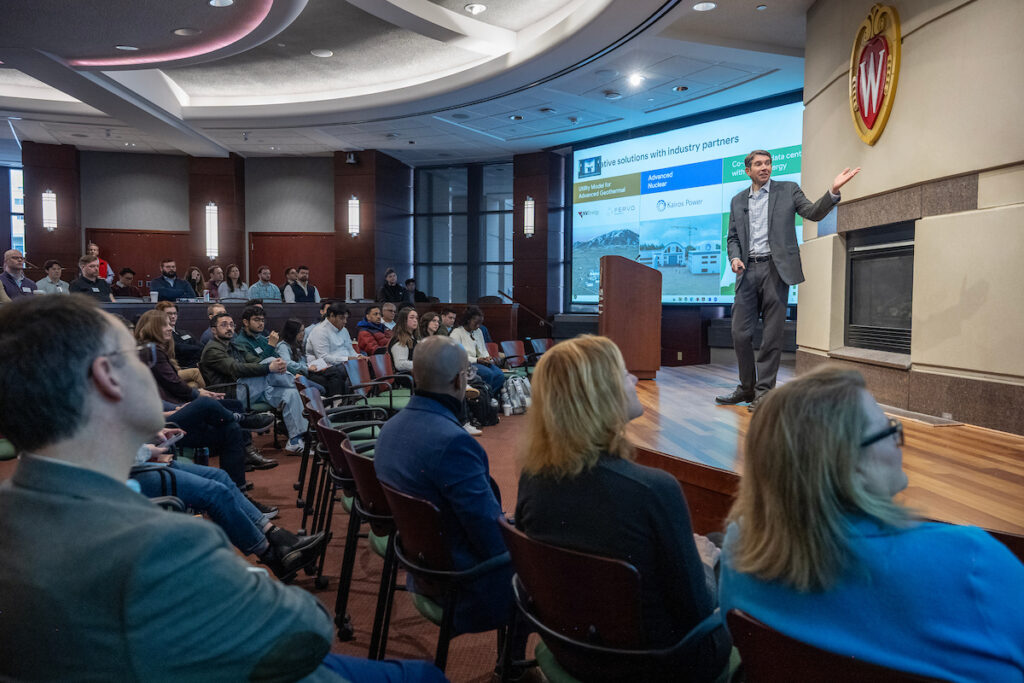
As AI reshapes the way leaders learn, work, and make decisions, the demand for professionals who can lead at the intersection of human and machine intelligence will only grow. Mission MBA allows WSB to be at the forefront of that conversation, through a focus on research, curriculum, and industry partnerships within the MBA program.
Research
Through RISE, the UW initiative to recruit faculty across a spectrum of disciplines to find solutions to global challenges, WSB welcomed six new professors specializing in AI. Together with current faculty, they are driving research and shaping the conversation on AI in business.
Curriculum
WSB is designing three new AI courses, which are expected to be offered in both the PMBA and the FTMBA. In addition to fundamentals, the courses explore AI’s role in management and enterprise systems.
“From a leader’s perspective, students need to answer questions like: How do I realize the benefits of AI? How do I integrate it into our processes? How do I manage this new ecosystem of human and AI agents?” Bauer said in a recent interview with Update magazine. “These courses help our students not just learn about AI but learn how to leverage it strategically.”
The school’s novel badge framework, originally developed for the PMBA, makes it easy to expand this content to other degree programs or even as a standalone professional development opportunity for alumni or community members, as AI continues to be one of the most sought-after topics for business leaders.
Industry
The new AI Hub for Business connects students with faculty and industry partners through events, applied research, and real-world collaboration. Students across all three MBA programs are already engaging with programming, including the upcoming AI Summit. The Hub’s new Executive Advisory Board—with industry leaders from Intuit, Google, 3M and more—keeps WSB at the forefront of AI in business.
Applied learning in action
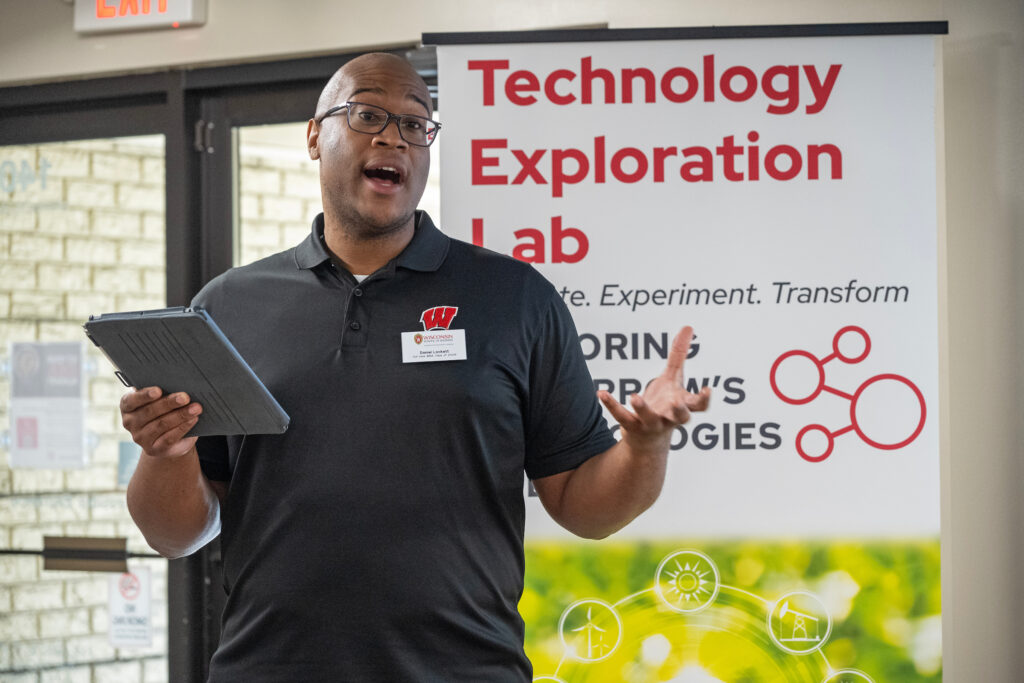
WSB’s experiential learning opportunities ensure students practice what they learn and can tackle real-world challenges early and often.
One such example is underway at the UW Technology Exploration Lab, a collaboration between WSB, the Wisconsin Institute for Discovery, and other entities. The Lab brings together students, alumni, and industry partners to explore bold ideas through applied AI, hands-on experimentation, and venture-ready innovation. As part of the Lab’s Venture Build program, MBA students from WSB’s product innovation course advise student founders and developers on consumer insights and go-to-market strategy.
A similar partnership with the computer science department pairs MBA students studying technology product management with undergraduate computer scientists for a rigorous capstone project, with prompts directly from industry partners like Amazon, Capital One, and Epic.
Beyond coursework, WSB is investing in community building for FTMBAs, from optimizing class size to expanding events and co-curricular activities.
“We’re asking our stakeholders, ‘What does a transformative full-time MBA experience look like? What does it need to have?'” Sanford says. “Sometimes those answers are obvious; others take research, pilots, and experimentation. But exploration is progress in itself, especially for a legacy program like the full-time MBA.”
The pathway to success
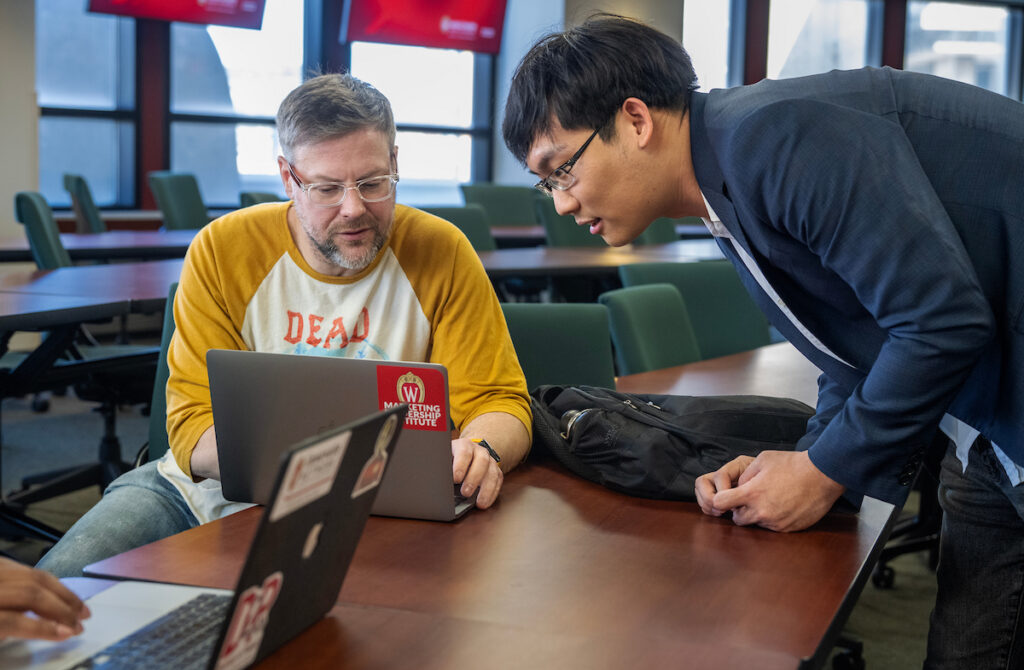
Students pursuing a FTMBA choose WSB to elevate their skills, pivot careers, and prepare for leadership. Mission MBA aims to make that journey more personal, more hands-on, and more effective.
Career pathways
Building on a model that produced a 94% employment rate for the undergraduate class of 2025, WSB is expanding personalized career coaching to the MBA. Students will benefit from coaching aligned with Knowledge Centers, employer partnerships, and real-time labor market insights.
Early career prep
The MBA Career Boot Camp for All launched in summer 2025, giving every entering student early access to training, workshops, and support tailored to their industry of interest. Specialized advising is available for competitive paths such as consulting, investment banking, and technology.
“Employers now want to engage with our students very early in their FTMBA,” says John Rooney, executive director of MBA and master’s career development. “We are not only providing more tailored career training, but also adding opportunities for students to develop their personal brands, solidify their career interests, and practice their skills from the start.”
Integrated learning
This fall, sector-specific applied-learning courses include career content such as interviewing, networking, and job searching—combining classroom learning with direct career readiness.
“We know students, especially those that switch careers, want to be able to explore a range of career paths, some of which are constantly evolving,” Rooney says. “We’re looking at ways we can continue to combine structure and flexibility to make career preparation a more bespoke experience.”
Looking ahead
Mission MBA isn’t about chasing trends. It’s about honoring a legacy of excellence while refusing to stand still. Since 2020, each MBA program has seen strategic investments to expand opportunities for students. Now the FTMBA takes its turn, guided by the same deliberate approach.
“We’re listening carefully, moving conscientiously, and never losing sight of what makes a Wisconsin School of Business MBA distinctive,” Bauer says.
The result is an MBA designed not only to launch a student’s next role, but to shape a lifetime of leadership. And this is only the beginning.